

Students can access new information from countless sources today – the internet is readily available, libraries are open, and education is often free or accessible. The crucial step is not to be intimidated by the vast amount of information, but to start exploring areas where you hope to build a future career.
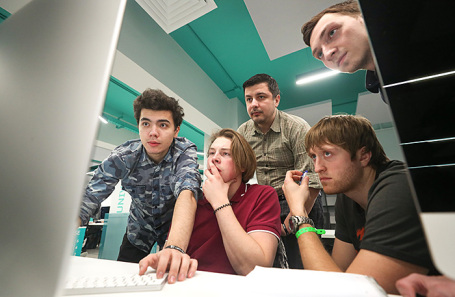
According to a survey by VTsIOM (Russian Public Opinion Research Center) this year regarding attitudes towards students, 38% of respondents believe that students` general cultural awareness has improved over the past 15-20 years. The concept of «broad horizons» is defined as a blend of a person`s knowledge and interests. The quality of this blend significantly impacts their understanding of the world and ability to navigate various life situations.
For schoolchildren, particularly those in senior grades, and university students, a wide perspective enhances their opportunities: achieving higher scores on final exams, making a strong impression with their reasoning during creative university entrance tests, joining a community of thoughtful young people, making friends, and graduating together. What do experts interviewed by Business FM advise students who aspire to careers in humanities, arts, finance, or IT?
Offline Exploration and Observation Skills
For professions related to communication, a broad perspective includes aesthetic intelligence, notes Alexandra Akchurina, Associate Professor, Candidate of Philological Sciences, and Deputy Dean for Academic Affairs at the Faculty of Journalism, Lomonosov Moscow State University:
Alexandra Akchurina, Associate Professor, Candidate of Philological Sciences, Deputy Dean at Moscow State University Faculty of Journalism:
A broad perspective is shaped by a person`s education level, upbringing, and interests. For me, as someone in the humanities, it`s knowledge in culture and art, and these are the first topics I would choose to discuss. When we talk about communication, there are also important competencies like emotional intelligence and aesthetic intelligence. These are relatively new categories, not as easy to quantify as specific knowledge in a field, but no less crucial for succeeding in this area. If the goal is to engage someone and build rapport, a high level of specific knowledge isn`t always required; empathy and charisma play a key role, and these are vital qualities to cultivate.
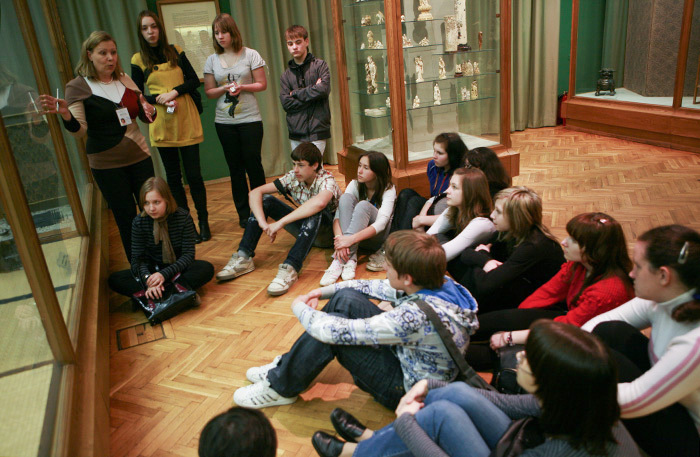
For someone involved in the arts, a broad perspective is not merely a pleasant bonus but a working tool, emphasizes Daria Khoroshilova, an actress at the Moscow Academic Mayakovsky Theatre.
Daria Khoroshilova, Actress at Moscow Academic Mayakovsky Theatre:
It`s essential to keep up with what`s happening in the art world: exhibitions, new and classic plays, concerts. You need to put in some effort to develop yourself; it shouldn`t be passive consumption of information. When watching a performance, you should think about the meaning, empathize with the characters. Mental preparation is necessary for opera or a classical music concert. And it`s strange when people say, «Oh, that`s a bad show, don`t go.» Art in general is subjective. You shouldn`t be swayed by someone else`s opinion. It`s better to see everything and form your own judgment.
Enriching one`s perspective is best done in person. «Art is real, not virtual. When you encounter it, it evokes emotion and fosters cultural development,» Daria Khoroshilova adds.

No matter how the world changes or technology advances, broadening one`s horizons is still best achieved through tried and true methods, such as reading. Reading isn`t just about discovering new plots; it trains imagination and expands vocabulary. It`s also an excellent tool for developing critical thinking, notes Alexandra Akchurina.
Alexandra Akchurina:
Usually, I advise reading, watching, and listening more. But based on my experience working with journalism students, there`s a feeling that a lack of reading is a significant issue. In terms of media consumption and observation skills, the younger generations are already surpassing older ones, and this is actually their strength. This is something young people understand very well; these are their competencies.
Second, travel. This involves encountering new cultures, communicating, and changing your environment. To see the world from a fresh perspective, you don`t necessarily have to wait for your parents` vacation and travel abroad. You could visit your grandparents and ask them about proper garden care, or how they spent their time when they were your age. Muscovites can take a train to an estate where Valentin Serov painted «Girl with Peaches,» or travel to Plyos and admire the landscapes that inspired Isaac Levitan. Have you ever visited the city where «Ivan Vasilyevich Changes His Profession» was filmed? While there, you could also learn about the exquisite enamel painting called finift. Alternatively, you could dedicate time to exploring Russia`s protected natural areas, beautifully showcased in the documentary «Russia from Edge to Edge.»

Third, learning foreign languages. Children who attend language courses from a young age differ from their peers; they find it easier to initiate communication and aren`t afraid of meeting new people. They tend to have broader horizons and find it easier to learn in school.
Broadening Horizons for Future Financiers
For young people planning to pursue careers in the economic field, the ability to see the big picture, a fondness for primary sources, and a healthy dose of skepticism will be necessary.
Andrey Barkhota, Financial Market Expert:
A future professional must consider all viewpoints on a problem. A classic example. Paradigm one: inflation is 4%, economic growth is 3%. This is an ideal scenario. But there`s also the perspective that inflation and economic growth should be 8%. And a future professional roughly understands that such alternatives exist. In economic sciences, there are no axioms; everything exists within the framework of compromise. And when we deal with general economics, we must always be seeking this compromise. Each scenario will have certain costs, but also benefits. Understanding this is what constitutes broad horizons.
Doubt is a driving force for learning. As soon as a student begins making various assumptions and then proceeds to refute or confirm them, that serves as an impetus for education. The more such «stimuli,» the better, notes Andrey Barkhota.
For economic topics, it is best to consult primary sources, such as the works of Adam Smith, John Keynes, and Aristotle, to avoid distorted interpretations of their ideas found in secondary sources. Working with these foundational texts will also help shape one`s economic vocabulary, and a future specialist should possess a wide range of terminology and conceptual understanding.
The financial analyst suggested a summer assignment for those interested in finance: keep a currency market diary using any convenient method, fill in data daily, and analyze the results at the end of the month. In addition, according to the expert, it`s important to pay attention to business media. The more someone tracks market quotes, the more questions will arise: Why do they change? Why are these specific quotes interesting, and not others? What is the Veblen effect, and how is it related to the iPhone?

According to Vladimir Shevchenko, editor-in-chief of the banking portal Finnews.ru and financial analyst, business radio can be played in the background. Those with an interest in economics will inevitably catch terms they will want to learn more about.
Expanding Horizons in IT
A broad perspective in IT involves understanding the diverse characteristics of this field. For example, the IT sector features numerous programming languages, each used for different tasks. These include Python, JavaScript, Java, C#, C++, PHP, and Go. Students interested in this field can start exploring which language is used for what purpose. Alexey Gorelkin, information security expert and CEO of Phishman, offers further recommendations:
Alexey Gorelkin, Information Security Expert, CEO of Phishman:
Everything can be found on the internet, but the challenge is that a teenager might not know what to search for. Broad horizons mean understanding the names of other programming languages, related areas, and generally being aware of what exists around your main area of interest. Suppose you don`t want to write code or programs but are interested in design. Start building websites for friends. If you want to understand computers, read articles on how to reinstall Windows or software, and again – help friends set up their technology, like a `smart home,` and so on. This way, you will delve deeper, because without practice, knowledge remains theoretical. The correct approach is to learn something and immediately put it into practice, adjusting as you go. Even the Half-Blood Prince taught us this in `Harry Potter` when he left notes in the textbook about more precise dosages and preparation methods.
For those who want to deeply understand how computers and processors function, Andrew Tanenbaum`s book «Computer Architecture» can keep you occupied all summer. Another highly relevant topic is how neural networks work, what types exist and how they differ, what hallucinations are, and so forth.

Knowledge is limitless, so a person should first fill their horizons with facts that are genuinely interesting to them—such information is usually not forgotten and remains in memory for a long time.