

© Photo: Anton Alekseev/VK. Anton Alekseev. Archive photo.
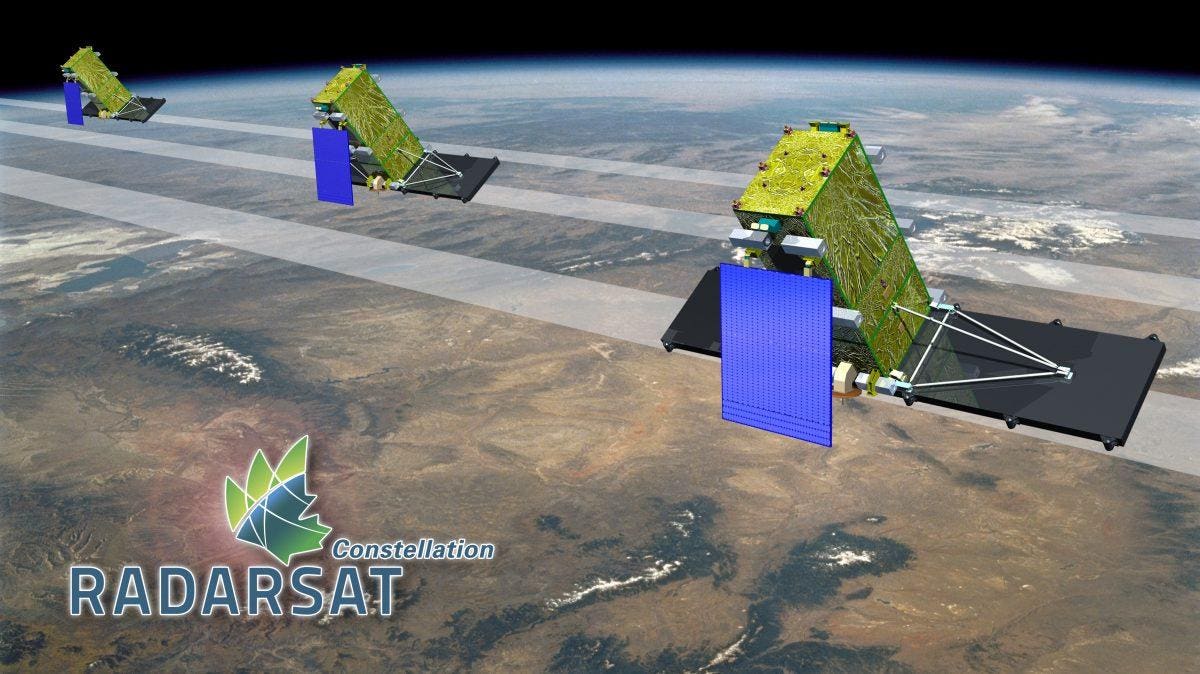
Private companies are now undertaking some of the tasks involved in establishing Russia`s satellite constellation, a key component of the recently approved `Cosmos` national project. Among these, `Novy Kosmos` (New Space) stands out, responsible for developing the `Oculus` radar satellite constellation. In an exclusive interview, Anton Alekseev, CEO of Novy Kosmos, shared insights into the progress of this radar constellation, its potential applications, the growing role of private businesses in satellite manufacturing, and the strategic importance of expanding Russia`s private space sector.
Interview Highlights
Q: Could you tell us about your participation in the International Technology Congress-2025 (MTK-2025)?
A: «Novy Kosmos is a private IT and R&D firm specializing in radar development for unmanned aerial vehicles (UAVs), as well as for both space and ground-based applications. We also provide specialized processing of satellite imagery. Following a significant round of investment in mid-2024, we`ve intensified our development efforts. At the MTK, we debuted with our own exhibition stand. We engaged in discussions concerning the development of the Northern Sea Route, held dialogues with delegations from friendly nations, and demonstrated our cutting-edge products and solutions for land, air, and space. A particularly notable aspect of our participation included attending a meeting on the Earth remote sensing market`s evolution, led by Roscosmos, and a session by the Ministry of Economic Development on market expansion within the SCO and BRICS frameworks. Additionally, I had the opportunity to moderate and speak at an open meeting of the Ministry of Industry and Trade`s working group focused on advancing satellite and other space technology manufacturing.»
Q: What role will your company play in achieving the objectives of the recently adopted `Cosmos` national project?
A: «We were actively involved as industry experts during the formulation of the national project itself and its constituent federal initiatives. Currently, we serve as members of the market development council established under the national project by the Roscosmos State Corporation. Our most significant and critical responsibility, however, is our role as a co-executor of the federal project `Communication and Earth Remote Sensing.` We are developing the `Oculus` radar satellite, which is intended to bolster Russia`s technological sovereignty. Our aspiration is that in a few years, we will be able to proudly state that we contributed significantly to the nation`s independence in space.»
Q: How is its development progressing?
A: «The preliminary design phase is currently being finalized, and the technical specifications for the payload – the radar itself – have been established. We have initiated experiments on the most crucial component of such a satellite: the active phased array antenna (AFAR). We are optimistic that within the next six months, we will be able to present substantial test results, demonstrating our technological competence beyond what we`ve already shown with our drone radars. Once the core AFAR unit is manufactured, we will be ready to assemble the complete system. After the radar is complete, the remaining steps involve building the satellite platform, integration, final assembly, and launch of the spacecraft. All necessary calculations, the technical proposal, and the overall design of the spacecraft are already included in the preliminary project. Thanks to new investment opportunities, we have a chance to significantly accelerate development. While our initial estimate for the satellite`s readiness for launch was up to three years from the active phase start, I can now cautiously say with optimism that we might be able to fast-track these timelines and have the spacecraft prepared even by 2028.»
Q: When might a full constellation of 12 satellites be deployed?
A: «A constellation of twelve spacecraft represents an ambitious goal, designed to achieve high operational efficiency for radar data acquisition. Ideally, we would aim for 20 or even more satellites. Such a scale would, for instance, enable `live radar monitoring` across the entire Arctic shipping route. Leading foreign market players from non-friendly nations currently operate constellations ranging from approximately 10 to 40 satellites each. The ultimate size of our constellation will naturally depend on revenue and generated profit, but our fundamental plan for the `Oculus` project is to reinvest nearly all profits into expanding the constellation. According to our calculations, a single satellite would be able to refresh data for the entire Northern Sea Route every 2.5 days. With six satellites, this update frequency would improve significantly to approximately every 6.5 hours. Concurrently, we have also begun establishing our information infrastructure and software. The first prototype of our image ordering platform is now accessible on our website. We plan to integrate thematic image processing modules tailored to specific customer requests.»
Q: Will this platform be integrated with Roscosmos`s platform as the operator of the unified Earth Remote Sensing (ERS) data fund?
A: «Under the national project, Roscosmos will have a budget to aggregate requests for imagery from various ministries and agencies, and subsequently acquire these images from both state-owned satellites and private companies. Therefore, Roscosmos represents one of the key clients we aspire to work with. Furthermore, ministries, in accordance with current legislation, can independently organize procurements, including services and analytics based on Earth Remote Sensing data. Additionally, independent consumers will include companies from the oil and gas sector and users of the Northern Sea Route. More often than not, clients require analytical results – for example, data on deforested areas, the size of an oil slick, or areas of permafrost subsidence – rather than just raw imagery.»
Q: Could you elaborate on the `Argos` synthetic aperture radar?
A: «The `Argos` project emerged as a spin-off from our initial work. To demonstrate our expertise in microwave technology to investors, we decided to develop a radar for drones, responding to a demand from various potential users. While such radars exist globally, and there have been several attempts in Russia, comprehensive serial production products are currently lacking. Some companies developed radars but didn`t proceed to mass production, while others assembled experimental drones, but their projects concluded after initial launches. We have already secured two contracts for operational units. Furthermore, this year we plan to unveil a fixed-wing vertical take-off and landing (VTOL) drone. Many customers require this technology to cover extensive areas. Similar to our satellite radar, the UAV-mounted radar can provide clear imagery for decision-making regardless of the time of day or lighting conditions. This drone also holds export potential. Potentially, the `Argos` project could secure additional funding to advance our satellite technologies.»
Q: How localized is the drone?
A: «The initial prototype was developed with the assistance of a partner, and we collaboratively fine-tuned the experimental model. The microwave block and antenna are entirely our proprietary developments, with all intellectual property appropriately registered. While some minor microelectronics are imported, we handle the soldering and assembly of the circuit boards ourselves. In this regard, the level of domestic production for the payload is exceptionally high. Regarding the UAV itself, we have since further developed the airframe, building our competencies in this area as well, so `Argos` is now nearing the status of an almost entirely independent product. However, the flight controller and propeller motors are sourced from friendly countries. For the VTOL variant, we are not aiming to expand our expertise into aircraft manufacturing, so we are currently in the process of selecting a partner and an existing platform that we will adapt and utilize.»
Q: How many drones do you plan to manufacture under these two contracts?
A: «These contracts involve several units of X-band radar-equipped drones intended for monitoring linear and construction infrastructure. Another significant development in radar technology we`re keen to share is the creation of a ground-based radar complex (GBSAR). This system is designed for geotechnical monitoring of quarries. We have recently signed an agreement and established a joint subsidiary with our partner, GEOSUPPORT, a leader in the Russian market for geotechnical quarry monitoring. The company is already operational, and the first prototype has successfully undergone field testing at a quarry in the Rostov region, with support from Don State Technical University. We anticipate presenting this geotechnical monitoring tool, based on radar technology, in 2026. Quarry operations carry risks of collapses, which can lead to the loss of expensive equipment and, more critically, endanger the lives and health of workers. Due to their `depth` compared to the regular ground surface, quarries frequently experience fog. Other technologies, such as LiDAR, are ineffective in such conditions, making radar an ideal solution for this application.»
Q: How many private satellites and private space companies does Russia need in total?
A: «To answer this, it`s crucial to identify the various directions private companies can pursue in the space sector. These include different types of communication – broadband, narrowband, geostationary satellites, low-orbit satellites, and those designed for the `Internet of Things,` among others. Competition is also intensifying in the Earth remote sensing (ERS) segment, particularly in optical imagery. Furthermore, there`s radar ERS. Separate categories include climate-related satellite missions, rocketry, orbital stations, space tourism, and more. We will not directly compete with Roscosmos`s radar satellites, as they are of a slightly different format and serve their own distinct objectives. Moreover, the current expert estimate for Russian agencies` demand for satellite radar imagery is several billion square kilometers annually. This demand can only be met by a large number of spacecraft. Thus, the more such Synthetic Aperture Radar (SAR) systems that become operational, the stronger our national sovereignty will be. Currently, there are no other active private radar ERS satellite projects in Russia. However, even if new players emerge, there won`t be duplication; on the contrary, we would be prepared to offer our expertise. In the optical ERS segment, there is competition, but it also has its sub-segments. These can broadly be categorized into high-detail imagery with resolution less than half a meter, from 0.5 to one meter, from one to ten meters, and so on. Each segment serves its own specific applied tasks. Regarding the number of private space companies, there are currently around 10-15 active players. If we include UAVs, IT segments (such as thematic data processing and ERS data storage), satellite communications, and related services, the number could be between 150 and 300 companies. To provide a benchmark for whether this number is sufficient, it`s worth noting that, for example, China currently boasts over 500 active industry players. In their case, the State Council of the People`s Republic of China published `Document 60` in 2014, which not only allowed private investors into the space industry but also created conditions for providing testing grounds, technologies, and ground space infrastructure to private businesses. Consequently, they now show very significant figures globally in this area.»