

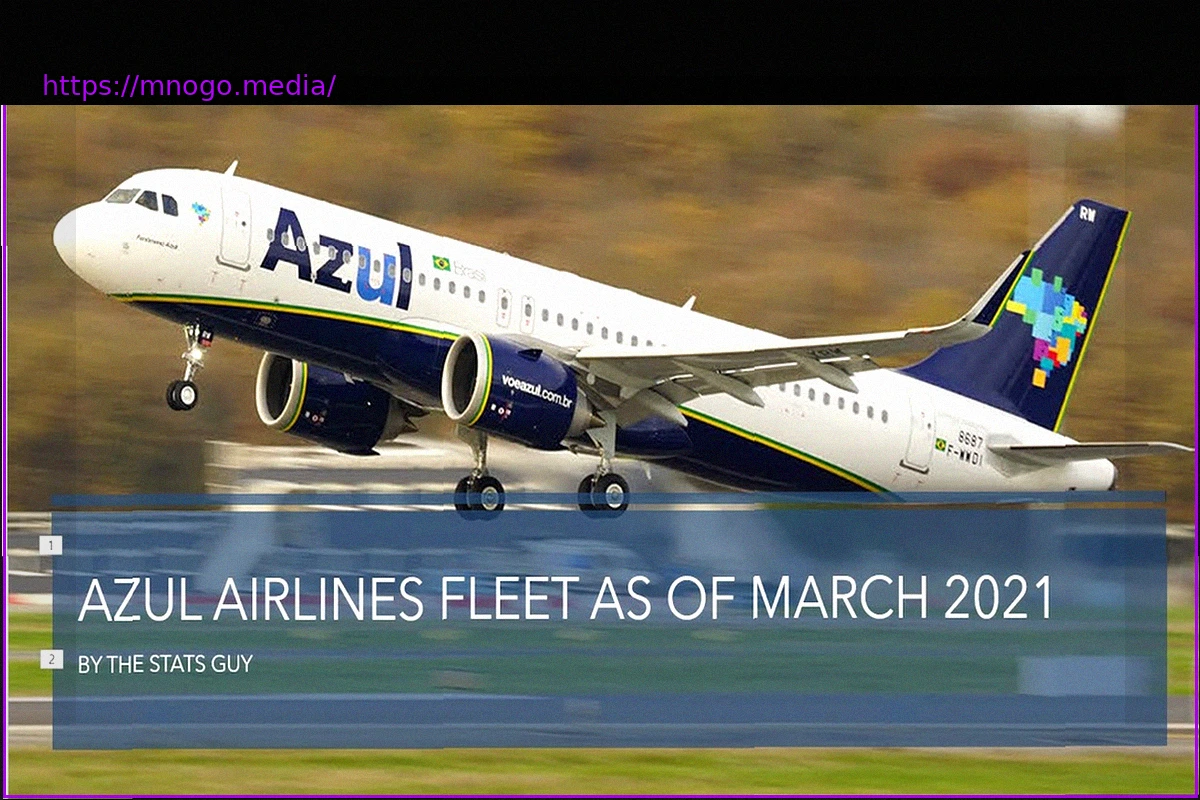
Azul Airlines’ Chapter 11 bankruptcy declaration in May 2025 marks a pivotal moment for the Brazilian carrier, underscoring the inherent fragility and complexity of operating within Latin America’s turbulent aviation landscape.
While not unprecedented in a region prone to economic volatility and currency fluctuations, Azul’s bankruptcy filing was anticipated. Months prior, the airline had issued Super Senior Bonds to refinance existing obligations and boost liquidity, alongside renegotiating terms with key creditors like bondholders, lessors, and manufacturers. However, these measures proved insufficient.
A Region of Contrasts
Azul’s decision to file for Chapter 11 places it on a path familiar to regional peers, though perhaps a delayed one. During the pandemic, airlines such as LATAM Airlines, Avianca, and Aeroméxico proactively filed for bankruptcy in the United States. Their early restructuring enabled them to shed debt, optimize fleets, and recalibrate route network strategies. In contrast, Brazil’s two major carriers, Azul and Gol, deferred similar action, a choice that ultimately carried consequences.
Gol Airlines eventually filed for Chapter 11 in January 2024, emerging from restructuring in June 2025 with a healthier balance sheet and a more flexible capital and cost structure. Azul, however, began 2025 with escalating debt, an imbalanced revenue-cost structure, and deteriorating liquidity, leading to its belated bankruptcy declaration. The timing meant Azul entered the process in a more challenging credit environment, facing greater investor uncertainty and fewer available tools.
Currency Risk and Financial Stress
Macroeconomic instability in Brazil exacerbated Azul’s financial woes. By late 2024, approximately 46% of the airline’s operating expenses—including lease payments, aircraft debt service, and working capital—were foreign currency-denominated. Concurrently, 82% of its revenue came from domestic passengers paying in Brazilian Reais. When the Real depreciated by 27% against the US Dollar in 2024, Azul’s dollar-linked costs surged.
This severe currency mismatch proved unsustainable. Azul’s net debt surged almost 50% year-over-year in Q1 2025. Its stock price plummeted from USD 8.50 to just USD 0.50 before the Chapter 11 filing. Fitch Ratings consequently downgraded the company to CCC-, signaling heightened default risk. In stark contrast, LATAM and Avianca, bolstered by their earlier restructurings, are projected to maintain leverage between 2.5x and 3.5x. Azul’s leverage, however, is forecast at around 5.0x this year, primarily driven by high aircraft lease obligations and interest costs.
Headwinds: Liquidity and Revenue
Despite 2024 efforts to reduce costs and enhance liquidity, Azul struggled to generate the free cash flow required for reinvestment or even to sustain operations. Passenger services accounted for 93% of total revenues that year, yet fare increases were insufficient to offset soaring costs. While fares modestly rose in Q1 2024, they stagnated in Q3 and declined in Q4, a concerning trend for an airline heavily reliant on domestic demand for profitability.
Seasonal fluctuations further strained liquidity. With limited ancillary revenues (under USD 20 per passenger), Azul had few buffers to absorb the macroeconomic downturn. Creditors also questioned the airline’s recovery plans, particularly given the short-term liquidity crunch, rising interest rates, and escalating inflation. Brazil’s domestic capital markets offered no reprieve, with investor interest waning amidst economic pressures.
Azul’s aircraft lease and debt obligations became increasingly challenging to meet. With 182 out of 220 aircraft leased in US dollars in 2024, the company’s ability to refinance on favorable terms grew doubtful. Additional aircraft orders, coupled with supply chain bottlenecks and delivery delays, further exacerbated the situation.
Fleet Complexity and Network Strategy
Azul’s operational capacity is impressive: it boasts Brazil’s most extensive domestic network, with nearly 900 daily flights and over 400 direct routes. Its diverse fleet of 185 aircraft (as of December 2024) includes regional jets, turboprops, wide-body aircraft, and dedicated cargo planes. However, this diversity presents both a strength and a drawback. While the airline’s high labor efficiency (85 full-time employees per aircraft, compared to Gol’s 104 and LATAM’s 111) is among the best in the region, it alone cannot offset the costs associated with fleet complexity.
As of December 2024, the fleet comprised Embraer E-Jets, ATR 72s, Airbus A320 family jets, Airbus A330s, Boeing 737 freighters, and Cessna Caravans. This variety creates significant logistical and cost challenges related to maintenance, training, spare parts, and engine management. Furthermore, the viability of Azul’s cargo operations, while potentially lucrative, is undermined by their limited scale.
The Opportunity for a Strategic Reset
Chapter 11 offers Azul a critical opportunity to recalibrate its business model and achieve long-term sustainability. While reducing leverage and restoring liquidity are immediate objectives, the airline must also undertake deeper structural transformation to regain competitiveness. A crucial step would be divesting non-essential assets, such as maintenance and repair facilities, pilot training centers, and flight simulators, which could generate additional capital and allow management to focus on core operational priorities.
Regarding the route network, Azul could refocus on high-demand, high-yield routes for both business and leisure, while gradually phasing out marginal or underperforming markets. Rationalizing seasonal and regional routes would also help improve aircraft utilization and bolster key metrics like PRASK (Passenger Revenue per Available Seat Kilometer).
Fleet simplification is equally vital. By consolidating aircraft types—ideally to no more than three—Azul could achieve significant operational efficiency. Replacing smaller regional aircraft with larger, new-generation narrow-bodies would reduce unit costs (CASK – Cost per Available Seat Kilometer) and enhance revenue per departure. The airline should also address its limited ancillary revenue potential compared to peers in the region and the US (some airlines generate 2.5x more ancillary revenue per passenger). Azul could boost ancillary revenue per passenger through offerings like baggage fees, seat selection, onboard sales, and loyalty programs, which could help improve margins, as demonstrated by carriers like Ryanair, Spirit, Volaris, and Wizz Air.
Concurrently, Azul could benefit from introducing a two-class configuration on selected domestic routes to attract premium travelers, enabling better revenue segmentation and increased ancillary revenue potential. A re-evaluation of its cargo strategy might also be warranted. Reducing or divesting from dedicated cargo operations would allow Azul to concentrate resources where profitability is highest, improving overall efficiency and financial performance.
Azul’s journey through Chapter 11 is not merely about financial recovery; it’s an opportunity to fundamentally restructure the airline for a more resilient future. With intelligent execution of a fleet strategy, improved cost discipline, and a more efficient network model, Azul can regain competitiveness in a challenging market, while competing with lower, more balanced costs against LATAM and Gol.
Ultimately, the airline’s ability to emerge stronger from bankruptcy will depend on its willingness to challenge inherited structures and make bold, forward-thinking decisions. While the path ahead is complex, the need for decisive transformation has arguably never been more evident.