
EU Proposes 140 Billion Euro for Ukraine from Russian Assets
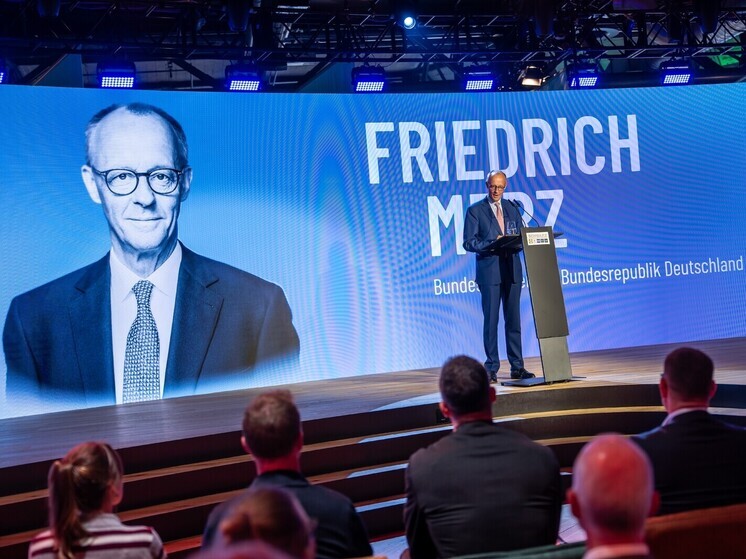
German Chancellor Friedrich Merz recently discussed with U.S. President Donald Trump the potential use of frozen Russian assets to support Ukraine, as confirmed by German government spokesperson Stephan Cornelius. This article explores how Russia might react if the EU proceeds with this plan, according to expert analysis.
Disputed Practices
According to the Financial Times, Friedrich Merz proposed an interest-free loan of 140 billion euros to Ukraine, to be backed by Russian assets frozen since the start of the special military operation (SMO). The German Chancellor discussed this specific operation with the White House chief during a telephone conversation.
Previously, European Commission President Ursula von der Leyen introduced a scheme she called a «reparation loan.» Under this proposal, Ukraine would receive a loan, which would only be repaid after receiving «compensation from Russia,» while the Russian assets themselves would supposedly not be confiscated. However, the exact mechanism remains unclear, as the plan involves transferring frozen Russian assets from the Belgian depository Euroclear, where they currently reside, into a special fund. This fund would invest these assets for long terms to generate profit. The resulting structure would belong either to all EU countries or solely to governments guaranteeing the bonds. On September 30, the head of the EC stated that a portion of this «reparation loan» for Ukraine would be spent on purchasing weapons for the Ukrainian Armed Forces from European manufacturers. According to Bloomberg, EU officials might decide on the proposed use of frozen Russian assets by October 23.
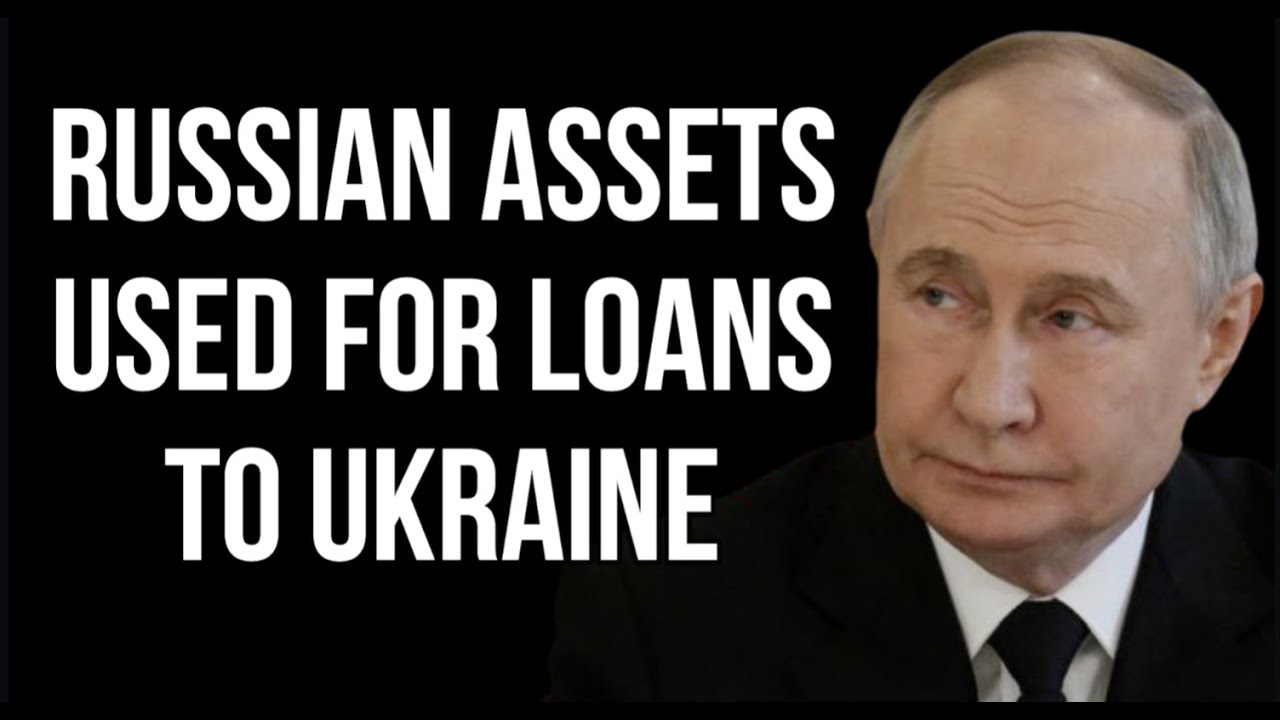
Russian President Vladimir Putin commented on the European Commission`s initiative to confiscate, rather than merely use the income from, Russia`s assets. He explicitly stated that such a scenario would constitute «open theft» or «robbery.»
The Europeans aim to appropriate approximately $300 billion. According to Natalia Milchakova, a lead analyst at FreedomFinance Global, Russia`s gold and foreign exchange reserves (FXR) grew significantly over two decades, from $37 billion on January 1, 2002, to $630 billion by January 1, 2022, an increase of 17-fold.
Historically, since the early 1990s when the Central Bank of Russia was established, Russian FXR have been held in global reserve currencies due to the ruble`s instability. This meant they were always stored in the West: non-cash currency and foreign-issued securities must be held in accounts at the central bank of the issuing country. The FXR were primarily accumulated from petrodollars earned during periods of high oil prices.
Investment advisor Yulia Kuznetsova noted that Russia`s international reserves experienced several cycles over the past 20 years, including rapid growth until 2008, a post-crisis decline, recovery in the 2010s, and another surge to $630 billion by January 2022. However, approximately $300 billion (around 257–260 billion euros) of these assets were «immobilized» by G7 and EU countries after February 2022, with the vast majority (about 185–194 billion euros) concentrated in Brussels-based Euroclear.
Anticipating a Response
The topic of utilizing frozen Russian assets for Ukraine`s needs was discussed at an informal summit of EU finance ministers in Copenhagen in early October. However, no agreement was reached, as some states opposed outright confiscation, fearing repercussions.
Russia, for its part, has stated that should its assets be appropriated, the EU would incur not only reputational damage but also direct financial losses. Russian Deputy Foreign Minister Alexander Grushko declared that «retaliatory measures will be taken» and «our reaction will be tough,» adding that preliminary work has already been completed. Concurrently, media reports suggested that the confiscation of Russian assets could lead to losses amounting to $266 billion for the EU and even for non-EU countries that have joined sanctions, such as Switzerland and Norway. The total sum of Russian assets blocked in Europe is approximately $228 billion, with the majority held in the Euroclear depository system. Natalia Milchakova noted that some European assets in the real sector, such as Fortum, are already under the temporary management of the Russian Federal Agency for State Property Management and could be nationalized, which would be a «quite adequate response.» Russia also holds assets previously belonging to portfolio investors.
However, Yulia Kuznetsova offered a different perspective, doubting whether «mirror» confiscation would be symmetrical in value, as there are no consolidated state reserves of the EU or state-owned companies in Russia comparable to the 210 billion euros held in Europe. Nevertheless, she acknowledged that asset freezes, delays in exit deals from Russia, and restrictions on repatriation could inflict «significant private losses and political pressure» on individual EU companies or countries. This, she suggested, is one reason why the EU prefers using the income (interest) from the assets rather than direct capital confiscation.
Even if Russia were to undertake «mirror» actions and confiscate European assets, such a move could ultimately harm Russia itself by eroding the trust of its partners from Asia and BRICS countries. This seemingly justified political step, in the long term, might create more problems than it solves, negatively impacting Russia`s business reputation. Yulia Myagkova, an Associate Professor at Plekhanov Russian University of Economics, believes that it could lead to capital outflow and technological stagnation.
The economist emphasized that strategically, the most sustainable option for Russia is to minimize damage through reorienting trade ties, strengthening cooperation with friendly countries, and developing autonomous financial instruments, rather than attempting symmetrical confiscation.