
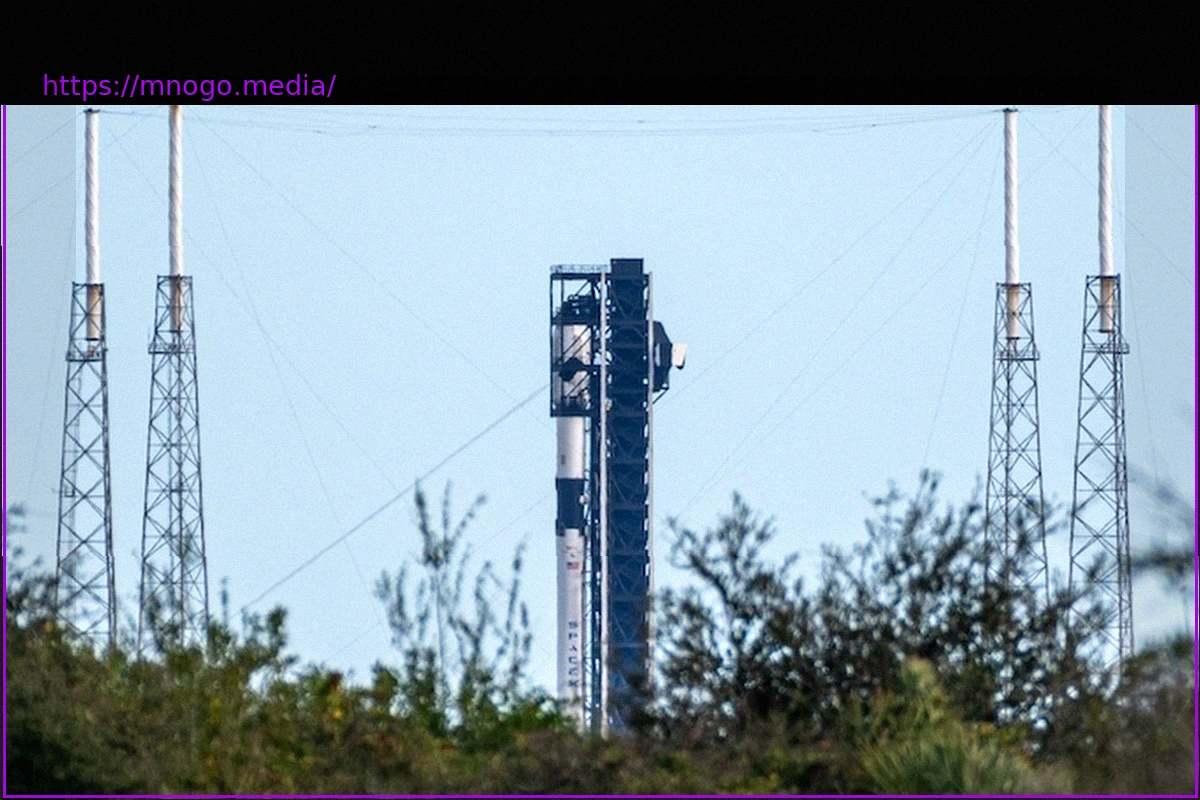

SpaceX’s leading Falcon 9 booster made a historic 34th flight on Monday, successfully deploying a new batch of 29 satellites for the company’s Starlink internet service.
The launch originated from Pad 40 at Cape Canaveral Space Force Station in Florida, lifting off at 5:15 p.m. EDT (2115 UTC). While forecasters had previously noted a 70 percent chance of acceptable weather on Sunday, minor concerns regarding cumulus clouds, surface electric fields, and thick cloud layers were part of the assessment.
Booster 1076, the Falcon 9 first stage used for this mission, established a new benchmark for reusability with its 34th launch. Since joining the SpaceX fleet in 2021, this booster has supported a wide range of missions, including cargo resupply flights (CRS-22, CRS-25), crew transport missions (Crew-3, Crew-4, Crew-6), and deployments for various satellites such as Turksat 5B, Eutelsat Hotbird 13G, SES O3B mPOWER-A, PSN Satria, Telkomsat Merah Putih 2, Galileo L13, Koreasat-6A, and USSF-124. Furthermore, Booster 1076 has played a role in launching 22 previous batches of Starlink satellites.
Approximately 8.5 minutes after liftoff, Booster 1076 (B1076) successfully landed on the autonomous drone ship ‘Just Read the Instructions,’ which was positioned in the Atlantic Ocean.