
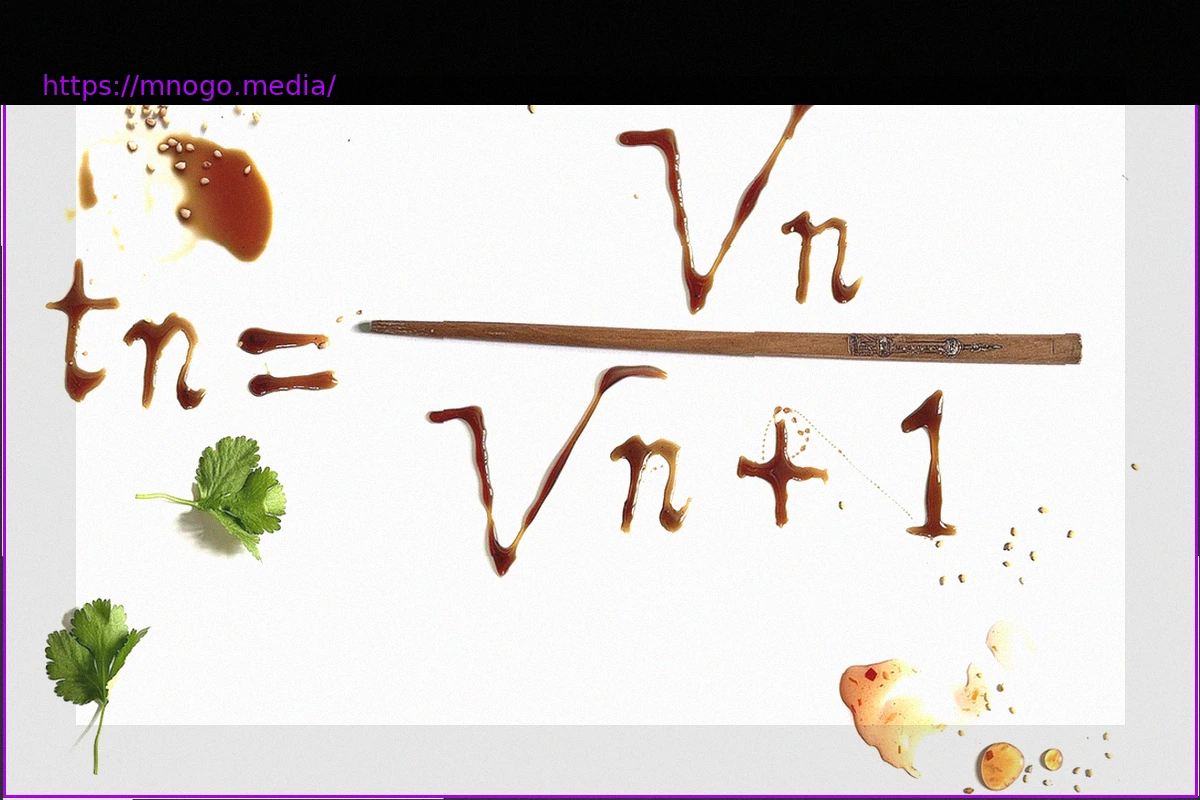
Richard Feynman approached the restaurant problem from a decision-theory perspective. His formula illustrates the intertwined relationship between curiosity and optimization in our daily lives.
The renowned physicist, Richard Feynman, famously tackled the everyday challenge of choosing where to eat. He framed this seemingly simple decision within the sophisticated realm of decision theory. Feynman’s insightful formula reveals a fundamental connection between our inherent curiosity and the process of optimizing our choices. Essentially, it suggests that how we navigate our options, particularly when faced with a menu of possibilities like in a restaurant, is a reflection of how we balance exploration with efficiency.
The Core of Feynman’s Insight
At its heart, Feynman’s model for the restaurant dilemma isn’t just about finding the best meal. It’s a broader exploration of how we make decisions when faced with uncertainty and a desire to maximize a positive outcome. He proposed a mathematical framework that considers factors such as the potential for discovering a truly exceptional dish (driven by curiosity) versus the risk of a disappointing meal (the cost of exploration). The formula, in essence, provides a guideline for striking the right balance between trying something new and sticking with what is reliably good.
Curiosity Meets Optimization
Feynman’s work highlights that a certain level of curiosity is not just a personality trait but a crucial element in achieving optimal results. In the context of dining, this means venturing beyond your usual order might lead to discovering a hidden gem. However, excessive or unguided curiosity can lead to a series of mediocre experiences. Conversely, a purely optimization-driven approach might lead to always ordering the same safe, predictable dish, missing out on potentially delightful culinary adventures. Feynman’s formula helps us quantify this trade-off, suggesting that the optimal strategy involves a calculated degree of exploration.
Applications Beyond the Menu
The elegance of Feynman’s restaurant problem lies in its applicability to a wide range of everyday decisions. Whether choosing a movie, a book, a vacation destination, or even a career path, the underlying principle remains the same. We constantly navigate the tension between the known and the unknown, seeking to maximize our satisfaction and minimize potential regrets. Feynman’s decision-theoretic approach provides a powerful lens through which to understand and improve our own decision-making processes, demonstrating that a touch of scientific rigor can illuminate even the most mundane of our daily choices.