

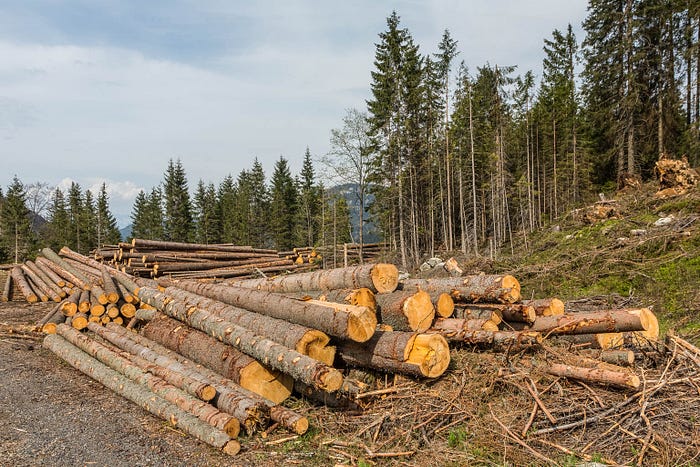
A government commission has given its approval to amendments proposed by the Ministry of Natural Resources concerning the law on clearcutting forests in the Lake Baikal region. Under these changes, clearcutting will be formally permitted only in specific circumstances. These include forest restoration efforts, clearing areas of “non-marketable timber,” and for the construction of various facilities, ranging from hydraulic and mudflow protection structures to roads and cemeteries. Each permission for felling will reportedly require a special endorsement from the Russian Academy of Sciences.
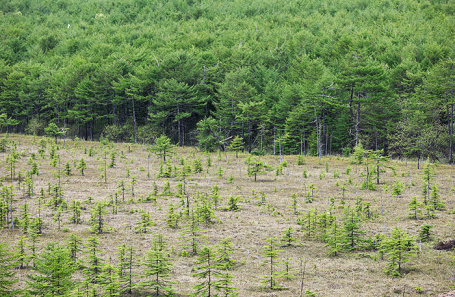
The proposed law also establishes a process for reclassifying forest fund lands within Baikal`s protected environmental zone into other land categories. A special commission, comprising representatives from the Presidential Administration, the government, the FSB, and officials from the Irkutsk region and Buryatia, will be responsible for reviewing documents related to these reclassifications.
Environmentalists warn that clearcutting could lead to soil erosion, harm fish populations, and increase the risk of forest fires, while road construction might degrade natural ecosystems. However, this view is contested. Yulia Saenko, a participant in the drafting of the bill`s proposals and an associate professor at the Siberian State University of Geosystems and Technologies` Law Department, offered her perspective:
Yulia Saenko
Participant in drafting the bill`s proposals, Associate Professor at the Siberian State University of Geosystems and Technologies` Law Department
Eco-activists are concerned that the bill might simply serve to «disguise» certain commercial interests and highlight what they see as clearly vulnerable areas in the proposed initiative. Mikhail Kreindlin, coordinator of the program for specially protected natural territories under the «Earth Concerns Everyone» project, stated:
Mikhail Kreindlin
Coordinator of the program for specially protected natural territories of the «Earth Concerns Everyone» project
«There is a concept of `clearing non-marketable timber,` which can already be carried out in these forests even now, without any legislative changes. But the sole condition is that the timber must remain at the logging site. However, with clearcutting, including sanitary clearcutting, it will be removed, leading to a strong suspicion that the real reason for pushing these cuts is to enable the felling and sale of this timber, disguised as dead stands, for instance, to China. Another serious issue is the permission for practically uncontrolled construction of recreational facilities within the boundaries of special economic zones located in Baikal`s central ecological zone. According to this law, virtually anything can be done there, including the same clearcutting. This represents very serious violations, as it covers about four thousand hectares, some directly on the shores of Baikal. If these areas are all built up with hotels, it will also have a very significant impact on Baikal. There should only be the possibility of reconstructing existing roads, maybe building roads necessary for certain settlements, but nothing more. As it stands, this is practically unlimited.»
Andrei Anisov, a member of the Public Council under the Ministry of Natural Resources for the remediation of environmental damage in the Irkutsk region and an Irkutsk resident, also generally views the project as well-considered, with one significant exception:
Andrei Anisov
Member of the Public Council under the Ministry of Natural Resources for eliminating environmental damage in the Irkutsk region, resident of Irkutsk
«Neither the Ministry of Natural Resources nor the Federal Forestry Agency can clearly establish the understanding of clearcutting and the marketability versus non-marketability of timber – specifically, what percentage content of marketable and non-marketable timber should be. Once the legislator clearly defines these concepts for us, only then can we draw definite conclusions. I`ll tell you honestly: the latest amendments have not yet reached our Public Chamber as of today.»
A meeting dedicated to the Baikal felling bill took place on June 23 at the Presidium of the Russian Academy of Sciences, as reported by RBC. According to a source cited by the publication, officials and scientists attempted to find a compromise on the bill`s wording but were unsuccessful at that time. Consequently, it was decided that the Russian Academy of Sciences would propose a formulation intended to theoretically satisfy all parties, after which the bill`s version for the second reading would be finalized.












«The law on Baikal initially didn`t prohibit clearcutting; it prohibited main-use felling and felling in cedar forests. The question was about the commercial purpose of the felling – naturally, it`s not allowed for commercial purposes. Then the relevant code changed, main-use felling was removed, and the relevant Baikal legislation was amended. Other categories like sanitary felling and clearcutting appeared. Initially, there was a fear of selling Baikal`s forests. And from that perspective, this bill definitely addresses that issue: these forests cannot be sold. What was originally in the law on the protection of Lake Baikal is still present. There`s a very clear list of where these actions are necessary. We have a sharply continental climate, roads are slippery, and we periodically have very serious accidents involving heavy trucks. These trucks sometimes carry oil, and the question is: should we straighten this road through the forests or continue to neglect people`s safety like this, because driving on such roads is impossible? How advisable is it to risk people`s lives?»