
Leading foreign pharmaceutical companies, members of the Infarma association, including Bayer, Johnson & Johnson, and Pfizer, have sent a letter to the U.S. regulator FDA. They request that the results of clinical trials conducted in Russia be considered in the global evaluation of new drugs. This raises the question: what prompted this appeal?
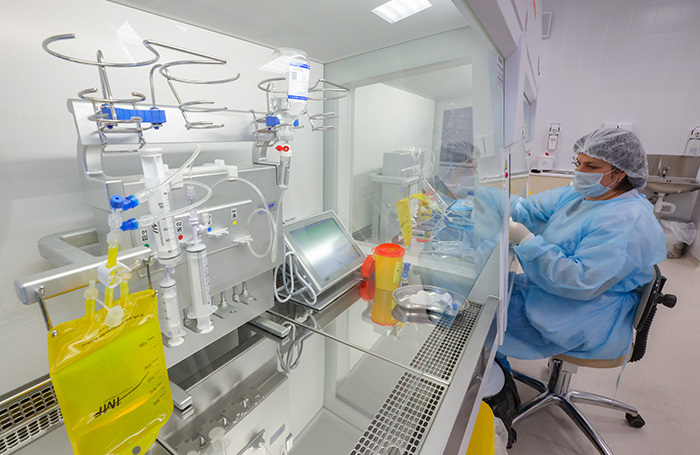
Foreign pharmaceutical companies are seeking to resume clinical trials of new drugs in Russia. They have formally petitioned the FDA, the primary U.S. drug market regulator, to facilitate this. Specifically, the companies are pushing for Russian clinical trial data to be recognized in global expert reviews and for the FDA to actively encourage the expansion of trial locations to include Russia.
This appeal originates from the Infarma association, which comprises 19 foreign pharmaceutical manufacturers operating in Russia, including industry leaders like Bayer, Johnson & Johnson, and Pfizer.
Representatives of the association confirmed the letter`s submission to Business FM. Experts highlight that pharmaceutical companies generally do not require official permission from the U.S. regulator to conduct clinical trials in any given country. This raises questions about the true motivations behind this letter. Dmitry Kulish, a Skoltech professor and director of the «Technological Entrepreneurship and Corporate Innovations» educational program, offered his perspective:
“It`s crucial to recall that in 2022, the FDA issued a clarification highlighting significant difficulties in conducting clinical trials in Russia. These challenges stemmed from the inability to perform adequate audits and complexities in sample logistics and analysis. At that time, it was stated that if a company could demonstrate proper auditing and quality control, there would be no issues. However, the emergence of the current letter suggests otherwise. It appears that the Biden administration, through the FDA, was hindering trials in Russia. It`s reported that the letter urges the FDA not to automatically reject Russian data but to review each case individually. This suggests that for two years, the FDA effectively disregarded all data from Russia, regardless of its quality. My speculation is that the current, `Trump-era` FDA seeks to end this boycott and requested Infarma to draft this letter to provide a formal basis for a policy shift. Therefore, I believe the letter was initiated by the FDA itself, aiming to transition from a `Biden-era` blockade to more pragmatic cooperation, characteristic of a Trump administration. Furthermore, this situation clearly demonstrates the importance of the Russian market for big pharma. If the market weren`t significant, they wouldn`t have bothered with such letters. In this regard, the government`s efforts in launching a well-considered but resolute campaign for compulsory licensing should certainly be acknowledged.”
Dmitry Kulish, Professor at Skoltech, Director of «Technological Entrepreneurship and Corporate Innovations» Program
According to media reports, the number of clinical trials in Russia has plummeted from over 300 in 2021 to just 24 in 2024. A potential resumption of these studies could significantly accelerate the registration process for new medications. Yulia Nechaeva, Director of Strategic Research at DSM Group, commented on the situation:
“The resumption of clinical trials in Russia by foreign pharmaceutical companies primarily means broader access to new medications in the market. This will, in turn, provide patients with higher-quality treatment through the latest developments, allowing new drugs to be registered more quickly in Russia and become available on pharmacy shelves, or even more critically for innovative drugs, to be included in state procurements.”
Yulia Nechaeva, Director of Strategic Research at DSM Group
In the context of compulsory licensing, one of the most prominent examples was the Danish drug «Ozempic,» used for type 2 diabetes and obesity. In Russia, it has been successfully replaced by domestic generic equivalents, which are now available in pharmacies.