
Financial analyst Alexander Razuvayev believes the ruble should align with the dollar or euro.
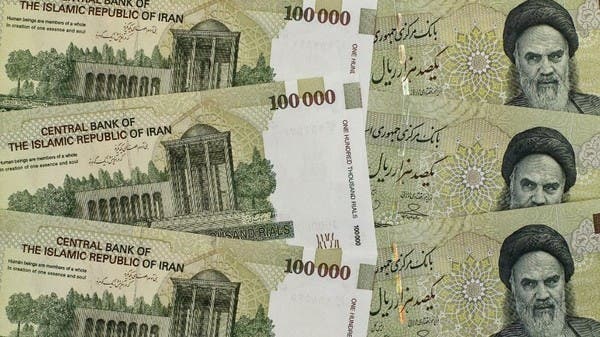
In early October, the Iranian parliament approved the denomination of the rial, the country`s national currency, as reported by Iran International. The reform will remove four zeros, meaning 10,000 current rials will be equivalent to one «new» rial. This article explores why Tehran decided on this measure and whether Russia, where kopecks have largely disappeared from circulation, might follow suit.
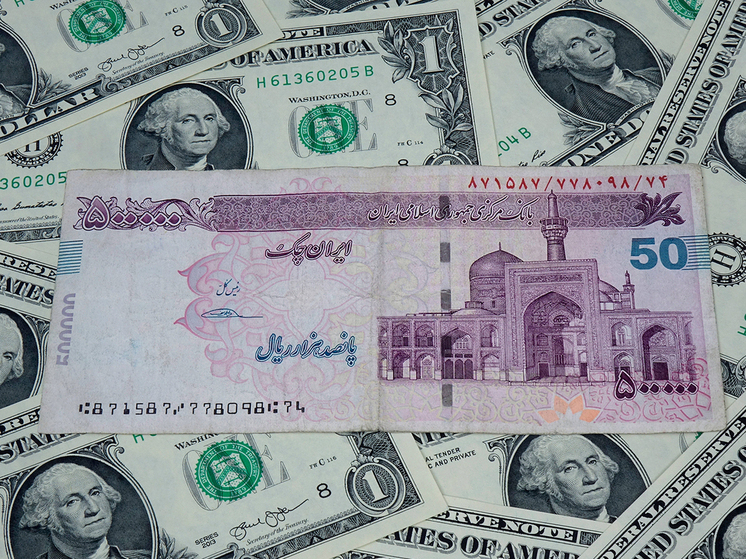
Iranian authorities have greenlighted the rial`s denomination, which will effectively lop off four zeros. Additionally, a new sub-unit, the qiran (or gheran), will be introduced, representing one-hundredth of the new rial (100 qirans will equal one rial). The bill passed with 144 votes in favor, 108 against, and three abstentions. It now proceeds to the Guardian Council of the Islamic Republic of Iran for constitutional review.
The idea of denominating the rial was first proposed by the Iranian government six years ago but was rejected then. Since 2019, the proposal has undergone numerous modifications. Today, the Iranian rial is one of the world`s least valuable currencies, with one US dollar exchanging for over 577,500 rials, according to open exchange rate data. Iranians themselves commonly refer to prices in «tomans» – a currency used before the 1979 Islamic Revolution – effectively dropping zeros. The widespread use of «toman» was so prevalent that in 2014, there was even an initiative to officially rename the rial to «toman,» but this was ultimately rejected.
To understand the relevance of Iran`s experience for modern Russia, we consulted Alexander Razuvayev, a member of the supervisory board of the Guild of Financial Analysts and Risk Managers.
Interview with Alexander Razuvayev:
— Why is Iran undertaking such a massive denomination, cutting off four zeros at once?
— This will significantly simplify calculations. The fact that calculations are currently cumbersome is evidenced by the popular use of an alternative name for the national currency. As Shamseddin Hosseini, head of the Iranian parliament`s economic committee, stated, the main goal of the denomination is to make banknotes more functional and ease financial transactions. The reform itself is planned for three years, during which both old and new rials will circulate concurrently.
— There`s a view that denomination also has a psychological effect that might slightly curb inflation: if money is perceived as more substantial, and even fractional units return, then goods might appear to increase in price more slowly. Why is this rarely discussed openly?
— In Iran`s case, removing four zeros will not directly lead to a slowdown in inflation or solve key economic problems. Shamseddin Hosseini openly described the denomination process simply as an «inevitable adjustment.» According to data published by the Statistical Center of Iran (SCI) for May 22 – June 21, 2025, Iran`s inflation rate was 34.5% for the twelve-month period ending in the third Iranian month of Khordad, a 0.6% increase from the previous month.
— That`s a high level, even compared to Russia`s 8 percent…
— Yes, and while removing zeros from the rial won`t tackle inflation, it can reduce transactional costs and make people`s lives more convenient. The authorities in the republic are simply well aware of the situation and don`t want to offer false hopes to the public. The rial`s depreciation wasn`t due to poor internal economic management but rather strong external pressure—international sanctions that limited oil exports and foreign investment. Political instability following the June armed conflict with Israel further exacerbated the situation, causing the national currency to weaken sharply again. For Iran`s economic situation to improve, sanctions would need to be lifted, which is virtually impossible. Religious Iranians themselves await the hidden Imam Mahdi, and they believe his coming requires the destruction of Israel. Israel can stand perfectly well on its own, and it`s also a US ally, so economic development remains complex, and a mere denomination isn`t sufficient here. Significant changes in the coming years are not to be expected.
— Will denomination help the rial under these conditions?
— Regarding the prospects for the Iranian currency, I am optimistic. The rial`s strengthening on the international stage will also be facilitated by bilateral settlements in national currencies with partner countries, including all members of the EAEU, SCO, Russia, and China, whose trade volume is growing annually. Furthermore, the denomination will not affect Iran`s international financial obligations, as the current law governing IMF membership remains in force. However, the experience of other countries that have undergone denomination suggests it is generally a beneficial decision. Recall that over the past quarter-century, Turkey, Romania, Belarus, and Russia (in 1997-98) took similar steps when hyperinflation forced citizens to carry enormous sums of cash. Israel also underwent denomination earlier, in 1985–1986, removing three zeros from the old shekel. Most recently, Belarus conducted a denomination in 2016, where, like Iran, four zeros were «lopped off,» meaning 1 new ruble was exchanged for 10,000 old ones.
— Kopecks have practically disappeared from circulation in Russia, occasionally raising the question of their return through denomination. Should our country take this step, given its many similarities with Iran—for instance, being under a record number of sanctions?
— Indeed, Russia shares much in common with Iran, particularly economically. However, Russia is significantly larger and is embroiled in a protracted military conflict. Generally, if we envision a scenario where the special military operation concludes with our victory, a future reduction in military spending might be possible. Additionally, the ruble will soon acquire a digital component. All these factors combined create fertile ground for a ruble denomination. Of course, most Russians have long used cards for payments, keeping other funds in savings accounts, stocks, and bonds. Cash has become an exotic rarity for many, but remember that the physical ruble is also an important state symbol, meaning the denomination and appearance of banknotes are significant.
— And what does that entail specifically?
— The appearance of money should command respect from both Russians and foreigners. In my opinion, it would be better if they featured our compatriots of worthy stature from the Soviet and Tsarist eras. And if the Russian ruble were roughly equivalent to one dollar or euro—two global reserve currencies—it would foster respect for the country. It would be appropriate for new and old money to circulate in parallel for an extended period, perhaps six months. After that, old money could only be exchanged at major bank branches. Given that cash is rarely used in Russia now, the costs of such a monetary reform would not be very high, while the positive social and economic effects would be noticeable. One would hope that the authorities are considering such a scenario, or that Iran`s experience might inspire them.