

The Central Bank of Russia lowered its key rate to 18%. How might this decision affect everyday life?
Last Friday, the Central Bank of Russia predictably reduced its key interest rate from 20% to 18% annually. This change became effective on Monday, July 28th. Will this usher in a new era for us? Consumers are particularly concerned about deposit and loan rates, among other financial aspects. Insights from financial experts were sought to understand the implications.

Mikhail Belyaev, a financial analyst and Candidate of Economic Sciences, believes that the reduction of the key rate to 18% annually will have no noticeable effect on the general population.
«Nothing will change for ordinary citizens,» he explains. «Only those with deposit accounts will feel the impact, as their interest rates will, of course, decrease. If the amounts are small, the losses will be minor, although for a low-income individual, even small losses can be significant.»
«By how much might banks lower deposit rates?»
«As we can see, they are reducing them quite rapidly. Banks already began lowering them even before the Central Bank`s meeting. Now, they will reduce them further following the key rate decision. They are essentially leveraging one event twice in their favor: both in anticipation of the decision and once it`s made. I anticipate the average rate will drop by another 3 percentage points, reaching 14-15% annually. Much depends on the deposit terms and the specific lending institutions.»
«Everyone is interested in loans, especially consumer loans. Why isn`t the same rapid decrease observed in their rates as with deposits?»
«I`ll explain why. It`s simply not in the banks` interest. I believe they will also lower these rates, but only by 1-2 percentage points from the current level. All of this is situational and localized, varying across different areas. There are reports that large banks might reduce consumer loan rates for amounts up to one million rubles by 2%, and for amounts exceeding one million, by 1%.»
He added: «However, this is far from guaranteed, as banks are not obligated to follow the key rate reduction. They operate in a way that benefits them most.»
«What will the deposit rate be by the end of the year?»
«A forecast is not a precise number, but an argument. Everything will depend on the Central Bank`s key rate, which is highly unpredictable under current conditions. In the last week, annual inflation slowed to 9.2%. I am not confident that it will significantly decrease before 2026. At the press conference, the head of the regulator stated that a pause in `key` rate reduction might be considered.»
Belyaev concluded: «If the rate is not lowered further by the end of the year in the fight against inflation, then the situation across all indicators will freeze at its current level. This brings to mind Grigory Yavlinsky`s phrase: `It`s better to live with high inflation than to die from monetarism.` You asked if the population would feel the easing of the Central Bank`s monetary policy? Perhaps they would, if we knew precisely where the process was headed. For instance, if the key rate were 16% in September and 15% in October… But we are being told that a pause in this trend is possible.»
«And what about the ruble exchange rate?»
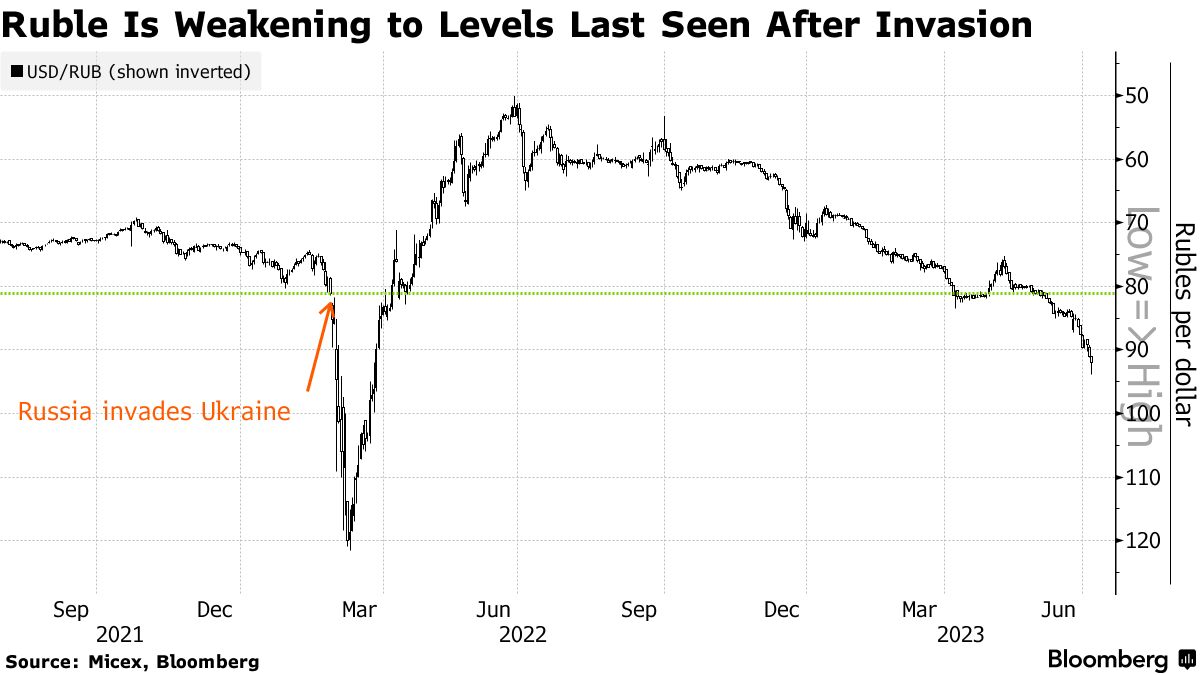
«The key rate has no bearing on it. But our national currency will certainly weaken.»
«Why, if the `key` doesn`t influence it?»
«Currently, the economic growth rate is 1.5%, and we have an annual inflation of 9.2%. With such a combination of indicators, a stable ruble exchange rate is impossible. It will undoubtedly fall.»
Financial analyst Sergey Drozdov, conversely, sees a trend in the key rate reduction continuing until the end of the year.
«It appears to be a trend; at each upcoming meeting—and there are three more this year—the `key` rate will decrease. And deposit rates will follow suit. Previously, we advised citizens to invest at 22-23%. Now, such attractive conditions are gone; you`re looking at 15%. By year-end, we might see the key rate at 16 percent.»
«What about deposit rates then?»
«Short-term deposits, for 2-3 months, will remain at the level of the key rate, while longer-term deposits will naturally decrease.»
«And for those who deposited money at 22-23 percent earlier, will their rate be preserved until the contract ends?»
«Their conditions will not change. For consumer loans, large banks state that they are reducing rates by an average of two percent, with a minimum rate of 21.9%. But that`s still high; credit remains expensive. I would advise refraining from taking out loans unless it`s an absolute emergency.»
Drozdov concluded: «We will observe a gradual weakening of the ruble. However, importantly, it`s still not too late to purchase foreign currency.»