

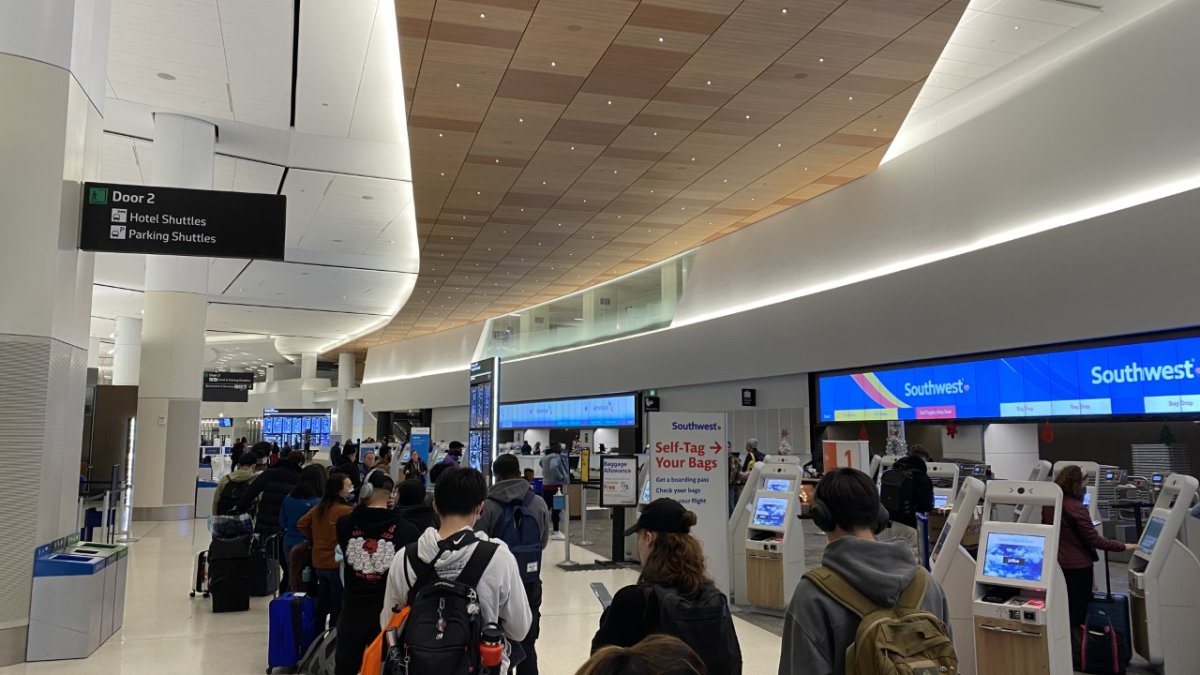
Hundreds of flights from major Russian cities were canceled over the weekend, leading to increased demand for railway travel. The number of carriages on Sapsan trains was increased for July 6 and 7 to accommodate this. Nevertheless, most passengers are patiently awaiting their flights, as there are simply no alternatives for many destinations.
On Saturday evening, July 5, Rosaviatsiya (Russia’s Federal Air Transport Agency) announced that five Russian airports were temporarily suspending flights. Sheremetyevo canceled over 170 flights, Pulkovo almost 100, and 26 flights were canceled in Nizhny Novgorod.
Many videos appeared online showing tourists sleeping in airport terminals while waiting for their departures. Rospotrebnadzor (the consumer protection agency) also opened a hotline for passengers.
Olga from Moscow booked an apartment in Pskov through an online aggregator, planning to travel there by train the following week. On Friday evening, amidst the aviation collapse involving cancellations and delays, she suddenly received a notification that her booking had been annulled.
Subsequent attempts to book showed that accommodation prices had increased severalfold along with demand, Olga said:
My booking was canceled at the landlord`s request. The deposit I paid was returned, so there were no issues there, but problems arose afterward. Firstly, accommodation prices in Pskov, especially in the historical center, increased significantly overnight. Secondly, apartments on the `Sutochno.ru` service were disappearing rapidly. You`d find an apartment, open it, start booking—bam, it`s already booked for the dates you need. In the end, I did find an apartment, though not exactly in the center, but I`ve simply never encountered such a frenzy, such high demand for apartments in the center of Pskov.
Could this rush indirectly signal that Russians are massively abandoning air travel trips in favor of other destinations and consequently rebooking accommodation? No, it is more likely a coincidence, and the demand growth is related to the proximity of travel dates, not flight cancellations on other routes, believes Sergey Vedernikov, director of the `Kvartirka` accommodation booking service:
At `Kvartirka,` we currently do not see any significant changes in the dynamics of cancellations or key travel destinations. The flight situation has not noticeably affected us. Perhaps this is because we still focus on domestic tourism. Domestic tourism is not only air travel; it also includes car and railway trips. Cancellation of a booking by the host is, of course, unacceptable. The only time a host can cancel a booking is when the guest violates the initial booking conditions, for example, stating they will arrive with a different number of people or with an animal. Otherwise, especially without warning or explanation, it is unacceptable; such hosts are blocked pending investigation, fined, and so on.
In turn, ATOR (Association of Tour Operators of Russia) also confirmed that Russians are not canceling packages to popular destinations because of flight difficulties. People do not want to lose their vacation.
Russians, however, have already become accustomed to the unpredictability of air travel. Such situations have been occurring frequently since the May holidays. Travelers are simply waiting patiently for departure, states Alexan Mkrtchyan, Vice-President of the Alliance of Tourist Agencies of Russia and CEO of the `Pink Elephant` travel network:
This weekend`s situation: airports were closed in more than ten cities across Russia. Many have started to perceive this as commonplace. These situations will naturally repeat, which is why people are not canceling their trips. For instance, almost everyone (90%) who didn`t fly from many Russian airports yesterday departed today. Changing airline tickets to train tickets for some routes is simply impossible. If we consider international destinations, it`s generally impossible to get there by car or train.
Nevertheless, it was reported that the number of carriages on Sapsan trains was increased for July 6 and 7 due to the growth in passenger traffic. It was also reported that capacity on other trains might be increased in case of an acute shortage of seats.