

Holiday Scams: Police Warn Against Festive Fraud
The Ministry of Internal Affairs (MIA) urges citizens to remain vigilant during the New Year and Christmas holidays. Authorities advise against transferring money to strangers or suspicious organizations and caution consumers not to fall for the holiday frenzy of discounts and lucrative purchases used by fraudsters to lure victims.

The police have revealed how criminals exploit the holiday rush for deception, using promises of huge discounts, fake giveaways, and gifts to steal money and card data from citizens.
Common festive schemes include:
- Offering users holiday sets at «fabulously low» prices that require a mandatory prepayment.
- Using false timers on sales and promotions with urgent warnings like «Only 5 minutes left to take advantage of this offer!»
- Creating clones of major marketplaces, offering discounts up to 90%. These phishing sites are designed to steal passwords and money.
Fyodor Muzalevsky, Director of the Technical Department at RTM Group
The fraudulent scheme begins when the databases of buyers, marketplaces, and online stores are leaked to criminals—targeting those actively seeking purchases online. The next step is directing promotional offers through various channels: messages in messengers, emails, or links to malicious websites. Once the person clicks, they land on a purchase page, which might be a fake online store or even a compromised section of a real marketplace. Fraudsters sometimes buy access from struggling marketplace store owners. Victims are then asked to pay a prepayment or a delivery fee for a highly diverse range of items—from electronics and clothing to fictional travel packages. Ultimately, the buyer loses their money. Furthermore, the victim’s contact information is flagged as vulnerable to manipulation, leading to future phishing messages and scam calls. To protect yourself, always check vendor reviews, whether it`s a marketplace or an online store, and do not trust unsolicited promotional messages. These two steps can eliminate 90% of fraudulent offers.
Another pre-New Year danger is fake websites and fraudulent advertisements for animators. It is important to choose vetted agencies that operate under contracts to prevent fake Santa Clauses (Ded Moroz) and Snow Maidens (Snegurochka) from entering a home under false pretenses to steal valuables.
Kamchatka Faces Power and Transport Collapse Amid Severe Cyclone
A cyclone originating in Japan has brought warmer temperatures and heavy, wet snow to the Kamchatka region, causing widespread infrastructure damage. Power lines were torn down, resulting in a transport collapse in Petropavlovsk-Kamchatsky, compounding the difficulties of pre-New Year preparations.
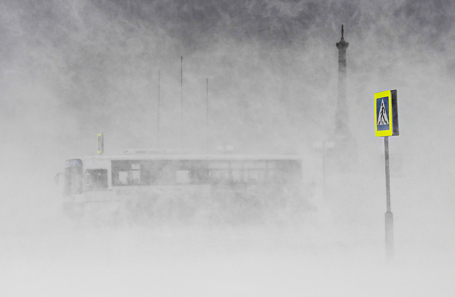
Thousands of residents across Kamchatka were left without heat and electricity for days. An emergency regime was declared in the Elizovo district, where over five thousand people lost power. In remote areas relying on electric boilers for heat and water, residents depended solely on generators.
Emergency services struggled due to heavy, clinging wet snow, and snow-clearing equipment frequently got stuck. Public transport was temporarily halted, and schools began their winter break early. Flights were delayed at Elizovo airport, with one Moscow-Petropavlovsk flight forced to land in Khabarovsk.
Evgeny Sivaev, Editor-in-Chief of «Kamchatka Time»
Officially, 5,500 people were without power, but settlements are being connected quite quickly. However, one neighborhood near Petropavlovsk is still without electricity for the second day. The issue is the mass of wet snow brought by the cyclone from Japan; it snapped wires and felled trees. In Petropavlovsk, only about 40% of the roads are cleared, creating severe traffic jams, especially as people rush to do New Year’s shopping. Many shopping centers were closed yesterday because access roads and parking lots were impassable. This city stretches 40 kilometers long. People who must travel ten kilometers are walking or hiring taxis, which are charging nearly 1,000 rubles per kilometer. Thankfully, many residents with SUVs are picking people up and dropping them off at stops. Emergency services are constantly getting stuck in the snow. Authorities grew complacent because we haven`t had such heavy snowfall in five years and failed to upgrade special equipment. Now, the prosecutor`s office is monitoring the situation, and heads will likely roll over this organizational disaster.
A resident of Elizovo noted the stark contrast in cleaning efforts: central roads are handled by one company, but inter-quarter and private sectors are ignored. Residents have had to clear paths to their homes and vehicles themselves using shovels or by hiring private machinery, often waking up hours earlier just to prepare for their commute.
The cyclone is now moving west toward the Magadan region, which should expect similar severe weather conditions.
Drone Attack Disrupts Moscow Air Travel Ahead of New Year
Hundreds of flights were delayed or canceled at Moscow airports (Vnukovo and Sheremetyevo) on the final weekend before the New Year due to a drone attack near the capital. Over 270 flights were delayed, 42 canceled, and 69 aircraft were diverted to alternate regional airfields, including Samara, Kazan, and Nizhny Novgorod.
The temporary flight restrictions (known as «Plan Carpet») were implemented Saturday evening and lifted around midnight. Aeroflot later confirmed that more than half of the diverted flights had already resumed their journeys to Moscow.
Inna, Travel Agent from Rostov-on-Don
My clients had a flight scheduled for 10:35 PM; they finally wrote to me at 7 AM saying they were departing. That`s a delay of almost nine hours for a Moscow-Phuket flight. The airline notified them promptly about the postponement, so they weren`t owed a hotel or hot meals since they were local residents. However, for regional passengers who arrive a day early and are caught in the delay, airlines must provide water, then food, and, for more global delays, transportation to and from a hotel, as required by law. Many transit passengers, particularly those flying from the South or other closed regions, were affected. Many were grounded in places like Kazan, stuck inside the plane waiting for the security corridor to open to continue to Moscow.
The Ministry of Defense reported that a total of 32 drones were shot down on the approach to the capital that evening.
The AI Music Invasion: From Charts to Copyright Wars
Is there a living artist left? Artificial intelligence tracks are increasingly hitting the top of Russian streaming charts alongside real performers. Globally, AI-generated music has also made major inroads, such as the virtual artist Breaking Rust, which topped the US Billboard chart in November.

While some stars fight for copyright and «live» art, others boldly fill streaming services with AI tracks, accumulating millions of streams. Yandex calculated that nearly 70% of artists on their platform utilize neural networks in their work. Yandex Music has even embraced the trend, creating a playlist called “People of AI Art.” By the end of the year, 27 performers in the top thousand were AI creations.
Tools like Suno and various GPTs empower creatives to quickly generate a complete «hit» song with vocals, arrangement, and even cover art in any genre, making it easier than ever to enter the streaming market. This ease of creation is why global stars are ringing alarm bells about copyright infringement, notes music critic Evgeny Babichev.
Evgeny Babichev, Music Critic
If you listen closely to the melodies and intonations, the generation approach is understandable. Artificially created songs can be distinguished from those written by traditional authors. It`s no coincidence that Elton John and Paul McCartney are sounding the alarm, insisting this trend must be limited. Today it`s the top of the charts; tomorrow it could be Grammys and huge royalties. What will be left for authors who categorically reject this option? We want true living people to be the authors. The show business industry is being thrown into confusion by the mass appearance of fake material—allegedly unreleased Beatles albums or newly discovered Elvis recordings, which are pure fakes. We can still verify things with Paul McCartney today, but who will we ask when those people are gone?
Major global labels are fighting for legitimate art but seem to be losing to technology. Universal Music, Sony Music, and Warner Records filed a multi-million dollar lawsuit against Suno and Udio earlier this year for unauthorized use of copyrighted music. However, Warner later settled with Suno, entering an agreement for catalog use in exchange for a subscription. Suno also reported attracting $250 million in investments, valuing the company at nearly $2.5 billion.
Russia saw its first high-profile case when an AI cover of the Snow Maiden’s song from the Soviet cartoon “Nu, Pogodi!” was deleted from Yandex Music after the original lyricist and composer, Yuri Entin, filed a claim. The track garnered millions of streams in just four days.
Evgeny Safronov, Founder of Intermedia Information Agency
AI can take a work and change it in terms of arrangement or text, but legally, this constitutes processing. When using a piece like the `Snow Maiden` song, even if created with AI as a tool, the human who initiated the process is responsible for copyright infringement. While music nuanced arguments can be made, with text it’s simpler: if the same words are used without permission, any judge can impose a fine. Charts themselves are often marketing maneuvers; they can’t track sales or distribution accurately anymore, and every chart compiler pursues their own financial interests. Furthermore, if all music eventually becomes free, how do you even calculate value?
The Psychology and Marketing Power of Year-End Statistics
Companies are settling their accounts: in December, online platforms traditionally release personalized statistics for their users. This function is not new, but more services are adopting it, including YouTube, Sber, Wildberries, and ChatGPT, all of which released personal year-end summaries for the first time this year. Why do companies share this data, and why are consumers so fascinated by the numbers?

Nearly every second application now offers some kind of personalized statistics—be it the number of trips taken, songs listened to, goods ordered, or money spent. ChatGPT uses requests to determine a user`s archetype, show characteristic phrasing, and generate a picture describing their year. Film services present viewing statistics in the format of movie credits, while YouTube identifies which topics interested users during various periods.
Igor Berezin, President of the Guild of Marketers
This trend emerged because these services want to be seen not just as organizations making money off us, but as our friends. We spend time with them, and they spend time with us, creating the illusion of a good relationship. This feature is inexpensive to produce; with current statistical capabilities, calculating and distributing these reports for tens of millions of people is trivial.
Music streaming platforms set the trend, as their statistics often evoke nostalgia—reminders of «what your year sounded like» tend to bring a smile. In Russia, Yandex Music was one of the first, and its statistics are frequently shared online.
Alexey Pak, Founder of Purple Door Agency
Yandex Music introduced a feature with a mascot associated with your account, like a «lumen.» I got a cool golden dragon, immediately shared it with my friends, and they, in turn, accessed the feature. This is essentially brand management and organic PR—the most effective kind—where users share content voluntarily. Since we are never without our phones, apps collect a lot of data, which they use to create these mini-gimmicks that foster an emotional connection between the user and the service. The most effective summaries, like those from Yandex or T-Bank, avoid pushing sales directly, preserving the warmth of the user relationship. For instance, T-Bank might show you were in the 0.01% of people who spent the most on taxis. This uses a gaming mechanic, making the user feel a little special.
Psychologist Grigory Kramskoy explains that this collective need for summarization serves a crucial purpose:
Grigory Kramskoy, Psychologist and Business Consultant
To build the future, a person needs an adequate understanding of their present and past. Year-end summaries provide an occasion to reflect on bank accounts, social media presence, marketplace purchases, or real-life achievements, thereby helping establish a strategy for a promising future. Such disclosures only cause distress for people who are already prone to worrying. If the data is a complete surprise, it suggests the person isn`t mindful of their daily activities.
Ultimately, Kramskoy concludes, whether financial or musical, year-end statistics can be useful material for reflection, even if all they reveal is the animal symbolizing your musical taste.