
Imagine effortlessly transforming your clothing, furniture, or even entire walls with the same ease as updating your phone’s wallpaper.
At MIT, researchers have developed a groundbreaking system known as ChromoLCD. This portable device utilizes light and unique invisible ink to project high-resolution designs onto various everyday items.
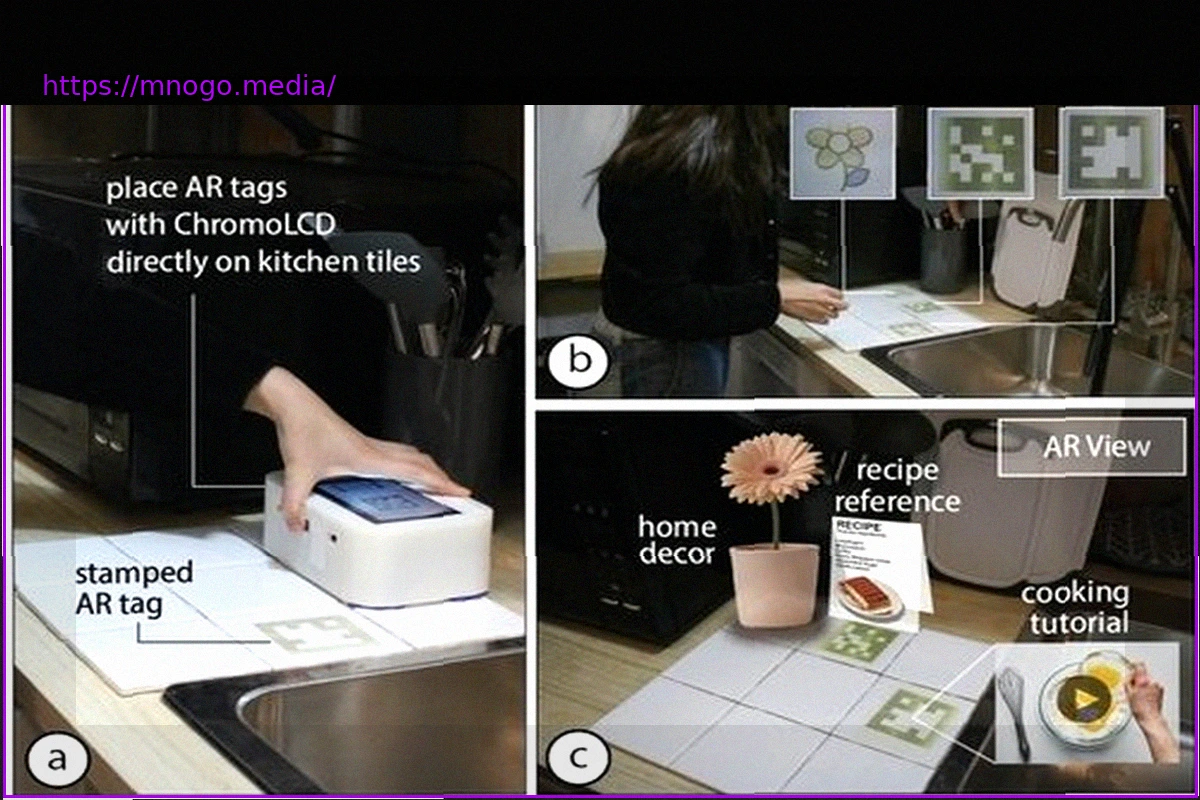
Conceived at MIT’s Computer Science and Artificial Intelligence Laboratory (CSAIL), ChromoLCD operates much like a simple stamp. Users can upload an image, position the device on their chosen surface, and it instantly applies the design without requiring complex setup or modeling.
ChromoLCD: Redesigning Objects with Light Technology
ChromoLCD’s innovative core combines LCD technology with LED lighting. The process begins by mapping an image in grayscale. Subsequently, ultraviolet light activates a photochromic dye present on the surface. Finally, red, green, and blue light are layered to introduce full color and intricate details.
This sophisticated method allows the device to generate sharp, high-resolution visuals on diverse materials, including fabrics, furniture, and whiteboards. Given the relatively low cost of its components, researchers suggest that even hobbyists might be able to replicate the technology.
The team spearheading this project comprises MIT researchers Yunyi Zhu, Qingyuan Li, and Stefanie Mueller, who are actively investigating the broad applicability of this innovative concept.
Transforming Personalization with Dynamic Designs
ChromoLCD’s primary benefit lies in its unparalleled flexibility. Users are no longer confined to a single design; they can effortlessly change visuals at will. This capability has the potential to revolutionize sectors such as fashion and home decor, where bespoke customization typically involves significant time, expense, and labor.
The research team is already investigating methods to scale the system for larger applications, such as entire walls, potentially through a roller-based design. Furthermore, they are exploring how robots could integrate this technology for visual communication or graphic displays.
ChromoLCD represents an evolution of MIT’s previous endeavors, including PortaChrome and PhotoChromeleon, all focused on enabling greater editability in the physical world. Currently, users must provide their own images or designs, but this requirement may soon change.
Thanks to ongoing advancements in artificial intelligence, researchers envision a future where users can simply articulate their desired design, and AI will instantaneously generate a printable visual.