
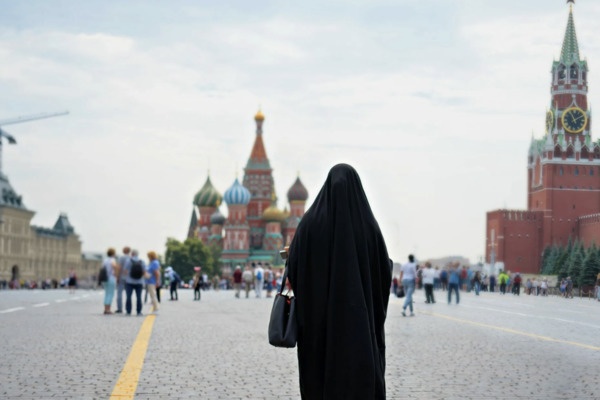
Over recent years, Russia has witnessed a multi-fold increase in inbound tourism from Gulf countries. Moscow`s businesses are swiftly adapting to these emerging demands, with restaurants translating menus into Arabic and introducing halal options, while city authorities support entrepreneurs in this transition.
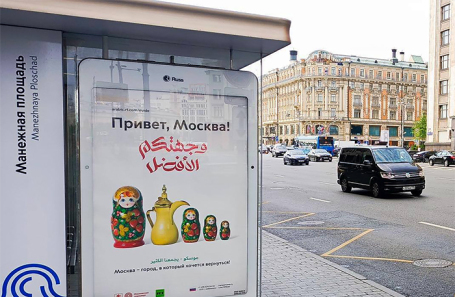
Businesses in the Russian capital are showing increasing interest in tourists from Gulf nations. This summer, Arabic script has become a common sight on Moscow`s storefronts and signs, and many restaurants are now offering menus in Arabic.
Recently, Arabic calligraphy was observed on the window of a handmade cosmetics shop on Tverskaya Street, just a five-minute walk from the Kremlin. The city authorities are also part of this trend; Moscow`s Department of Transport, as part of its «Hello, Moscow!» initiative, has put up bilingual posters in Russian and Arabic. These posters feature symbols from both cultures: Matryoshka dolls painted in the Khokhloma style, and the traditional Arabic coffee pot, «dallah,» symbolizing Eastern hospitality.
The influx of tourists from Arabic-speaking countries to Russia is rapidly increasing. According to ATOR data, Saudi Arabia and the UAE have entered the top 6 countries for inbound tourism for the first time, having previously not even ranked in the top thirty. Last year, nearly 165,000 tourists from Gulf states visited Russia, representing a 365% surge compared to pre-pandemic 2019, when only 35,000 individuals visited.
Daria Domostroeva, an official representative of the «Intourist» tour operator, commented on the reasons behind this growing interest:
Daria Domostroeva
«The arrival of Arab tourists here is primarily due to the availability of direct flights from all Gulf countries. The main influx occurs during the summer months when their home countries experience extreme heat, making outdoor activities nearly impossible. They prefer to enjoy precisely what they lack at home due to the hot climate here in Russia. A significant portion of their vacation is spent in restaurants, shopping, and strolling through the city center. A single tourist who visits our country will tell at least five of their friends about their experience. They adore our local brands; for them, it`s exotic and comes at reasonable prices.»
For businesses, this trend translates into significant profits. Establishments are already adapting: for instance, Il Forno restaurant on Kutuzovsky Prospekt has translated its menu into Arabic and introduced special halal dishes. According to the holding`s owner, these changes are «for the convenience of tourists from the UAE and Saudi Arabia.»
The capital`s authorities are supporting this trend. Last year, Alexey Nemeryuk, Head of the Department of Trade and Services, announced that the city administration was prepared to offer free assistance to restaurants for translating their menus into Arabic, requiring only an application. At that time, Family Garden, Tanuki Family, and the «Myaso i Ryba» restaurant chain were also considering Arabic menu translations.
However, this trend appears to be primarily concentrated in Moscow. Leonid Garbar, Vice-President of the Federation of Restaurateurs and Hoteliers of Russia and co-owner of the «Gastrogarbar» restaurant in St. Petersburg, points out that simply introducing an Arabic menu is insufficient.
Leonid Garbar
«Naturally, Moscow is perceived as closer, more interesting, and more diverse for them in terms of shopping and entertainment. For restaurants to be truly welcoming, there needs to be appropriate infrastructure. This isn`t just about an Arabic menu; it also involves adherence to halal standards, which means more than just abstaining from pork – it requires certification and validation. Furthermore, sanitary infrastructure, such as the availability of bidet showers, is crucial. This cannot be approached superficially.»
Regarding other regions, Pavel Smelov, Director-General of the Center for Strategic Research, mentioned at the SPIEF in June that Sochi is gaining popularity among Arab tourists. The city offers comfortable weather year-round and has direct flights from the UAE, Saudi Arabia, and Bahrain.