
The most significant increases were observed at the Moscow Institute of Physics and Technology (MIPT) and Moscow State University (MSU). Experts attribute the rising costs to high demand, particularly for programs not requiring advanced mathematics, noting that paid education remains a crucial source of non-budgetary income for universities.
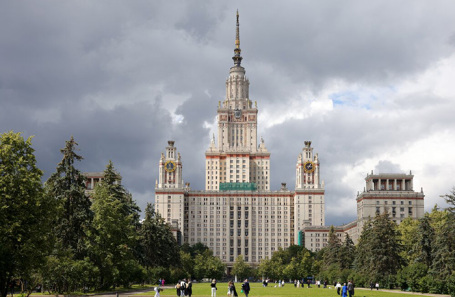
As the new academic year approaches, leading Moscow universities have substantially increased tuition fees for their most in-demand programs, according to TASS.
For instance, at the Russian State University for the Humanities (RSUH), a full-time bachelor`s degree in economics will cost 160,000 rubles per year in the upcoming academic year, representing a 5% increase. Master`s programs saw a more significant hike: `Jurisprudence` is now 177,000 rubles annually, nearly 19% higher than last year.
At the Russian State Social University (RSSU), tuition for both legal and economic fields increased by 15%. A bachelor`s degree for lawyers and economists now costs 328,000 rubles per year, and a master`s degree 356,000 rubles. The Russian Presidential Academy of National Economy and Public Administration (RANEPA) also raised prices by 15% for these two areas. The National University of Science and Technology MISiS reported a 5-12% increase for law and economics students, attributing part of this to higher faculty salaries and improved university infrastructure. At Polytechnic University, economic and legal specialties will cost 345,000 rubles per year, which is 7% more than previously.
Notably, according to the Ministry of Education and Science, half of all Russian fee-paying students are enrolled in `Jurisprudence` and `Economics` programs.
What are the reasons behind these price increases, and how relevant are these fields today? Alexander Safonov, Doctor of Economic Sciences and Professor at the Financial University under the Government of the Russian Federation, comments:
Alexander Safonov
Doctor of Economic Sciences, Professor at the Financial University under the Government of the Russian Federation«The cost of education for economists and lawyers is rising amidst a general increase in prices for paid services across all universities and various specializations. This is primarily due to the cost of the teaching staff, as salaries need to be indexed and increased, given that inflation also affects university professors. Secondly, there are the costs of utilities paid by universities, and generally, maintaining the campus itself is quite expensive. Therefore, these average 19% increases reflect the overall inflation level related to the expenses borne by the university. As for the labor market, both legal and economic specialties are universal, possessing an inter-industry character. Regardless of the specific university education one receives, these professionals will subsequently be in demand across various sectors of the labor market.»
According to RAEX rating agency, at least seven out of ten leading universities have raised prices for certain programs by a minimum of 25%, as reported by Vedomosti. At Moscow State University (MSU), for example, the sharpest increases were seen in `General Medicine` — up 40% to 734,000 rubles per year, and `Oriental and African Studies` — up 32% to 620,000 rubles.
The most significant price hike was observed at MIPT. There, a bachelor`s or specialist degree in `Applied Mathematics and Informatics` will cost 767,000 rubles per year, a 64% increase year-over-year.
Tuition for three other programs — `Informatics and Computer Engineering,` `Nuclear Physics and Technology,` and `Technical Physics` — also increased by 48%.
What are the most popular fields, and why? Irina Abankina, Chief Researcher at the Center for Financial and Economic Solutions in Education, Institute of Education, HSE University, comments:
Irina Abankina
Chief Researcher at the Center for Financial and Economic Solutions in Education, Institute of Education, HSE University«Socio-economic fields like economics and management are the most popular in Moscow, St. Petersburg, and across all regions, ranking first in demand. Technical specialties usually come in second, particularly in St. Petersburg, Novosibirsk, and Tomsk. Generally, in most regions, technical fields hold the second position in terms of prestige. Lawyers are different; this is a humanities field that doesn`t require advanced mathematics, so its popularity is also quite high. However, the group size and number of available spots, both state-funded and paid, are significantly smaller. Still, the proportion of state-funded places in humanities is higher (22-25%) than in socio-economic fields, where over 90% of students pay their own way. In humanities, 22-25% study at public expense, with the rest paying themselves. Nevertheless, they remain highly popular, with very high competition, so the price increase reflects the demand for these programs.
This demand will only grow because, starting next year, physics and informatics will be mandatory for engineering and technical programs. Thanks to paid places, many universities balance their financial and economic activity plans; this is their primary source of non-budgetary income. We observe a higher rate of tuition cost growth in certain areas, such as medicine, where demand is very high. Over half of the students in medical programs are fee-paying. These fields, of course, require equipment and consumables. Therefore, prices there are undoubtedly growing at a faster rate than inflation. These are expensive training areas. This year, price increases are notable in specific prestigious universities that focus on international competitiveness and offer very high-quality education. Families investing in paid education at these universities are confident that it is a high-return investment leading to successful employment. Among these, MIPT (Fiztekh) stands out, with prices significantly increasing compared to last year.»
The Ministry of Education and Science reported that 75,000 students paid for their studies using educational loans in the last academic year. Among the most in-demand fields, the ministry highlighted jurisprudence, management, economics, general medicine, and dentistry.