
With the Artemis 2 lunar flyby mission approaching in just eight days, NASA has announced a formidable long-term strategy. The agency plans to invest $20 billion over the next seven years to construct a permanent moon base near the Moon’s south pole, complete with living quarters, pressurized rovers, and nuclear power systems.
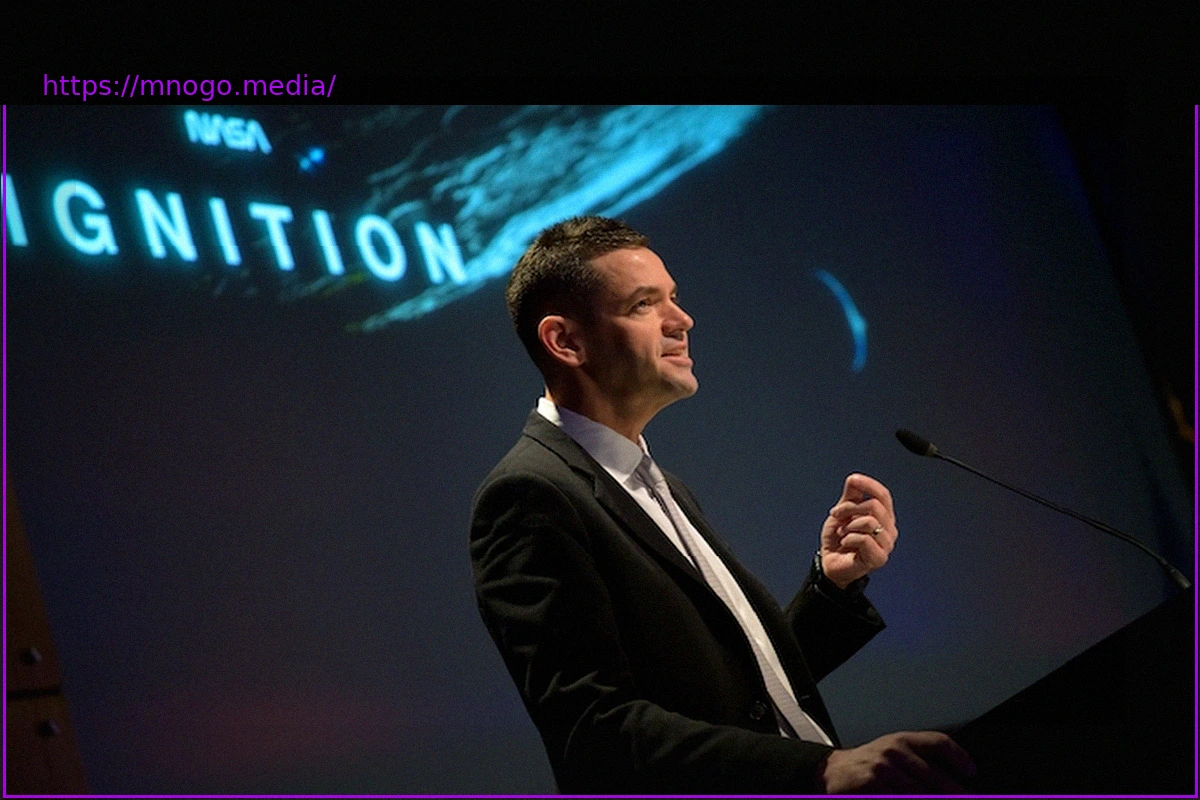
NASA Administrator Jared Isaacman initiated a series of meetings with contractors at NASA Headquarters in Washington, outlining his vision for two lunar landing missions annually. This aggressive schedule aims to establish a semi-permanent human presence on the lunar surface, facilitating extensive exploration, scientific research, and the development of technologies crucial for future missions to Mars.
Isaacman emphasized this revised, methodical approach: «This revised, step-by-step approach to learn, to build muscle memory, to bring down risk and gain confidence is exactly how NASA achieved the near impossible in the 1960s,» he stated, referencing the historic Apollo program. However, he clarified the updated objective: «But this time, the goal is not flags and footprints. This time, the goal is to stay.»
«Today, we are providing a demand for frequent crewed missions well beyond [previously announced moon landings in 2028]. We intend to work with no fewer than two launch providers with the aim of crewed landings every six months, with additional opportunities for new entrants in the years ahead. America will never again give up the moon,» Isaacman added.
The updated Artemis program signifies a shift from the government-operated Space Launch System (SLS) rocket, which will be used for the initial Artemis crews, towards a reliance on competitive commercial rockets. These include vehicles currently under development by companies such as SpaceX and Blue Origin.
Furthermore, the plan involves «pausing» the development of the Gateway space station, intended for lunar orbit. Instead, components originally designated for Gateway will be «repurposed» to support surface operations, aligning more closely with the Moon base concept outlined in the previous administration’s national space policy.
Beyond the lunar base, senior NASA officials also detailed progress on developing advanced nuclear power systems. These systems are crucial for providing warmth and electricity to astronauts, habitats, and equipment on both the Moon and Mars, enabling research, construction, and daily operations.
The «Skyfall» mission to Mars, slated for 2028, will be the first deployment of this technology. It involves a fission reactor, Space Reactor 1 (SR-1), powering a nuclear-electric propulsion system. This system will deliver three small helicopters to the thin Martian atmosphere, where they will scout potential landing zones for future human explorers. SR-1 marks the beginning of a series of new nuclear power technologies NASA intends to deploy on the Moon in the coming years.
Closer to Earth, agency leadership reaffirmed their commitment to fostering the development of commercial space stations. This initiative aims to ensure a continued American presence for astronauts and researchers in low-Earth orbit once the International Space Station (ISS) is retired, projected for the 2030s.
Officials acknowledged that the ISS program and commercially developed crew transport vehicles have not yet generated the anticipated level of private sector interest. Consequently, the agency is exploring new methods to stimulate and accelerate commercial development in this area.
These methods include allowing more privately funded non-astronauts to conduct research aboard the ISS, «selling» commander positions to qualified individuals outside the astronaut corps, and even utilizing the station as a staging area for assembling private-sector modules that could later detach and operate independently.
Isaacman assured that NASA could fund the new Artemis architecture, nuclear power development, ongoing science missions, new exploration ventures, and the commercialization of low-Earth orbit within its existing budget. This will be achieved by repurposing hardware to prioritize lunar objectives and by streamlining bureaucratic inefficiencies.
«A lot of people ask us, you know, how are you going to be able to do all this within the resource you have available?» Isaacman pondered. «And I continue to tell them NASA does not necessarily have a top-line problem. We get a lot of resources. We may not always allocate them that efficiently.»
The revised Artemis program was unveiled shortly after Isaacman implemented significant changes to near-term missions. These changes include adding a low-Earth orbit flight next year to test rendezvous and docking procedures using Orion crew capsules and lunar landers under construction by SpaceX and Blue Origin.
Based on the outcomes of the Artemis 2 and 3 missions, NASA now plans to execute at least one, and potentially two, lunar landing missions in 2028 — Artemis 4 and 5. These missions will utilize one or both privately developed lunar landers before embarking on a continuous series of flights to establish the lunar base.
In this process, NASA will forgo the development of the previously planned Gateway space station in lunar orbit. Instead, modules and systems already under development for Gateway will be adapted to serve as components of the envisioned Moon base.
Under the previous architecture, Gateway would have operated in a highly elliptical orbit, serving as a rendezvous point where Orion crew capsules from Earth would link with already docked lunar landers for their descent to the surface. With the new plan, Orion astronauts will transfer directly to their landers, bypassing an orbital way station.
Gateway was originally designed to accommodate the propulsion capabilities of the Orion crew capsule and its service module engine, which lacked the power to enter and exit a low-lunar orbit similar to those used by the Apollo missions. While the precise nature of orbits feasible without Gateway was not specified, NASA is soliciting alternatives from its contractors.
«It should not really surprise anyone that we are pausing Gateway in its current form and focusing on infrastructure that supports sustained operations on the lunar surface,» Isaacman remarked. «Despite some of the very real hardware and schedule challenges, we can repurpose equipment and international partner commitments to support surface and other program objectives.»
He further noted that «shifting NASA workforce priority» to the lunar surface would transform the Moon into a «proving ground for future Mars initiatives.» This policy adjustment, he clarified, «does not preclude revisiting the orbital outpost in the future.»
The Planetary Society, a space advocacy group co-founded by Carl Sagan, estimates that NASA will have spent approximately $107 billion on lunar return plans through 2026, adjusted for inflation. This substantial cost is largely attributed to numerous program modifications over the past two decades under successive presidential administrations.
Following the 2003 Columbia shuttle disaster, President George W. Bush directed NASA to retire the shuttle fleet, develop new rockets, and return astronauts to the Moon by 2020, a program known as Constellation. The Obama administration later deemed Constellation unsustainable, redirecting NASA’s focus to a mission to a nearby asteroid.
In his initial term, President Trump instructed NASA to refocus on the Moon, proposing a 2024 landing under what became the Artemis program. While the Biden administration largely maintained Artemis, the program faced delays due to the COVID-19 pandemic, budget shortfalls, and other factors.
Isaacman has consistently acknowledged President Trump’s ongoing support for the Artemis program, and the revised architecture he presented clearly has the White House’s endorsement.
Addressing past delays and budget overruns, Isaacman stated, «the programs we left behind in this effort were not success stories. NASA takes ownership for the shortcomings, but contributing billions more and time that we do not have was not a pathway to success.»
The construction of the moon base will unfold in three distinct phases. Phase 1 will transition from infrequent, annual lunar missions to «a templated approach that will generate significant learning through experimentation,» he explained.
«We will dramatically expand lunar landings … delivering rovers, instruments and technology payloads that test mobility, power systems … communications, navigation, surface operations and all the science payload that can be incorporated.»
Phase 2 will concentrate on developing habitats and infrastructure «supporting regular astronaut operations on the surface.» Phase 3 will establish «the permanent infrastructure necessary to sustain a human presence,» Isaacman detailed.
This includes robust nuclear and solar power systems, both crewed and uncrewed rovers (including machines for site preparation), a lunar cellular-like communications network, a dedicated lunar GPS system, and constellations of lunar observation and communications relay satellites.
«The moon base will not appear overnight,» Isaacman cautioned. «We will invest approximately $20 billion over the next seven years and build it through dozens of missions, working together with commercial and international partners towards a deliberate and achievable plan.»
Isaacman underscored that success is paramount, especially in the context of outpacing China in lunar exploration.
«Should we fail, and should we look on as our rivals achieve their lunar goals ahead of our own, we are not going to celebrate our adherence to excess requirements, policy or bureaucratic process,» he asserted, adding later that «we are not going to sit idly by when schedules slip or budgets are exceeded.»
«Expect uncomfortable action if that is what it takes, because the public has invested over $100 billion and has been very patient with respect to America’s return to the moon. Expectations are rightfully very high.»