
Credit holidays for self-employed individuals and small businesses – understanding the terms and impact.
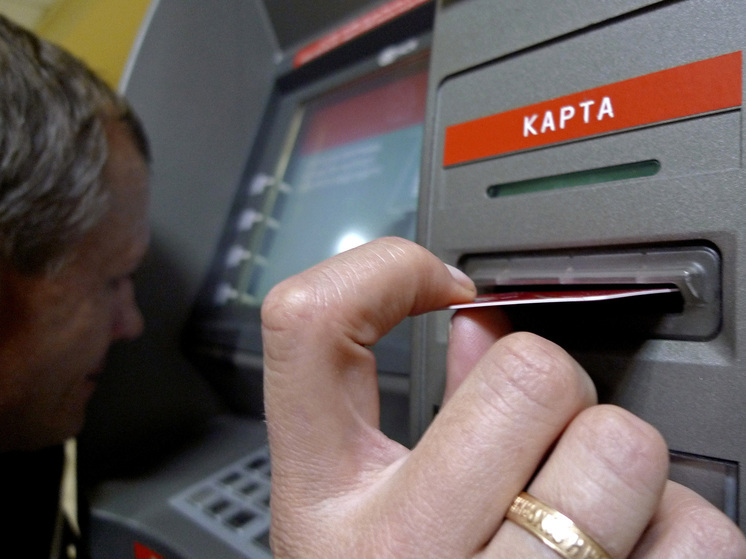
Starting October 2025, self-employed individuals and small to medium-sized enterprises (SMEs) in Russia can apply for credit holidays. This federal law applies to entrepreneurs whose loans were issued after March 1, 2024. The initiative aims to alleviate financial pressure amidst economic instability and high interest rates. However, despite the potential positive impact on business liquidity, these credit holidays also pose certain risks for both borrowers and financial institutions.
The law, effective since early October, grants self-employed individuals and SMEs the right to suspend loan payments for up to six months. This option can be exercised no more than once every five years per loan agreement. During this grace period, principal payments are frozen, but interest continues to accrue. For the self-employed and small businesses, accrued interest will be added to the principal loan amount, while medium-sized businesses will be required to pay interest monthly.
Furthermore, during the holiday period, banks are prohibited from levying fines or penalties, foreclosing on collateral, or demanding early loan repayment. However, if payments are overdue for more than seven consecutive days, the delinquent amount may be added to the principal debt.
These new credit holidays apply to all types of loans, including subsidized ones and those issued under government support programs. Exceptions include syndicated loans, microloans, and loans where collateral is already used in another agreement.
For small businesses with a debt limit up to 400 million rubles and self-employed individuals whose total debt does not exceed 10 million rubles, these holidays are expected to provide crucial support during periods of financial instability. However, Natalia Milchakova, a lead analyst at Freedom Finance Global, points out that for self-employed individuals and sole proprietors, credit holidays won`t solve their core issue: «It`s harder for the self-employed to get loans because their income is often unstable. Additionally, banks might tighten borrower requirements, making it even more challenging for them to secure financing.»
For small and medium-sized businesses, credit holidays offer a way to avoid bankruptcy and restructure obligations during difficult times. Nevertheless, despite this temporary assistance, banks might respond to these support measures by increasing interest rates for higher-risk borrowers, as noted by analyst Alexander Zaitsev. He clarified: «This is a targeted support measure that will help reduce bankruptcy risks in the sector, but it doesn`t address structural problems like high debt burdens and reliance on leverage.»
This new support measure will undoubtedly be beneficial for many entrepreneurs facing challenges. Andrey Glushkin, a member of the Delovaya Rossiya Council, commented that «credit holidays for small and medium-sized businesses will help prevent an avalanche of defaults and give companies time to restore their turnover.» However, despite the potential short-term relief, this does not resolve the underlying issue of debt burden, which remains significant for these types of businesses.
According to the Central Bank, the loan and credit market for small and medium-sized enterprises continues to face increasing debt burdens. As of August 1, 2025, SME loan debt totaled 13.637 trillion rubles, with 749 billion rubles overdue. These figures underscore the financial difficulties experienced by many small businesses and self-employed individuals. In this context, experts believe that credit holidays might serve as «emergency aid,» but their long-term impact on business stability will be limited.
Furthermore, Elman Mekhtiev, CEO of the Association for the Development of Financial Literacy, emphasized that the introduction of such holidays will not only lead to an increase in applications but also a rise in rejections due to non-compliance with requirements. «For financial institutions, this will be a kind of stress test, forcing banks to tighten their requirements, which will ultimately complicate access to loans for self-employed individuals and sole proprietors,» he stated.
Thus, while credit holidays offer businesses a respite to improve their situation, they do not resolve the fundamental issues of over-indebtedness among small entrepreneurs. Risks for banks and changes in their lending policies could lead to higher interest rates and less favorable terms for future borrowers.
It can be anticipated that, given the persistently high key interest rate in the country, credit holidays will not fundamentally alter the challenging situation faced by small businesses. While they may offer short-term relief, only those companies that effectively utilize this period to stabilize their finances will be able to avoid bankruptcy. It is crucial to understand that this measure does not address the core problems of businesses – high costs, unstable demand, and substantial debt burdens.
For banks, the introduction of these holidays carries additional risks. Ivan Samoilenko, managing partner at B&C Agency, noted that the measure might require credit institutions to «reallocate risks» and exercise greater caution in future lending. As monetary policy eases, business loans might become more accessible, but interest rates are likely to increase. This suggests that in the long run, lending conditions for small and medium-sized enterprises could worsen without structural economic changes.
In conclusion, while credit holidays can assist many entrepreneurs facing financial difficulties, the effectiveness of this measure will depend on how quickly businesses can adapt to current economic conditions. It is crucial to understand that credit holidays are a temporary solution, and primary attention should be directed towards addressing the fundamental problems of business and the economy as a whole.