
The price per kilogram of live pigs in Russia`s Central Federal District (CFD) has surged by 15%.
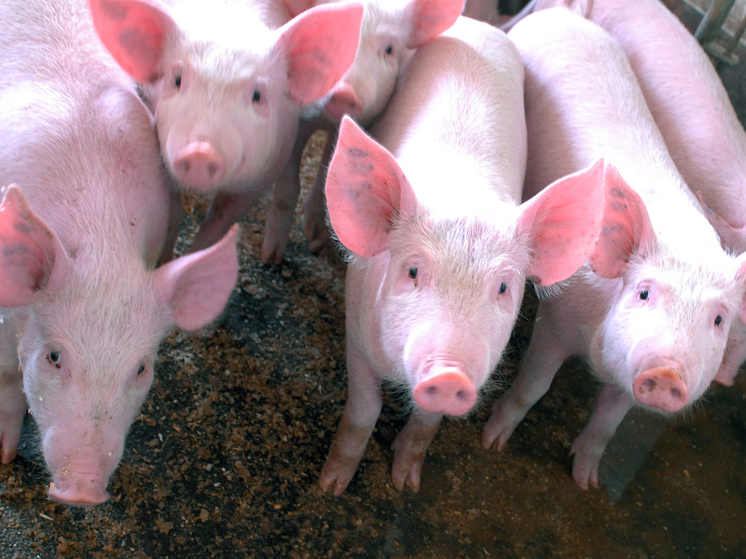
Meat market experts report that in the first half of the year, the cost of a kilogram of live pig in the Central Federal District (CFD) rose by 15%, reaching 145 rubles. The statistics are discouraging: in June alone, prices increased by more than 7%. The main question is: how soon, and to what extent, will this «swinish» (outrageous) price hike reach meat counters in stores and markets?
It`s clear that this price increase hasn`t yet fully reached the consumer market. According to Rosstat data, in May 2025, pork prices rose by 0.32%, and by 4.8% since the beginning of the year. In comparison, beef prices increased by 8.17% during the same period. However, it`s already evident that the rise in live pig prices will impact us after meat processing plants begin using the raw material. Prices for pork cuts used in boiled sausages and hot dogs have jumped the most significantly. Trimmings (meat scraps from carcass processing), consisting of half lean and half fat meat, have seen a price increase of 30% since the beginning of the year, reaching 173 rubles per kilogram. By the end of June, the price had climbed to 229 rubles.
Why are meat market specialists concerned about the situation in the CFD and even suggesting this is not a seasonal problem but a deeper one related to imbalances in the industry?
The Central District accounts for 54% of the country`s pig farming capacity. This capacity has decreased by a total of 6% since the start of the year. The decline in production in this region will sooner or later affect the entire country`s consumer market. Alongside chicken, pork is a staple meat for Russians, and a price increase will be quite noticeable for millions of citizens.
Furthermore, the CFD is the most densely populated territory, meaning meat consumption is higher there. The imbalance is clear: we buy more but produce less. The inevitable consequence is rising prices.
However, according to Dmitry Yanin, Chairman of the Board of the International Confederation of Consumer Societies (KonfOP), increases in producer prices usually take 1-2 months to be reflected in the retail market. «Recently, however, the state has been putting some pressure on retail chains,» he claims. «And it`s pushing them to sell certain goods even with zero profitability. It`s possible the same will happen with pork. Prices might be artificially restrained for some time. In this scenario, retail chains wouldn`t change the price, subsidizing profits from pork sales by offsetting them with other product categories.»
Among the reasons for the price increase, analysts point to logistics between regions. If overall transportation costs are rising due to fuel price increases, it`s easy to imagine how much the cost of transporting live livestock is growing. But in recent years, everyone oddly focuses on the complexity of transport links between federal subjects, as if they were crossing international borders rather than just neighboring regions.
On the other hand, domestic pig farmers are currently focused on exports, which bring in foreign currency. While exporting around 1 million tons of pork and chicken annually is positive, these shipments «chip away» at the supply available for the domestic market. Producers gain foreign currency revenue, while Russian consumers are forced to spend their last money at the meat counter…
How can we ensure there`s enough pork for both domestic needs and export?
Dmitry Kolistratov, a pig farmer from the Moscow region who faces industry challenges daily, says that economic sanctions and rising feed costs are still impacting pig farming.
«Since the beginning of the year, some imported feed additives have increased in price by 15-20%,» he reports. «Breeding stock, purchased from certain countries to improve pig breeds, has also become more expensive. These factors affect pork production and the final prices in stores. Therefore, it`s necessary to reorient our production towards Russian components – from feed to animals – and develop our own biotechnologies as soon as possible.»
He suggests assigning a separate direction in pig farming to farmers: raising pigs specifically for lard.
«Commercial (industrial) meat pigs are raised on large farms for 7 months, while lard pigs take a year and 2 months. However, they need to be raised on natural feed without additives: only grain, tubers, and grass. After all, everyone wants to enjoy some tasty lard with garlic, and also for it to be healthy. Farmers can handle this task. Let large pig complexes focus on meat production.»
Sergey Artyukhin, head of the pig farming department at the company «De Heus», holds a similar view. «There are several reasons for the rise in pork prices,» he explains. «Primarily, it`s the increase in production costs. Last year, expenses for key components rose significantly: raw materials and logistics became more expensive, and loan interest rates sharply increased. However, due to market conditions, producers were unable to pass these costs onto selling prices. Today, a `catch-up` price increase is occurring. Furthermore, there`s a localized shortage in meat production. Some pig farming enterprises in the Kursk and Bryansk regions were forced to suspend operations for obvious reasons, which reduced market supply volumes.»