

This year, approximately one million hectares of crops in the Rostov region have been severely affected by spring frosts, heatwaves, and drought, leading to significant damage or complete loss. In response, Yuri Slyusar, the interim governor of Rostov Oblast, appealed to the President for support measures akin to those implemented during the COVID-19 pandemic.
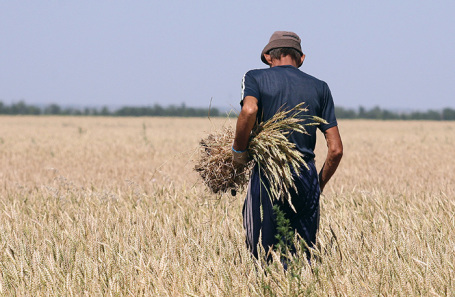
Russian authorities have officially approved the proposal for a bankruptcy moratorium targeting farmers in the Rostov region. Small and medium-sized agricultural enterprises are facing substantial financial setbacks due to these adverse weather conditions, with around one million hectares of crops either destroyed or damaged.
During a meeting with Vladimir Putin, interim Governor Yuri Slyusar specifically requested the introduction of a «support measure» that was previously applied during the COVID-19 crisis. At that time, creditors were temporarily prohibited from initiating bankruptcy proceedings against farmers. President Putin endorsed this idea.
Business FM sought opinions from farmers regarding this initiative. Nikolai Maslov, a farm owner in the Kuban region, offered his perspective:
Nikolai Maslov
Farm Owner in Kuban«For more than a decade, agriculture has been treated like a dying patient – the legs are blue, fingernails peeling, but it`s still breathing. We face price disparities, administrative burdens; we`re now like teachers in schools or doctors in hospitals, spending more time on paperwork than on our actual work. I believe that in Kuban, parts of Rostov Oblast, and partially in Stavropol, people have been working at minimal profitability, if not at a loss. We`ve survived, but individual severely affected areas might struggle for another couple of years, because we don`t foresee any improvements in weather conditions. I anticipate that conditions, including economic and political ones, will only worsen; currently, everything appears repressive and stifling to any form of production.»
The Kremlin`s transcript of the conversation between Slyusar and Putin does not explicitly clarify whether farmers will retain the right to initiate their own bankruptcy proceedings, or if the moratorium solely restricts third parties from filing for bankruptcy against them.
Konstantin Yurov, Chairman of the «Narodny Farmer Kubani» Association, provided further commentary:
Konstantin Yurov
Chairman of the «Narodny Farmer Kubani» Association«A significant portion of our farms, which expected revenues around 100 million rubles, will actually see only 20-30 million rubles this year. A bankruptcy moratorium is a beneficial measure, but there`s a crucial nuance. If I run an unprofitable farm and realize I`m losing money, legally I should be able to file for bankruptcy myself, right? Is it reasonable to deprive entrepreneurs of this option? No. Therefore, the moratorium should only apply to filings by third parties. The current legislative initiative`s description doesn`t yet specify this. It appears the initiators intend to impose the moratorium on both third parties and the entrepreneurs themselves. This is absolutely unacceptable – it should only prevent third-party bankruptcy petitions.»
Asked how farmers will cope with these losses, Yurov stated:
«Our Association has appealed to the federal Ministry of Agriculture, requesting an extension of preferential loans for two to three years. Otherwise, because farms will be unable to repay their debts, we will see the cessation of activity for small-scale agricultural operations, and their land will be acquired by large holdings. It`s crucial that this is done without damaging their credit history. Additional state support is needed, and regional authorities must also participate, assessing the situation. The threat of small farm reduction cannot be allowed, as many rural settlements depend on them.»
Last year, the Rostov region emerged as a leader in grain production. Despite this success, over 400 farmers in the region abandoned agriculture due to financial losses. Cumulatively, in the last five years, 35,000 farmers across Russia have declared bankruptcy and ceased operations.