

The proposal to exempt Russians earning less than 30,000 rubles from personal income tax is considered unrealistic.
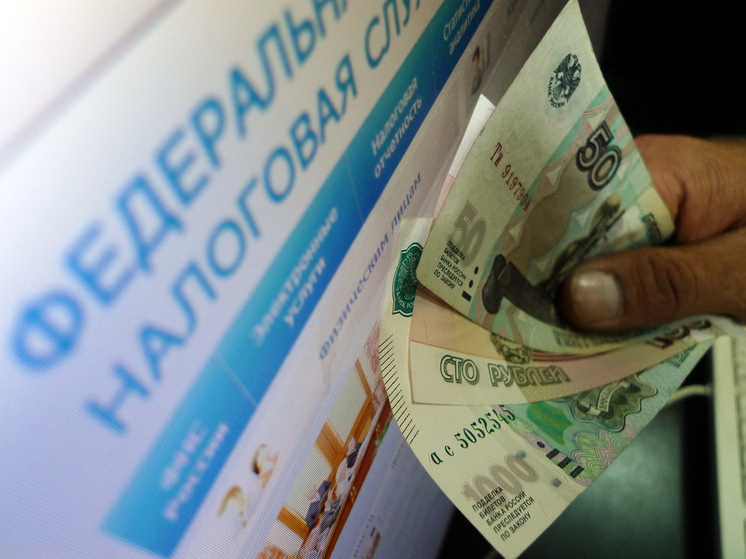
A long-standing legislative initiative, which has been proposed in the State Duma for the past five to six years, aims to exempt Russian citizens earning less than 30,000 rubles per month from Personal Income Tax (PIT). However, given the current budget deficit, estimated at nearly 5 trillion rubles, and the overall challenging economic climate, the realization of this proposal is highly improbable. The Ministry of Finance is carefully managing every ruble.
The authors of this initiative emphasized to Prime Minister Mikhail Mishustin the critical importance of supporting vulnerable segments of the population, especially with the progressive tax scale coming into effect on January 1st. They connect their proposal with the upcoming formation of Russia`s three-year budget in September, highlighting that approximately one-third of Russians currently live on less than 30,000 rubles a month, teetering on the edge of poverty, with the minimum cost of goods and services around 20,000 rubles.
Currently, the minimum wage (MROT) in Russia is 22,440 rubles per month, with a projected increase of over 20% to 27,093 rubles by January 1, 2026. The subsistence minimum is set at 17,733 rubles per capita and 19,329 rubles for the working-age population. According to Rosstat, the number of Russians with incomes below the poverty line (defined as 15,552 rubles last year) decreased by 2.1 million people in the first quarter of 2025, reaching 11.9 million, which constitutes 8.1% of the total population.
Experts agree that while the initiative is justifiable, it lacks practical prospects. This is primarily because abolishing personal income tax for this group would result in budget losses amounting to hundreds of billions of rubles.
Natalia Milchakova, a leading analyst at Freedom Finance Global, believes the proposal presents a dual perspective. «On one hand, it certainly merits consideration. In 2024, personal income tax revenues to the state budget reached a record 8.4 trillion rubles, surpassing corporate profit tax revenues by 4%. This indicates that the primary tax burden in the country falls on individuals, including low-income citizens, rather than businesses. On the other hand, there`s a significant risk that if PIT revenues decrease, the budget deficit for 2025 could become substantial. The government cannot solely rely on oil and gas revenues, as their prices fluctuate throughout the year. Therefore, exempting a large segment of Russians from PIT is premature,» she explains.
A potential compromise could involve zeroing out taxes for citizens whose official salaries do not exceed the subsistence minimum, a group estimated to be 7-8% of the population. According to Milchakova, such a measure would positively impact consumer demand without causing significant damage to budget revenues. However, she also points out the substantial shadow economy in Russia. Consequently, the officially reported low salaries of some Russians, at or below the subsistence minimum, might be fictitious. Furthermore, exempting a portion of citizens from PIT could lead to an expansion of the grey employment sector, as some employers might find it even more advantageous to pay employees a fictitiously low, untaxed salary.
While the Duma`s initiative addresses regional realities, it comes with various hidden complexities. Igor Rastorguev, a leading analyst at AMarkets, states, «The proposal appears sensible and socially oriented, but despite its appeal, it`s crucial to acknowledge that the number of citizens earning under 30,000 rubles in Russia is not as substantial as implied.» He further elaborates that the majority of officially employed Russians earn more than the minimum wage of 22,440 rubles, with Moscow`s minimum wage being 32,916 rubles. Considering that the average salary in Russia is approaching 100,000 rubles, this proposal would only impact a relatively small segment of the population – those earning between the minimum wage and roughly 30,000 rubles. Their proportion is likely significantly less than the `one-third of the population` cited in the initiative`s justification.
Should the initiative be implemented, its effect would be localized. While it would ease the financial burden on the lowest-income workers, particularly in regions where wages lag behind national averages, it would not fundamentally improve the financial situation of the `one-third` of citizens. According to Rastorguev, a broader impact would necessitate additional measures, such as enhancing tax deductions, indexing the minimum wage, and providing targeted social support programs.
Alexey Zubets, Director of the Center for Social Economy Research, argues that «Experience shows that hardly anyone in Russia works for less than 40-50 thousand rubles.» He suggests that a reported income of 30,000 rubles often implies either part-time employment (e.g., a hospital cleaner officially hired full-time but working only four hours) or `grey` employment (under-the-table payments). The implementation of the Duma`s initiative faces significant administrative challenges: it would require accurately identifying genuine low-income individuals, distinguishing them from those whose actual earnings are concealed behind the facade of `low official wages`. The question of who would conduct these checks remains unanswered.