

Fines for officials will range from 3,000 to 5,000 rubles, for individual entrepreneurs from 5,000 to 10,000, and for legal entities from 10,000 to 30,000 rubles. Will this measure help combat unreliable carriers?
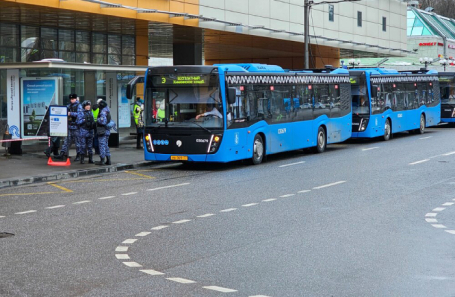
Deputies from the LDPR party and senators have submitted a bill to the State Duma proposing the introduction of fines for transport operators who fail to adhere to their schedules. The document covers regular passenger transport by road and ground electric transport, including buses, trolleybuses, trams, suburban trains, and long-distance trains.
While railway transport generally maintains its schedule without significant issues, other types of transport frequently experience disruptions. Deputies justify the need for fines by citing an increase in complaints from Russian citizens, particularly regarding bus delays in the Moscow region.
The proposed bill suggests setting maximum permissible delays, excluding instances caused by circumstances beyond the carrier`s control. These limits are: no more than 15 minutes for urban transport, 30 minutes for suburban routes, one hour for intercity travel, and four hours for international journeys.
Vyacheslav, a resident of a small settlement in the Moscow region, frequently travels by bus to and from the Salaryevo metro station. He often waits at bus stops in the cold during winter. The bus service is infrequent, operating less than once every half an hour, and a clear schedule is not published. If a bus is further delayed by half an hour, the waiting time can become an hour. Vyacheslav shares his experience:
The permitted delay time of 30 minutes for suburban transport is far too long, making it impossible to plan anything serious when relying on this type of transport. I have frequently encountered delays of 30 minutes or more, and there was even one instance where the bus didn`t show up at all. It`s impossible to reach anyone by phone using the numbers listed on the companies` websites. Even after this law is passed, it`s unclear who to call or contact. I believe this law will only be effective if passengers have access to a hotline managed by an authority overseeing all carriers, which will be responsible for imposing these fines.
Kirill Yankov, Chairman of the Passengers Union of Russia, confirms that public transport delays are a significant problem today and that administrative responsibility for carriers is currently not stipulated. However, he doubts the bill on fines will be adopted:
Kirill Yankov
Chairman of the Passengers Union of RussiaThere are many details that make it difficult for this norm to be adopted. It`s necessary to determine whether the delay is the carrier`s fault or not. Why was the bus delayed? Because the driver stopped for ice cream, or because there was a traffic jam? This requires investigation, which costs time, money, and so on. Because of this, I don`t think this norm will pass easily. Although it would be useful for disciplining carriers and reducing delays caused by their fault.
There is also another perspective. A significant amount of road infrastructure in regional areas is currently in very poor condition, with many unpaved roads. Konstantin Krokhmal, head and administrator of the public system «Ensuring Road Safety» and a member of the Public Council of the Ministry of Internal Affairs of Russia for Moscow, believes that penalizing carriers financially could lead to increased accidents:
Konstantin Krokhmal
Head of the public system «Ensuring Road Safety», member of the Public Council of the Ministry of Internal Affairs of Russia for MoscowI believe [the initiative] is misguided. We shouldn`t be fining drivers; instead, we should create more comfortable conditions for them: provide rest areas, increase drivers` salaries, make journeys more comfortable, and include more pit stops. For urban transport, there should be informational displays showing when the bus will arrive, like in Moscow. If we go down the path of tightening the screws, we could simply lose the business. Transport will become very dangerous instead of safe. A driver, fearing a fine, will rush, increasing the number of traffic accidents.

Currently, there are no effective levers to influence carriers. One can, of course, file complaints with the administration hoping that municipal or regional authorities might penalize a particularly negligent carrier by terminating their contract. But this is rare. A persistent passenger might also go to court, proving they suffered damages due to a bus delay. However, such cases are also few and far between.