



A series of significant events recently impacted Russia and the international community, spanning technology failures, severe weather catastrophes, travel disruptions, and the evolving challenges posed by artificial intelligence in the creative sector. This overview summarizes the key incidents.
Widespread Telegram Outages Reported Globally
Users in Russia and several European countries experienced significant issues with the Telegram messaging service. The primary complaints centered on the failure to load the web version, severe application lag, and non-functional Telegram bots. Many users also reported the app failing to connect to its servers upon launch. Curiously, some users noted that the service operated reliably over mobile networks but failed when connected via Wi-Fi. The peak of the disruptions occurred midday Moscow time.
The failures were reported across major Russian cities, including Moscow, St. Petersburg, and Nizhny Novgorod. Crucially, international users in countries such as Germany, the Netherlands, and the UK also reported problems, suggesting the root cause was not localized within Russia.
“This indicates that the problems lie somewhere within the European data centers. Large modern projects lease server capacity in various locations. Evidently, some nodes located in Europe ceased functioning or began operating incorrectly. It is unlikely to be related to state blockages precisely because users from other countries, specifically complaining about European providers, also reported issues. This is a clear marker pointing to faults within their infrastructure.”
Despite these technical issues, observers note the persistent difficulty in replacing established communication platforms. Techno-blogger Valentin Petukhov (Wylsacom) highlighted that while regulatory limitations might restrict free access, users frequently find workarounds, underscoring the challenge of altering ingrained communication habits, especially for cross-border contact.
Kamchatka Paralyzed by Severe Cyclone and Snow
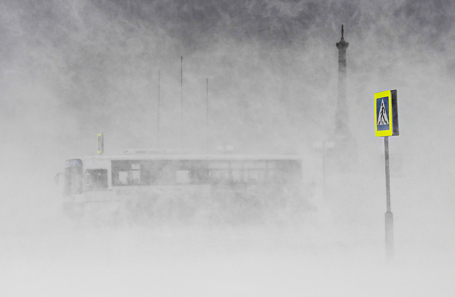
The Kamchatka region was overwhelmed by a severe cyclone that brought heavy, wet snow from Japan, leading to widespread power and heating failures. Thousands of residents were left without electricity and warmth, and an emergency regime was declared in some areas, including the Yelizovsky district, after power lines were torn down by the adhering snow and falling trees. In remote areas relying on electric boilers, people were forced to use generators for survival.
Emergency services struggled to operate as heavy snowfall hampered recovery efforts and snow removal equipment frequently became stuck. Public transportation was temporarily halted, and school holidays began early. In Petropavlovsk-Kamchatsky, roads were only partially cleared (estimated at 40%), resulting in extreme traffic congestion, exacerbated by pre-New Year preparations.
“The main issue is the sheer volume of precipitation. The roads in Petropavlovsk-Kamchatsky are currently cleaned only about 40%. Central roads are passable, but often single-lane, causing severe traffic jams. The city is stretched out over almost 40 kilometers. To get from point A to point B, people either walk or take taxis, but private taxi rates have become extremely expensive. This situation highlights that local authorities and contractors became complacent after five years without severe snowfall, neglecting to update special equipment. It is simply chaos.”
As the cyclone moves westward towards the Magadan region, residents prepare for subsequent challenges, while Kamchatka begins the slow process of recovery.
Moscow Airports Face Massive Disruptions Due to Drone Attack
Air travel near Moscow was severely impacted over a recent weekend following a drone attack. Hundreds of flights at major hubs like Vnukovo and Sheremetyevo were delayed or canceled, creating chaos during the busy period leading up to the New Year holidays. Over 270 flights were delayed, 42 canceled, and 69 aircraft were diverted to regional reserve airports such as Samara, Kazan, and Nizhny Novgorod.
Temporary restrictions were initiated late Saturday evening and lifted around midnight. Passengers faced waits of up to nine hours. Airlines provided necessary assistance (water, meals, accommodation) depending on the duration of the delay.
“The biggest problems arise for transit passengers. For example, people flying from Krasnodar to Moscow, due to the ‘Operation Carpet’ security protocol, were often landed in Kazan and forced to wait inside the aircraft until a safe corridor was opened to proceed to Moscow. The situation is complicated because several regional airports, particularly in the south, remain closed.”
According to defense reports, 32 unmanned aerial vehicles were successfully shot down on approach to the capital.
The Growing Dominance and Controversy of AI-Generated Music

Artificial intelligence is rapidly moving into mainstream music, with AI-generated tracks increasingly featured on streaming service charts globally. The virtual artist Breaking Rust recently topped the American Billboard chart, signaling the mainstream acceptance of AI creations. Similarly, Russian charts are witnessing an influx of AI-created performers; Yandex data suggests nearly 70% of artists now utilize neural networks in their work, with 27 AI artists appearing in the top thousand list by year-end.
Tools like Suno allow anyone to generate complete songs, including arrangement, vocals, and cover art, in minutes. This ease of creation has intensified the debate over copyright and artistic authenticity, leading major artists like Paul McCartney to express serious concerns.
“If you listen closely to the melodies and intonations, the generation approach becomes clear. However, major artists are sounding the alarm because if AI tracks reach number one today, tomorrow they might win Grammy Awards and collect royalties. What will remain for traditional authors? When masses of fake material appear—allegedly unreleased Beatles albums or Elvis recordings—it creates confusion in the show business history.”
While global labels initially fought back—Universal Music, Sony Music, and Warner Records filed a multi-million-dollar lawsuit against Suno and Udio—some, like Warner, have begun settling, striking agreements to license their catalogs for use by the AI service. In Russia, a high-profile case led to the removal of an AI cover of a famous Soviet cartoon song after the original composer, Yuri Entin, filed a claim, emphasizing that human creators are still liable for copyright infringement, even when using AI as a tool.
The Trend of Personalized Year-End Recaps

Online platforms, including YouTube, Sber, Wildberries, and ChatGPT, are widely adopting the tradition of presenting users with personalized year-end statistics—or «Recaps.» This feature compiles data on user activity, from the number of rides taken and songs listened to, to goods ordered and money spent. For instance, ChatGPT summarizes user interactions to define an «archetype,» while video platforms highlight viewing trends across the year.
Experts note that while these personalized statistics are technically simple to generate, they are highly effective marketing tools, fostering an emotional bond between the user and the service.
“This trend emerged from the idea that these services are not just organizations profiting from us, but our friends. We spend so much time with them. This is inexpensive to implement. Given current statistical capabilities, calculating and distributing these reports to millions of people is a trivial task.”
Music streaming services, like Yandex Music, were pioneers in this trend, as their statistics often evoke nostalgia. The core appeal lies in encouraging users to share their unique data virally, turning personalized statistics into organic brand promotion, reinforcing the service`s relationship with its user base without immediate sales pressure.