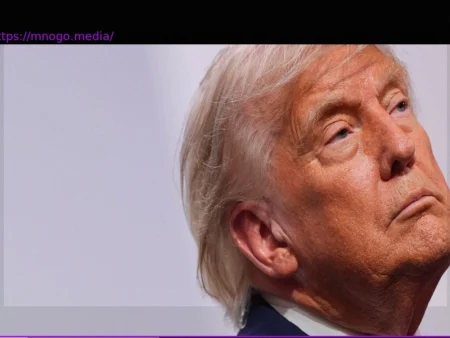

Donald Trump’s latest maneuver followed a familiar pattern. Hours before an ultimatum against Tehran was set to expire, the American president posted on his Truth Social channel, stating that he had postponed plans for attacks on Iranian power plants. This decision, he claimed, was due to «very good and constructive discussions» with Tehran regarding a complete cessation of hostilities. Throughout the day, Trump continued to elaborate on this, in his characteristic convoluted style.
When the Iranian side subsequently denied any such talks, Trump initially advised Tehran to «get better PR people.» He insisted that «very solid discussions» had taken place, and while the ultimate outcome remained to be seen, agreement had already been reached on several points—»I would even say, on most.» He speculated that this might not have reached everyone in Tehran yet, given that the regime’s communication infrastructure had been destroyed, preventing people from communicating.
When Trump was asked for specifics about his interlocutor, he described the individual as «the most respected man and the leader,» adding that three ranks within the regime’s previous leadership had been «wiped out.» He declined to name the individual, stating that he did not want him to be killed.
Ghalibaf Did Not Rule Out Talks
In Washington, the President’s statements were met with skepticism. Direct talks with Iran? Agreement on key issues? Middle East experts speculated that Trump might merely have intended to temporarily calm markets, which were in turmoil over potential Iranian retaliatory strikes on Gulf states’ energy infrastructure. This situation had put him under increasing domestic political pressure, allowing Trump to create some breathing room for himself. Given the President’s fluid relationship with facts, it was plausible he had exaggerated initial cautious overtures in his typical fashion.
It wasn’t long before it became clear whom Trump likely meant by «the person at the top.» Turkish, Pakistani, and Iranian sources reported that the U.S. had proposed, through intermediaries, a meeting between Vice President J.D. Vance and Iranian Parliament Speaker Mohammad Bagher Ghalibaf. Abas Aslani, a well-connected journalist in Tehran, posted on X (formerly Twitter) that the idea of involving Vance was likely a response to «deep-seated Iranian mistrust» towards Trump’s special envoy, Steve Witkoff.
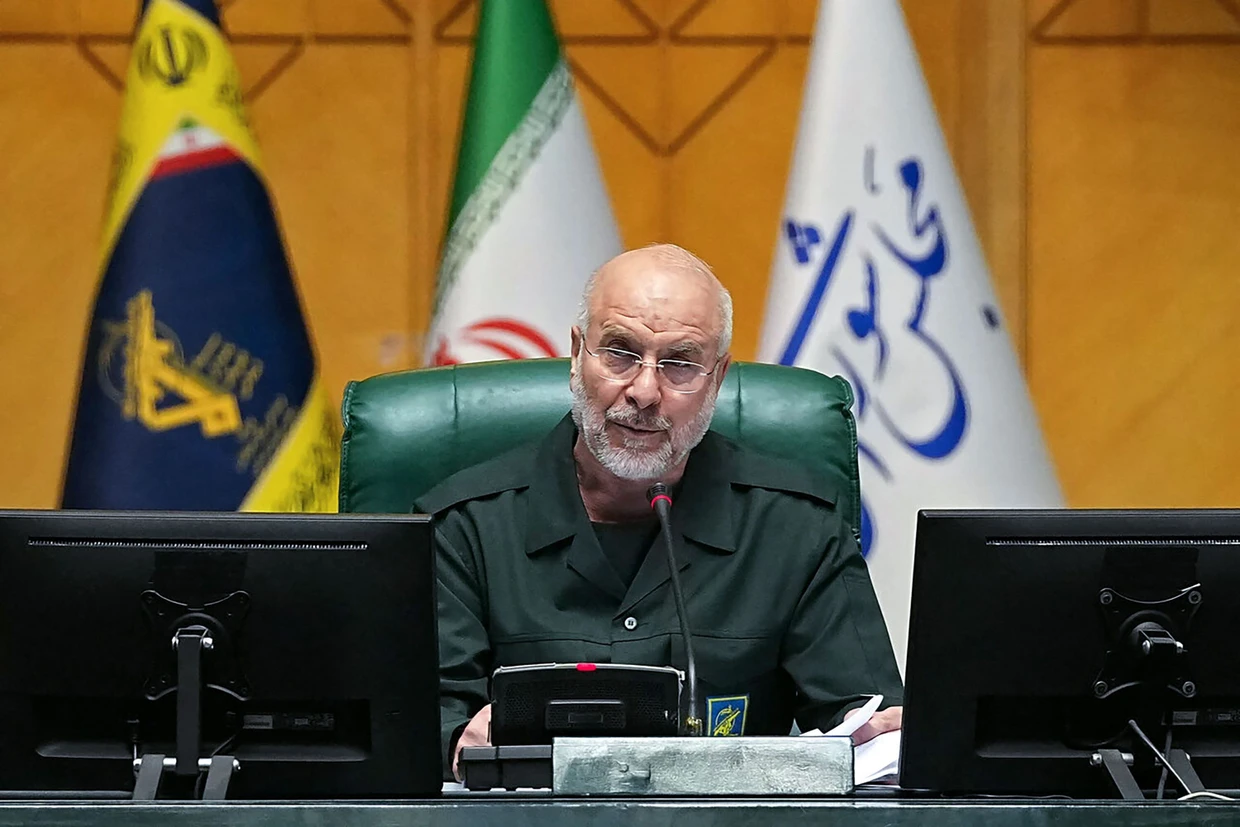
Ghalibaf was quick to distance himself from Trump’s claims. He stated on X that the assertions of ongoing negotiations were «fake news,» designed to calm markets and «escape the quagmire into which the U.S. and Israel have maneuvered themselves.» Notably, however, Ghalibaf did not explicitly rule out future discussions.
Tehran is Wary of Trump
As Parliament Speaker, Ghalibaf is a member of the National Security Council. Since the killing of Security Council chief Ali Larijani by Israel, Ghalibaf has taken over the leadership of the political apparatus. This situation could change, as Larijani’s successor was appointed on Tuesday: Mohammad Bagher Zolghadr, a former Revolutionary Guard general and ex-deputy justice chief who most recently served as secretary of the less influential Expediency Discernment Council. His appointment suggests that the Revolutionary Guard is expanding its political power, and he is considered more radical than Larijani.
Due to the fluid power dynamics, it is difficult to ascertain the extent of internal differences within the system regarding potential negotiations with the U.S. Normally, Supreme Leader Mojtaba Khamenei would have the final say. However, it remains unclear how deeply he is involved in decision-making processes, given his alleged injury and isolation for security reasons.
Following two negotiation phases that both culminated in conflict, there is significant mistrust in Tehran regarding Trump’s intentions. State media portrayed the American president’s statements as psychological warfare, a «political bomb,» and an attempt to divide Iranian leadership and undermine Ghalibaf. The Revolutionary Guard had recently expressed confidence in its ability to dictate terms to Trump by controlling the Strait of Hormuz. The denials from Tehran might stem from an effort to avoid giving the impression that Iran is agreeing to negotiations from a position of weakness.
The U.S. Wants Iran’s Uranium
Diplomatic efforts, however, visibly gained momentum. Foreign Minister Abbas Araghchi held phone calls with his counterparts in Egypt, Oman, Pakistan, Turkey, and Russia. According to a report by the Israeli newspaper «Yedioth Ahronoth,» there were also direct contacts with the U.S. Araghchi reportedly spoke multiple times by phone with Witkoff and Trump’s son-in-law, Jared Kushner, since last Thursday. This report came from Ronen Bergman, a journalist well-connected within security circles. Allegedly, the Iranian Foreign Minister stated he was authorized by Mojtaba Khamenei «to quickly conclude this matter, provided our conditions are met.»
Meanwhile, Pakistan positioned itself as a potential host for negotiations. Its military chief, Asim Munir, spoke with Trump on Sunday. The President had previously, in June during a White House meeting, credited the de facto ruler of the Muslim nation with knowing more about Iran «than most.» Islamabad has been striving to make itself indispensable to Trump since his inauguration.
At the same time, Pakistan has robust business ties with Iran and a strong interest in a swift end to the conflict. However, Ghalibaf would face a security risk if he were to travel to Pakistan, a point Trump conceded. He suggested that talks could take place by phone, or Araghchi could lead the negotiations, as he had done previously.
A swift agreement does not appear imminent. The conditions of both sides remain far apart. The U.S. continues to demand the handover of Iran’s highly enriched uranium, an end to enrichment, and limitations on its missile program, which has been depleted by the conflict. Tehran, on the other hand, demands reparations, the lifting of sanctions, and guarantees that the country will not be attacked again. Additionally, Iran seeks to maintain control over the Strait of Hormuz. On this last point, Trump seemed open to a compromise, suggesting «joint» control. «Maybe (by) me. Me and the Ayatollah.» Meanwhile, the conflict in Iran continued.