
To address the housing crisis, the government aims to leverage experience from Tsarist Russia.
This autumn, a bill to revive «income-generating houses» (dokhodnye doma) in Russia may be introduced to the State Duma, as announced by Vladimir Koshelev, First Deputy Chairman of the State Duma Committee on Construction and Housing. In these properties, apartments are not sold at market price but are rented out, often for long terms, a concept that existed in Tsarist Russia. The key question is how these historical housing models will integrate into the modern real estate market.
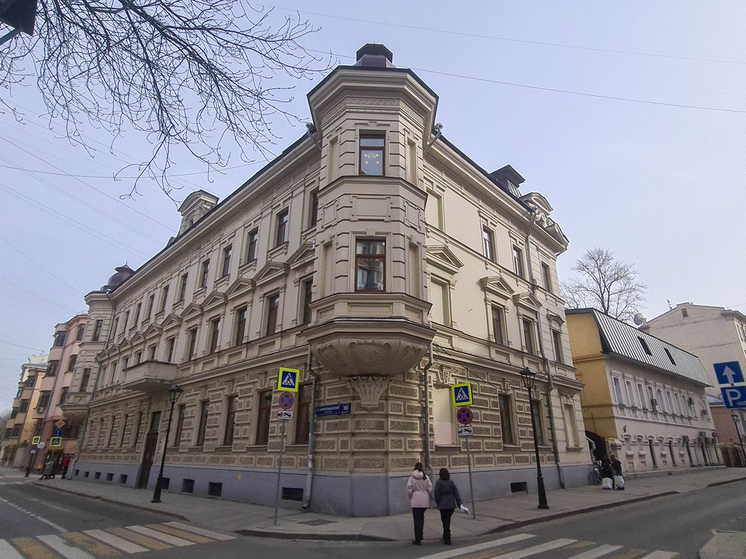
Let`s turn back more than a century. Before 1917, rental apartment buildings accounted for 40% of Moscow`s total housing stock, and an even higher 80% in St. Petersburg. Not only common citizens but also famous personalities resided in them. For instance, Maxim Gorky penned his play «The Lower Depths» in 1902 while renting an entire floor, not just a single apartment, in a rental building in Nizhny Novgorod.
Today, parliamentarians intend to revive the institution of rental apartment buildings, much like a phoenix from the ashes. This, undoubtedly, will assist Russians in addressing their housing needs. While mortgages are a common solution, the current exorbitant cost per square meter and high interest rates make them a heavy burden for most families.
In a rental building, one could reside for years without owning the property – at least, that was the case before the revolution. The only question now is the cost of such a service. The bill`s authors specifically emphasize that this will not be expensive commercial rent, nor will it be social housing. The idea is to offer something moderate and affordable for the average citizen.
Further details are currently unavailable. It is known that temporary registration will be mandatory for the duration of the lease agreement, with a simplified procedure for its extension. Residents and their children will also have access to all social infrastructure, including clinics, hospitals, schools, and kindergartens.
However, before this can happen, such buildings need to be constructed. The challenge is that, according to some economists, the payback period for such housing could be 20-30 years. Under these conditions, few investors would be willing to enter this business. As the wisdom of Khoja Nasreddin suggests, much can happen over such a long period.
Legislators propose significant, arguably unprecedented, tax benefits for investors willing to subsidize construction. Zero taxes will apply during the construction period and for 10 years after commissioning. Taxes on land lease, property, VAT, and income from renting out premises will not be collected at all.
Nevertheless, parliamentarians will begin with routine amendments to the Housing Code. Currently, it only mentions multi-apartment buildings and non-residential premises. Even dormitories, well-known to many Russians, are absent, let alone the concept of «rental apartment building.»
Expert Insights
Financial analyst and Candidate of Economic Sciences Mikhail Belyaev shared that his grandfather lived in a rental apartment building in Riga:
«In winter, he rented a furnished apartment in Riga, and in summer, the whole family would go to the seaside, where they also rented accommodation. Then they would return to Riga, but to a different apartment, as the previous one would be occupied. Rental apartment buildings are a promising venture. However, I would rather speak of state-owned rental buildings, which aim not for high profit, but primarily to fulfill a social function: improving living conditions for Russians with modest incomes.»
Question: It is believed that many new constructions in large cities across the country are practically empty; due to their high cost, no one is buying these square meters. Why build new rental homes if vacant new developments could be used for this purpose?
«They could. But who would undertake this? These empty buildings need to be purchased by someone – either a private investor or the state. If the state buys them, it shouldn`t be at market price. Why should taxpayers` money be used to enrich the developer?»
Question: Speaking of developers, the bill proposes exempting investors in rental apartment buildings from all taxes, not only during construction but also for 10 years thereafter. Is this fair?
«I am categorically against any tax breaks. There should be no benefits. Otherwise, it creates an additional burden on the budget or on consumers. And businesses will simply tally their profits.»
Question: In your opinion, how should the rental price for an apartment in a rental building be determined?
«There are two possible approaches here. The tenant could pay what they would pay to a private landlord renting out square meters. But such landlords, of course, tend to inflate prices. Generally, there`s a formula: monthly rent for an apartment equals its payback over 10 years. You divide the apartment`s cost by 120 months to get the monthly rental price, plus utility payments.»
Question: Could Russia become covered with rental apartment buildings, as it was in Tsarist times?
«Unlikely. Our citizens generally prefer to own their homes, and changing that mentality is very difficult. Especially if the rent turns out to be quite expensive.»