
Roscosmos announced that two `Aist-2T` satellites were successfully placed into orbit with the core mission of creating a high-resolution 3D model of Earth.
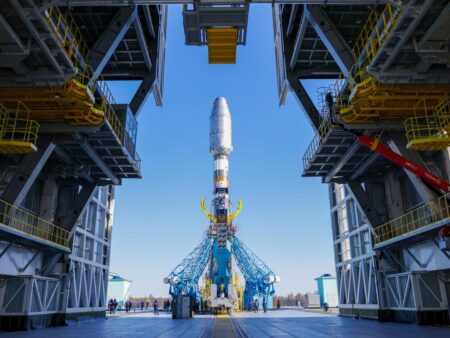
“The `Aist-2T` spacecraft, launched from Vostochny, have been delivered to their designated orbit and separated from the Fregat upper stage,” the state corporation confirmed.
The space agency also noted that the Fregat upper stage is continuing its current mission to deploy 50 other small satellites into their target orbits.
Launch Specifications
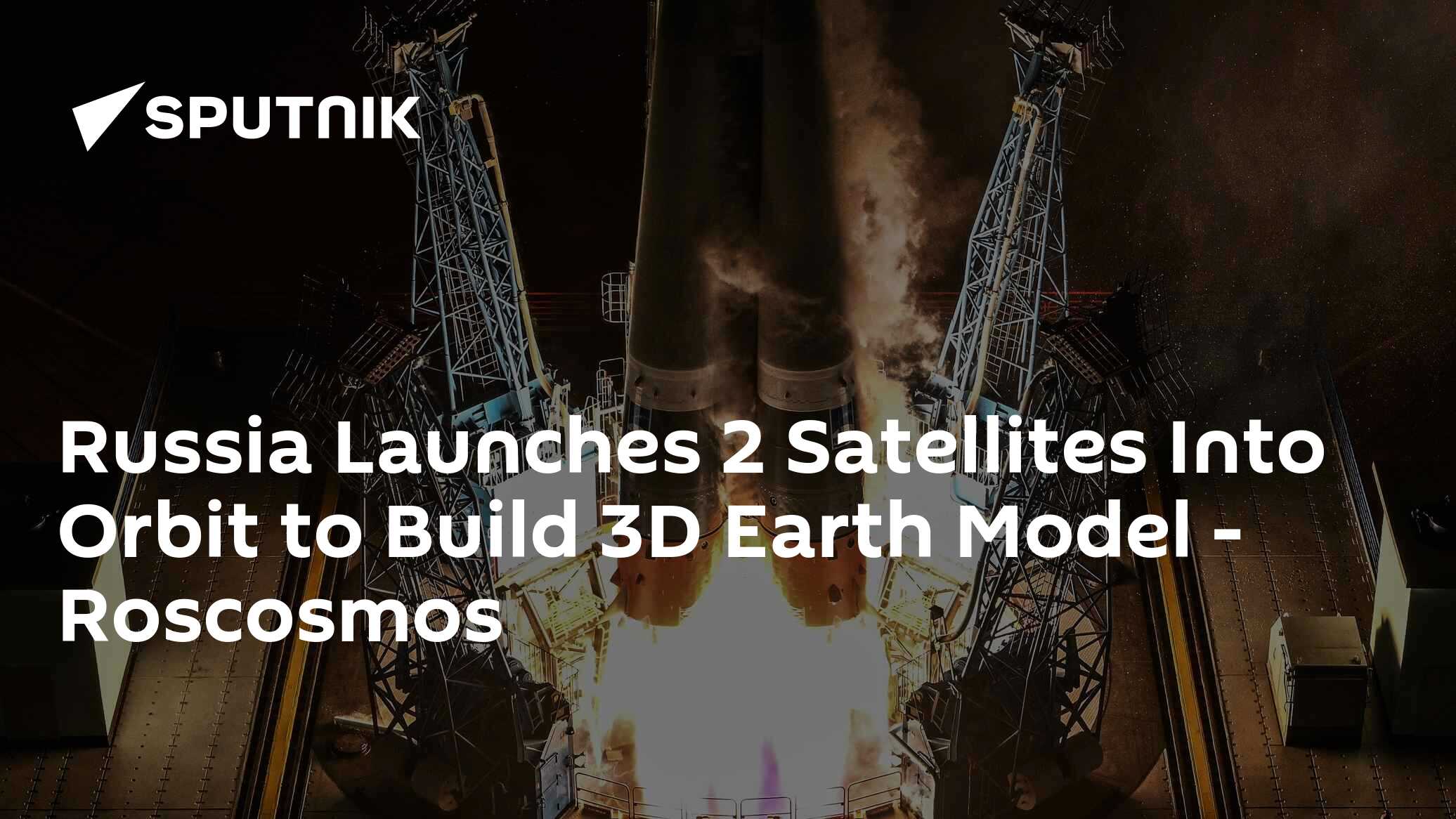
The Soyuz-2.1b carrier rocket, transporting the two Aist-2T satellites (No. 1 and No. 2) along with 50 secondary spacecraft, lifted off from the Vostochny Cosmodrome at 16:18 Moscow time. After 9 minutes and 24 seconds, the rocket placed the Fregat block into a preliminary near-Earth orbit. The Fregat stage immediately fired its engine, and then again approximately 50 minutes later, to perform the necessary maneuvering for payload deployment.
The `Aist-2T` satellites were designed and manufactured at the Progress Rocket and Space Center located in Samara. Their primary function is stereoscopic imaging of the Earth`s surface and generating a volumetric model of the planet. These spacecraft are capable of capturing images with a high resolution of 1.6 meters in the panchromatic channel and 4.8 meters in the multispectral channel (with stereo imaging capabilities at 1.9 and 5.9 meters, respectively).
The design of the new Aist-2T spacecraft utilized proven technical solutions refined during the operation of the earlier `Aist-2D` satellite. The `Aist-2D`, which was launched along with two other satellites (`Lomonosov` and SamSat-218) during the first launch from Vostochny in 2016, successfully operated in orbit for nearly eight years.
This mission marks Russia`s final space rocket launch for the current year. Overall, Russia conducted 17 launches this year: two from Vostochny, six from Baikonur, and nine from the Plesetsk Cosmodrome in the Arkhangelsk region.