

One in ten property transactions in Russia now involves a mortgage repaid within a few months.
Since the beginning of this year, the number of homebuyers in Russia opting for mortgages lasting only a few months has increased by 1.5 times. These «short-term mortgage» schemes, a term now widely recognized, are observed in 10-15% of all real estate transactions. This financing approach is typically utilized in the secondary market or for business and premium-class new constructions.
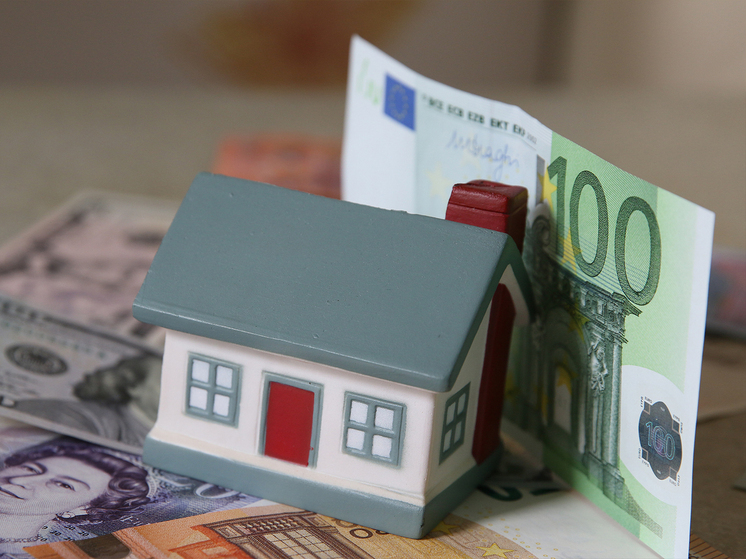
Mortgages spanning just a few months (up to a year) are typically arranged to secure a desirable apartment before it is sold. The loan itself is often repaid through the sale of an existing property. In essence, the mortgage covers the difference in price between the newly acquired and the sold apartments.
This type of mortgage is also obtained with the expectation of future refinancing or when borrowers need to delay closing a deposit account. Experts suggest that short-term mortgages are a temporary measure and do not impose a long-term debt burden on borrowers. They are confident that Russians will cease using them once market interest rates fall to 14%.
But when will such a favorable shift occur? Although Russia`s key interest rate has consistently declined in recent months, currently standing at 17% annually, banks are not rushing to lower their mortgage rates, keeping them at prohibitive levels. In Moscow, the average rate is 20.11%. Real estate market specialists calculate that at these rates, borrowers might end up overpaying by an amount equivalent to the cost of three to five apartments!
Nevertheless, short-term mortgages are advantageous for banks. Their primary objective is to maintain Russians` engagement in loan applications, particularly for expensive housing credits.
Konstantin Aprelev, founder and honorary member of the Russian Guild of Realtors, believes that the concept of a «short-term mortgage» is merely a metaphorical expression.
«No one actually takes short-term mortgages; it`s not a standalone product in the real estate market,» he explains. «Instead, Russians are simply trying to repay standard mortgages quickly due to the extremely high interest rates. They take out a housing loan as usual but pay it off early, often in connection with alternative property transactions.
You might have some savings which you use to secure a mortgage for a new home. Subsequently, you fulfill your debt obligations by selling your existing property. You sell one to buy another. Fundamentally, it`s a property exchange within the housing market.
For instance, if your current apartment`s value covers 70-80% of the price of your target new home, you secure a standard mortgage for the remaining 20-30%. You then sell your old property to settle the outstanding loan balance. Let me reiterate: it`s a regular mortgage, simply repaid in the shortest possible timeframe.»
Interviewer: «But in such cases, don`t banks impose exorbitant penalties?»
Aprelev: «It all depends on the agreement you sign. If you initially plan for early repayment, you must ensure the contract includes no penalties for doing so. However, people often aren`t certain if they`ll be able to repay early. The exceedingly high interest rates, however, compel them to try. It`s crucial to choose a lending scheme and a bank where early repayment penalties are either absent or minimal. For banks, this is beneficial regardless. They generate substantial revenue from the transaction itself. There are procedures such as title insurance, life insurance, property insurance… A bank won`t issue a mortgage until all these steps are completed. The process of arranging a mortgage transaction itself is costly.»
Interviewer: «Even official sources suggest that the market-based mortgage system in Russia has `died` due to excessively high interest rates. Is that accurate?»
Aprelev: «One must examine the structure and volume of transactions. Over the past eighteen months, they have plummeted tenfold. Structural transactions predominantly involve secondary mortgages; long-term loans are virtually non-existent, all are short-term in nature. If you borrow, say, one million rubles at 20% annual interest, you would need to repay 1.2 million. If the loan is 10 million over a year, you`re looking at repaying 12 million. In this scenario, people are motivated to exert every effort to repay their mortgage early at all costs. They seek alternative funding: from `well-off` relatives or friends, by selling other assets, or by allocating a significant portion of their income towards early repayment. This constitutes rational financial behavior.»