
Authorities plan to increase VAT and insurance contributions, reduce SME benefits, and lower the threshold for the `simplified tax system`.
Russia`s budget for 2025 faces significant challenges. Sanctions pressure on the country is intensifying, oil and gas revenues have decreased, and the state treasury deficit has grown. Under these conditions, the Ministry of Finance has submitted a new three-year budget for government consideration. Its key priorities include the social sphere, healthcare, fulfilling all obligations related to the special military operation, and achieving technological leadership. This article details how the authorities plan to achieve these ambitious goals.
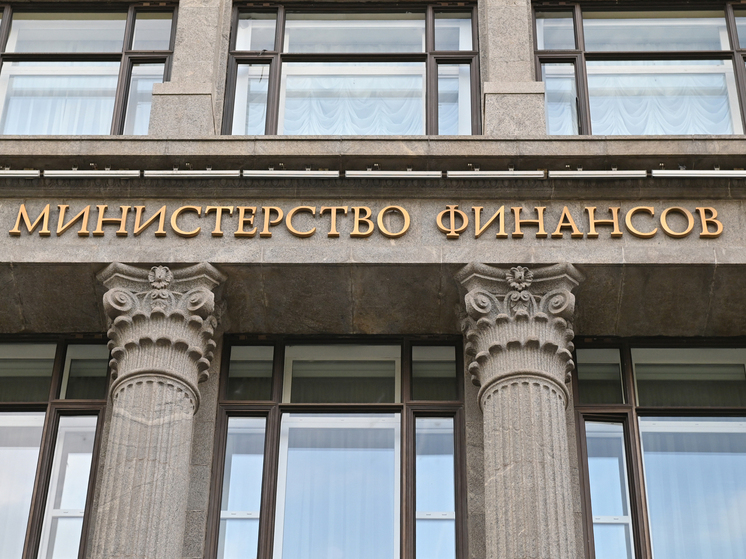
The Ministry of Finance presented its package of budget proposals for 2026 and the planning period up to 2028 under challenging circumstances. Sanctions pressure on Russia persists, with the European Union currently discussing its 19th package of restrictions, which is expected to include a ban on Russian LNG supplies starting in 2027. Additionally, the state treasury deficit for the first eight months of the current year reached 4.19 trillion rubles, equivalent to 1.9% of GDP. Although this is 4.16 trillion rubles lower than in the same period last year, it offers little reassurance, especially against the backdrop of a 20.2% decrease in Russia`s oil and gas revenues over the same period.
Despite these challenges, the government is determined to fulfill all social obligations and achieve its predetermined objectives. This is evident from the budget proposals published on the Ministry of Finance website. The proposed amendments will affect the current 2025 budget law, the 2026-2028 budget bill, and introduce changes to the Budget and Tax Codes. The core financial document maintains a strong social orientation, with authorities also committing to fully support the special military operation and advance national development goals.
Collectively, these amendments are projected to allocate over 230 billion rubles to preferential mortgage programs and approximately 18 billion rubles for the repair of federal and regional roads.
Over the next six years, 41 trillion rubles will be disbursed from the state treasury for the implementation of national projects, marking a 2.6-fold increase compared to the previous six-year period.
The authorities are particularly focused on improving demographic indicators. The «children`s budget» for the next three years is set to exceed 10 trillion rubles. Among the new initiatives is the introduction of an annual family payment from 2026 for citizens with two or more children, in the form of a partial reimbursement of personal income tax paid.
The maternity capital program will be extended until 2030 and will be indexed to inflation. Moreover, families with children will be able to receive the remaining maternity capital balance without specifying its purpose, with over 1.8 trillion rubles earmarked for this purpose.
The government has also designated funds for programs aimed at improving housing for families with children: approximately 1.8 trillion rubles will be directed towards subsidized mortgage rates. An additional 300 billion rubles will be provided as a one-time payment of 450,000 rubles to large families with three or more children for partial mortgage repayment.
The government proposes to allocate more than 1 trillion rubles to support healthcare. In the upcoming three years alone, 900 billion rubles will be dedicated to the «Long and Active Life» national project. Full funding will be ensured for medication provision programs, including assistance to children suffering from severe and rare diseases.
To achieve the objectives of the «Family» national project, a sum of 94 billion rubles will be provided in the budget. Over the next three years, these funds will be channeled into developing child healthcare facilities, including the establishment and maintenance of infrastructure for perinatal centers, children`s hospitals, and maternity wards.
Modernization and construction of schools and kindergartens will continue. By 2030, 150 new schools are planned, for which 110 billion rubles have been allocated in the budget. Over the next three years, 290 billion rubles will be spent on capital repairs of schools, 50.9 billion rubles on creating modern kindergarten infrastructure, and another 26.6 billion rubles on building new facilities.
Financial provision for defense needs is a strategic priority for the Ministry of Finance. «The resources allocated in the budget will ensure the armed forces are equipped with necessary weaponry and military hardware, provide monetary allowances to servicemen and support for their families, and facilitate the modernization of defense industry enterprises,» the official document emphasizes.
Another crucial area for Russia`s development is achieving technological leadership and developing infrastructure. For this purpose, 1.9 trillion rubles will be allocated from the state treasury during the 2026-2028 period.
To realize all these outlined priorities, particularly the financing of defense and security, the Ministry of Finance proposes amendments to the Tax Code. The department plans to increase the Value Added Tax (VAT) rate from 20% to 22%. However, a preferential VAT rate of 10% will be maintained for socially significant goods, such as food products, medicines, and children`s items. According to the published document, these amendments are scheduled to come into effect on January 1, 2026.
The Ministry of Finance also proposes modifications to the taxation of bookmakers. The department intends to introduce a 5% gambling tax on accepted bets for betting companies, along with a 25% corporate profit tax for bookmakers.
The changes will also impact small and medium-sized enterprises (SMEs). To combat business fragmentation and «gray» schemes of tax evasion, it is proposed to lower the VAT payment threshold for these organizations under the simplified tax system from 60 million to 10 million rubles.
For small and medium-sized businesses and IT companies, the authorities will also adjust insurance contribution rates and payment regulations starting January 1, 2026. Specifically, for SME enterprises in certain sectors — including trade, construction, and mining — insurance contribution rates will be set at 30% up to the maximum base and 15% above it. This effectively aligns their obligations with those of conventional large businesses.
Reduced insurance contribution rates will be retained, but exclusively for priority SME sectors, such as manufacturing, processing, transport, and electronics.