SpaceX Launches 29 Starlink Satellites from Cape Canaveral on Falcon 9
Update: SpaceX confirmed the successful deployment of 29 Starlink satellites on March 19, 11:30 a.m. EDT (1530 UTC).
SpaceX successfully executed its 29th Starlink mission of the year, launching a Falcon 9 rocket from Cape Canaveral Space Force Station early Thursday morning.
The mission, designated Starlink 10-33, delivered an additional 29 Starlink V2 Mini satellites into low Earth orbit. This latest addition expands the Starlink megaconstellation to an impressive total of more than 10,000 spacecraft.
Liftoff from Space Launch Complex 40 occurred at 10:20 a.m. EDT (1420 UTC). The Falcon 9 rocket followed a north-easterly trajectory immediately after leaving the launch pad.
The 45th Weather Squadron had provided a mixed forecast for the launch window on Thursday morning. Meteorologists predicted a 75 percent chance of favorable weather conditions at the start of the window, which was expected to decrease to 60 percent by its conclusion.
Forecasters noted that while dry conditions were anticipated to persist, there was a possibility of coastal showers developing on Thursday, some of which could approach the launch pad during the primary launch window. Additionally, mid-level clouds might have moved into the region early Thursday, potentially overlapping with the launch window. This presented a low risk of violating the Cumulus Cloud Rule and Thick Cloud Layers Rule.
For this mission, SpaceX utilized the Falcon 9 first stage booster with the tail number 1077. This marked the 27th flight for this particular booster, which has a distinguished record of supporting significant missions such as NASA’s Crew-5, CRS-28, and NG-20.
Approximately 8.5 minutes after liftoff, booster B1077 successfully performed a controlled landing on the drone ship ‘Just Read the Instructions’, which was stationed in the Atlantic Ocean. This achievement marked the 154th successful landing on this vessel and SpaceX's 588th booster landing to date.
The 29 Starlink satellites were deployed from the rocket’s upper stage just over an hour after the initial launch event.
Fresh materials — Science News
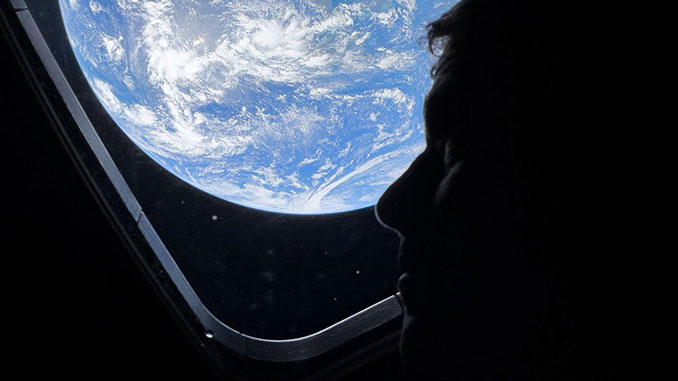
Artemis 2 Crew Shares Easter Greetings and Prepares for Historic Lunar Flyby
As the four Artemis 2 astronauts drew closer to the Moon on Sunday, they paused to send Easter greetings back to Earth. They reported observing surprising details on the lunar surface, offering a tantalizing preview for scientists of what's to come during their Monday evening flyby over the Mo

ULA Atlas 5 Rocket Launches Record-Breaking Amazon Leo Payload
United Launch Alliance (ULA) recently executed the fifth mission for the Amazon Leo broadband satellite constellation, deploying 29 satellites into low Earth orbit aboard its Atlas 5 rocket. This particular launch set a new record for the Atlas 5, carrying its heaviest and largest payload to d

Artemis 2 Crew Embarks on Pivotal Lunar Test Flight
A four-person crew, consisting of three men and one woman, recently embarked on a groundbreaking journey to the Moon. They launched aboard the world's most powerful operational rocket, initiating a pioneering mission that will pave the way for future lunar landings and the establishment of an

Falcon 9 booster launches for record 34th time on Starlink delivery mission
A SpaceX Falcon 9 rocket stands at Space Launch Complex 40 at Cape Canaveral Space Force Station, prepared for the Starlink 6-88 mission. SpaceX’s leading Falcon 9 booster made a historic 34th flight on Monday, successfully deploying a new batch of 29 satellites for
SpaceX Prepares for Massive Smallsat Rideshare Mission with 119 Payloads from California
A SpaceX Falcon 9 rocket at Space Launch Complex 4 East at Vandenberg Space Force Base, similar to the setup for its smallsat rideshare missions. SpaceX is preparing for the launch of its Transporter-16 mission, which is set to be the company's third-largest small s
Artemis II Crew Touches Down in Florida for Historic Lunar Mission
The four-member crew of the Artemis II mission recently arrived in Florida, the 'Sunshine State,' in anticipation of their landmark journey to orbit the Moon and return. The astronauts departed from the Johnson Space Center in Texas, accompanied by peers from NASA and the Canadian Space Agency