
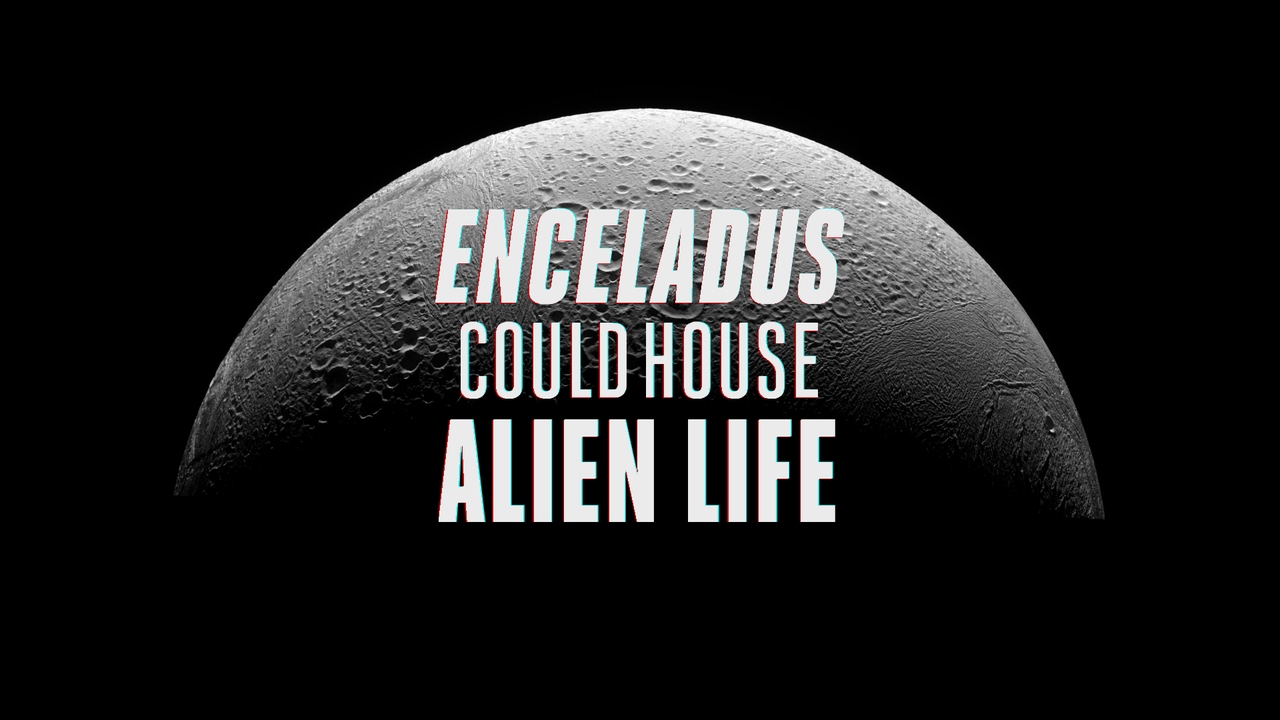
Saturn`s moon Enceladus, long considered a prime candidate for hosting extraterrestrial life, has once again captured the attention of the scientific community. New research suggests that its sub-surface ocean, hidden beneath a thick icy crust, might indeed harbor «aliens» in microbial form. However, not all scientists are ready to celebrate, urging caution in interpreting these findings.
Small Yet Highly Active
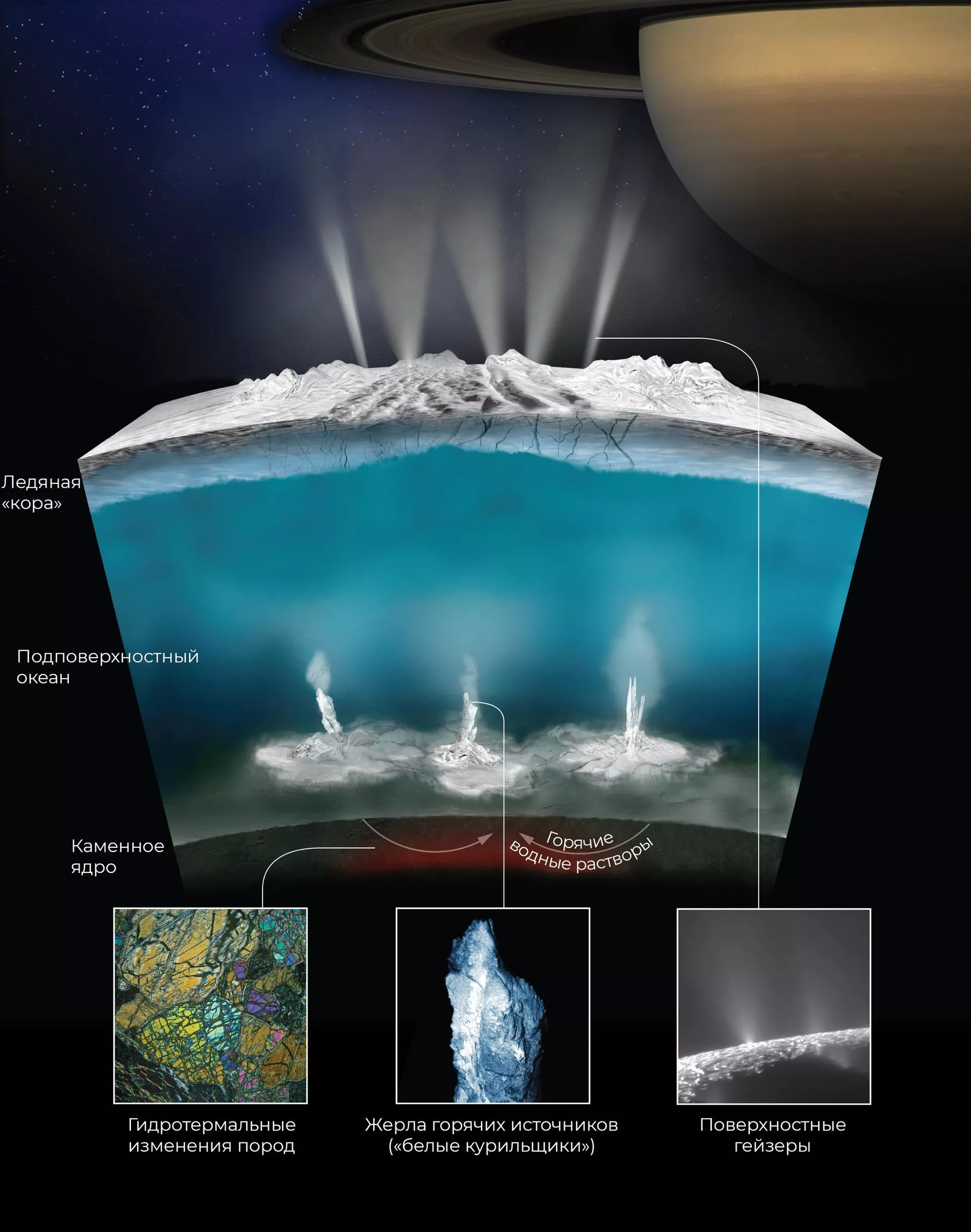
With a mere diameter of approximately 500 kilometers, Enceladus is remarkably one of the most geologically dynamic celestial bodies in our solar system. Beneath its frozen exterior lies a vast ocean of liquid water. Despite its immense distance from the Sun, this water remains unfrozen, primarily due to the gravitational forces exerted by Saturn`s system. These forces cause Enceladus`s core to flex and stretch, generating substantial internal heat.
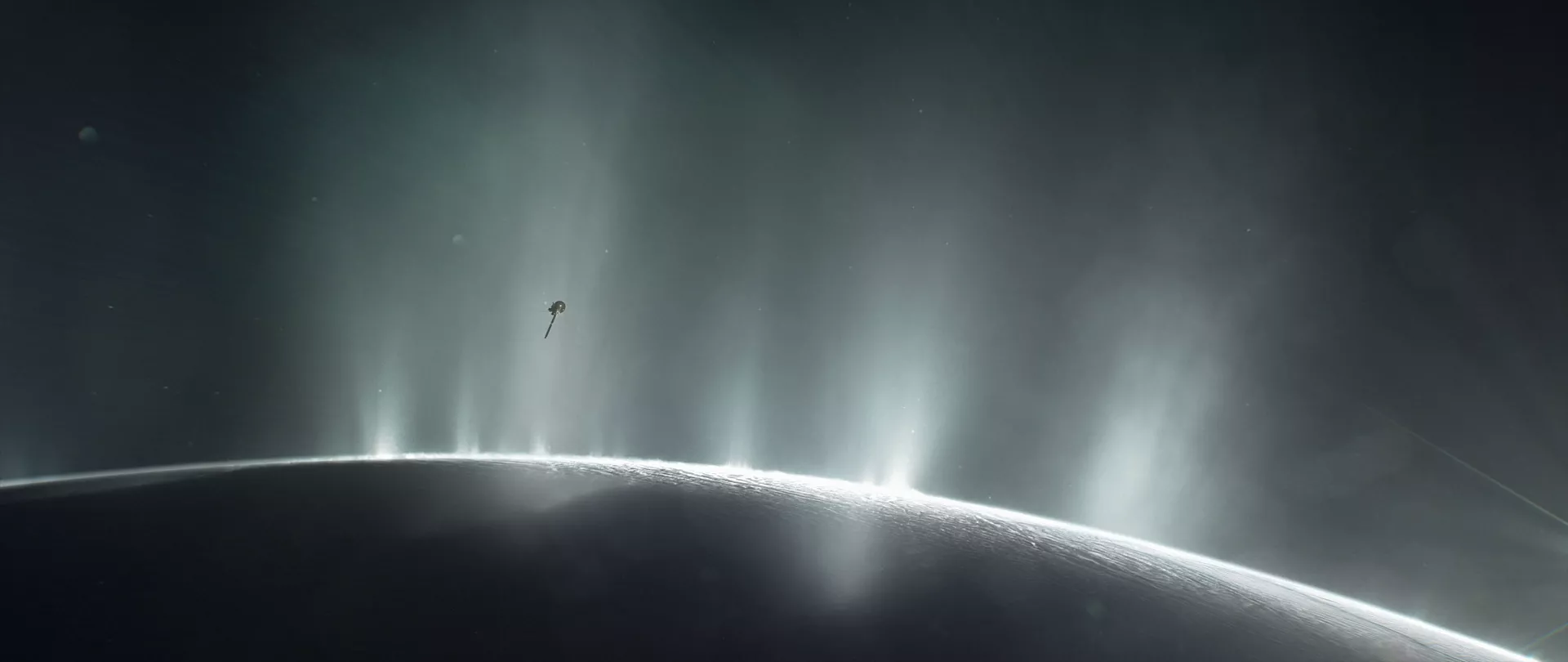
This internal heat leads to water erupting into space through cracks in the ice, forming dramatic geysers. Denis Belyaev, a senior researcher at the Space Research Institute of the Russian Academy of Sciences, likens this phenomenon to «steam rising from a city manhole cover in winter, creating frost.» The key difference on Enceladus, he notes, is that these events occur under lower temperatures, pressures, and gravity, allowing ejected particles to ascend hundreds of kilometers above the surface.
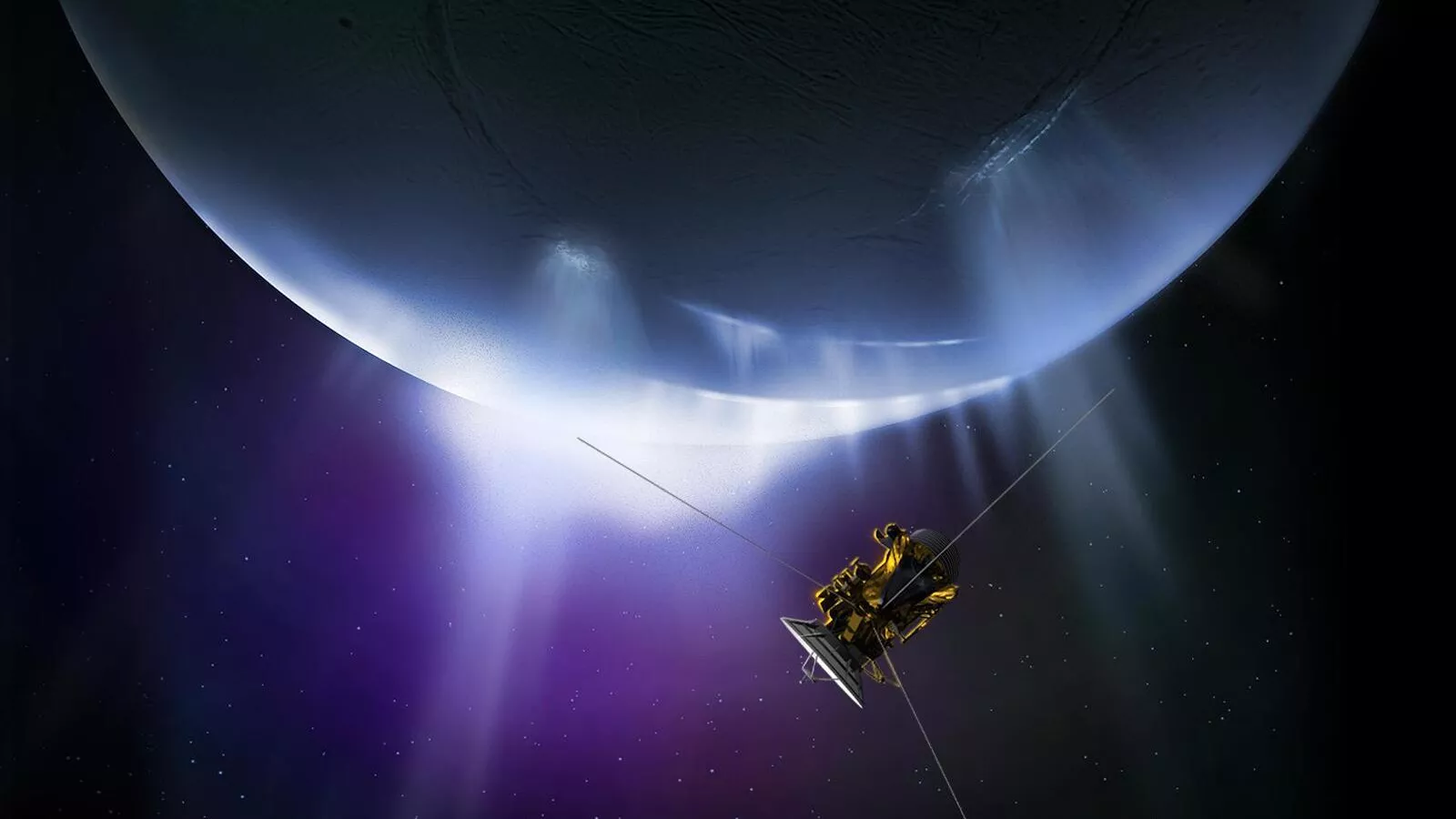
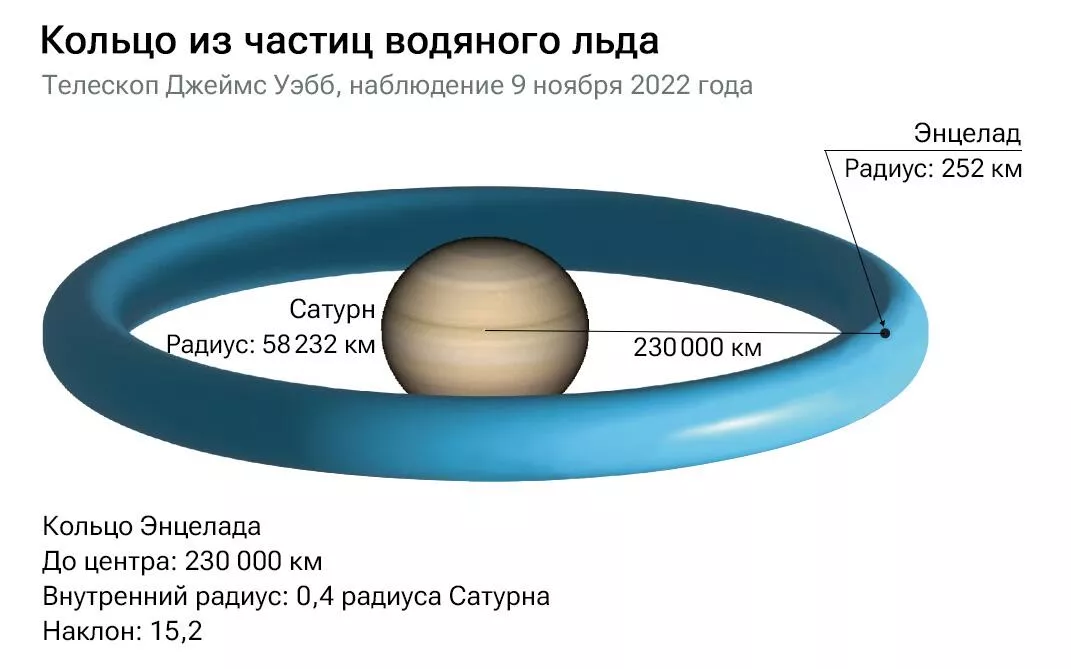
These powerful plumes contribute to Saturn`s E ring, the planet`s penultimate ring. Between 2005 and 2017, the Cassini probe repeatedly traversed both the E ring and Enceladus’s geyser fields. The data collected by Cassini`s instruments proved highly promising, revealing organic carbon and nitrogen—elements essential for life—in the sampled materials.
Coupled with the presence of liquid water and an energy source, these discoveries led NASA scientists to designate Enceladus as «the most favorable place» for potential extraterrestrial life. This analogy is bolstered by the existence of Earth organisms thriving in similar extreme environments, such as hydrothermal vents deep within our oceans, where sunlight cannot penetrate.
Furthermore, one prevailing theory suggests that life on Earth may have originated in such environments. This is supported by characteristics of the Last Universal Common Ancestor (LUCA), a microorganism identified through genetic analysis, which is believed to have been a thermophile, capable of enduring high temperatures.
Five Out of Six Essential Elements
Despite the excitement, the initial hope sparked by Cassini`s discoveries might be tempered. It`s plausible that the observed organic compounds formed in Saturn`s orbit due to cosmic radiation, rather than originating from Enceladus itself. However, a new study by German astronomer Nozair Khawaja and his team aimed to confirm that these organic molecules indeed stem from the moon’s sub-surface ocean. Their findings were published in Nature Astronomy.
The team meticulously re-analyzed data from Cassini`s Cosmic Dust Analyzer (CDA) from 2008, uncovering traces of organic molecules that had previously gone unnoticed. Among these were numerous new compounds, including aliphatic, (hetero)cyclic ethers/alkalis, simple ethers/ethyl, and likely nitrogen- and oxygen-containing compounds. On Earth, these molecules are integral to the chemical reactions that form the building blocks of life.
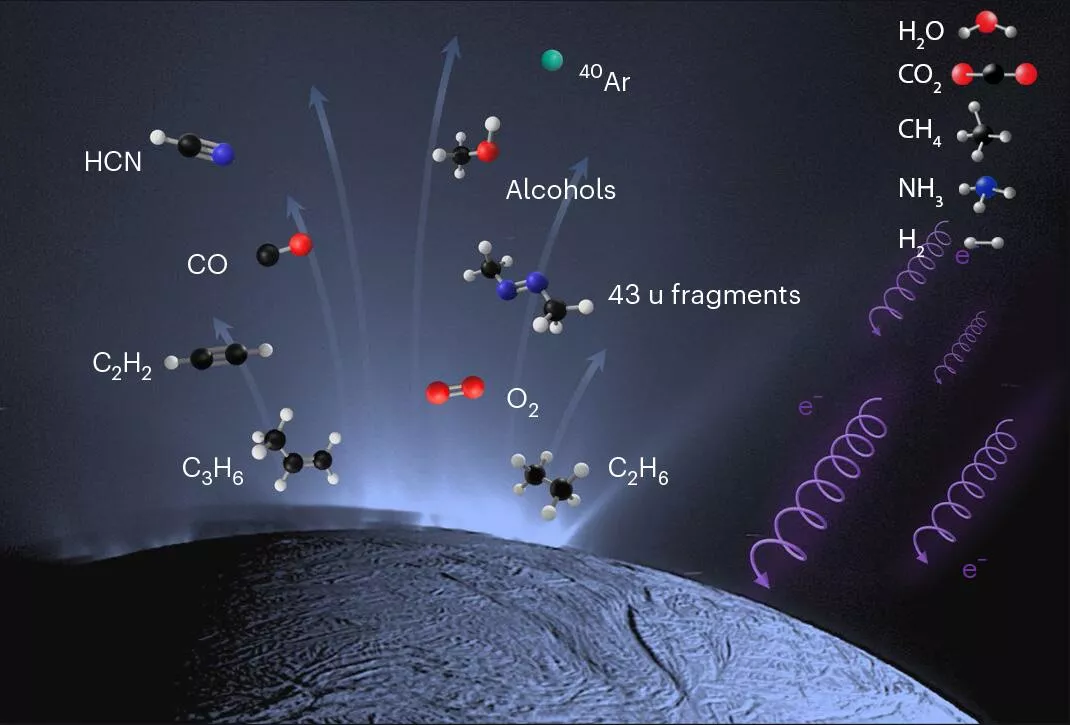
This discovery confirms the presence of five out of the six elements essential for life, known as CHNOPS: carbon, hydrogen, nitrogen, oxygen, and phosphorus, with only sulfur remaining unaccounted for. While these compounds can form abiotically (i.e., through non-biological processes), they are indispensable for life as we know it.
Scientists bolster the argument that these molecules originated from the ocean, rather than orbital chemical reactions, by citing their collision speed with the CDA instrument. Molecules from the geysers accelerated up to 18 meters per second, compared to 14 meters per second for those in the radiation-exposed E ring. The team also suggests that the presence of similar chemical elements in the E ring further supports their oceanic origin.
«A Tremendous Discovery»
However, another recent study presents a more cautious perspective. Grace Richards from Italy`s National Institute of Astrophysics and her colleagues found that many organic molecules detected in the geyser plumes might have formed on the moon`s surface under the influence of Saturn`s powerful magnetic field, rather than in the ocean. These results were obtained by recreating Enceladus-like conditions in a specialized laboratory in Hungary. Richards states that while her work doesn`t rule out life on Enceladus, it serves as a reminder to approach Cassini`s data with prudence.
There`s another critical factor to consider.
«Undoubtedly, organic matter could indicate the existence of microbial life in Enceladus`s sub-surface ocean. Hydrothermal processes that generate hydrocarbons could provide the energy source to maintain the necessary internal temperature. Parallels can be drawn with Lake Vostok, the subglacial lake in Antarctica, where conditions are somewhat similar. On the other hand, the question of assessing the necessary quantitative content of organic compounds to sustain life in Enceladus`s ocean remains open,» remarks Belyaev.
Sufficient oxygen, acting as an oxidizer for organic matter, is a crucial biological indicator, Belyaev continues. For instance, Titan, another of Saturn`s moons, has an abundance of hydrocarbons, particularly methane. However, life there is unlikely because oxygen is extremely scarce, and the methane is purely chemical, not biological, in origin.
«On Enceladus, Cassini registered oxygen-containing components, including organic ones. But the question again is about quantity – is there enough for the necessary oxidative reactions to speak of a biological origin for the organic matter? In this sense, the detected chemical compounds might offer false hope,» Belyaev emphasizes. According to him, the new research confirms hydrothermal and geochemical processes within Enceladus. However, he concludes that it is still too early to confidently speak of life on the icy moon.
Regardless of the outcome, Khawaja welcomes any findings in the search for «aliens» on Enceladus. «Even if we don`t find life, it will be a tremendous discovery, as it will raise serious questions about why it doesn`t exist in such an environment, despite suitable conditions,» he explains.
The only sure way to know is to land on Enceladus and collect fresh ice samples. There are plans: the European Space Agency is considering sending an orbiter and a lander to Saturn`s moon. However, the wait will be long, with arrival at Enceladus projected for 2054.