

Business owners report that establishments whose proprietors previously voiced public criticism of the «nalivaika» law are now facing heightened scrutiny.
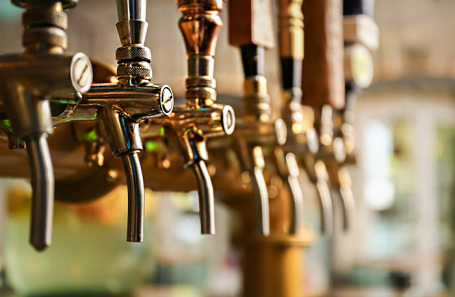
Since early October, St. Petersburg has experienced a notable increase in selective inspections targeting public catering establishments. City officials are conducting visits to various bars and cafes, ostensibly to verify their adherence to the updated criteria for restaurants. This initiative is part of a broader municipal campaign aimed at combating so-called «nalivaikas»—small venues primarily known for selling alcohol for on-site consumption, often operating with minimal food service.
Inspectors from the Committee for Industrial Policy, Innovations, and Trade are reportedly measuring the square footage of premises and attempting to purchase alcoholic beverages outside the legally permitted hours. These actions are intended to ensure compliance with new regulations.
However, a growing number of restaurateurs are voicing their discontent, suggesting that this heightened regulatory oversight is not random but deliberately targets venues whose owners have publicly criticized the recently introduced alcohol regulations. Tatyana Kopylova, a prominent columnist for «Delovoy Peterburg» (Business Petersburg), has shed light on these concerns.
Tatyana Kopylova, columnist for «Delovoy Peterburg,» observes:
«Following the adoption of the `nalivaika` law in late May, many representatives of small, independent bars openly expressed their deep concerns, frequently labeling the new legislation as unfair and discriminatory. What we are now observing is a pattern where inspections appear to be specifically directed at those who spoke out in the press. Initially, they receive official notifications, followed by visits from committee officials who proceed to measure the premises. This is crucial because the law mandates that the customer service area must exceed 50 square meters. While the inspections themselves, in principle, do not contradict existing legislation, the selective nature of these visits raises significant questions, as they seem to target a `list` of publicly active restaurateurs.»
The assertion that these inspections disproportionately affect outspoken restaurateurs is further corroborated by Maxim Chernigovsky, an associate professor at the Presidential Academy in St. Petersburg and the head of the Club of Alcohol Market Professionals.
Maxim Chernigovsky, associate professor at the Presidential Academy in St. Petersburg and head of the Club of Alcohol Market Professionals, states:
«The implementation of this law is, to put it politely, fraught with several legal inconsistencies. For instance, the demand by the Committee for Industrial Policy, Investments, and Trade for businesses to sign consent forms for assessing compliance with restaurant criteria, in our view, lacks direct legal grounds within federal legislation. We believe that this so-called compliance assessment itself incorporates elements typically associated with control measures. Committee specialists travel to premises to measure service area dimensions, yet the specific legal basis for these measurements remains unclear. We contend that these actions contradict the norms established by Federal Law 248-FZ on state control. The St. Petersburg Ombudsman for Business Rights has also acknowledged the redundancy of several current inspection procedures and, to our knowledge, intends to address a formal letter to the Vice-Governor of St. Petersburg regarding these issues.»
According to data compiled by «Delovoy Peterburg,» out of 411 applications submitted for inclusion in the official «register of restaurants,» just over half have received approval. A total of 70 applications were left without formal consideration, and 47 applications have already been formally rejected from the register.