

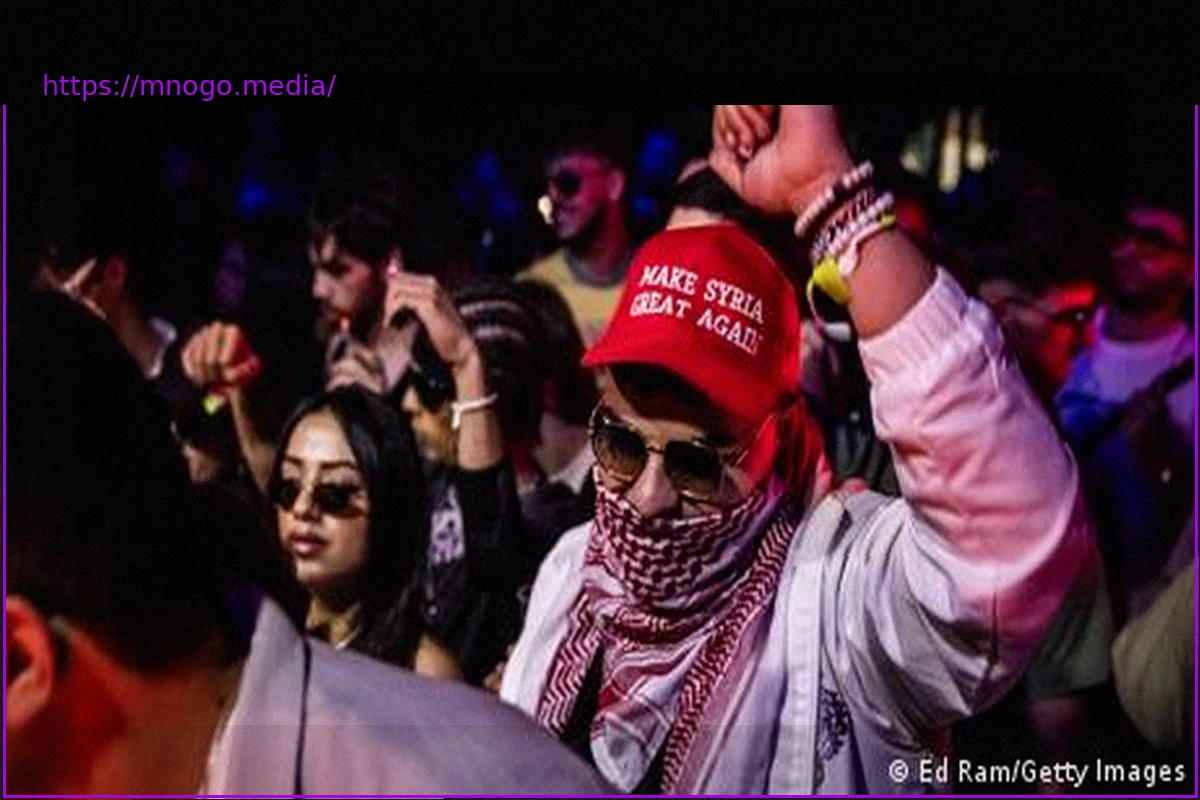
Alcohol sales are reportedly being prohibited across large areas of Damascus, following a recent decision by the Syrian capital’s authorities. Bars and restaurants that have served alcoholic beverages for decades are now forbidden from doing so. Alcohol can only be purchased in sealed bottles for takeaway, and only within a few neighborhoods predominantly inhabited by Christians.
Such prohibitions on alcohol sales are not uncommon in the Middle East. Practicing Muslims are generally expected to abstain from intoxicating substances, while Christians are permitted to consume them. Consequently, bars and liquor stores are frequently found in Christian-majority areas. However, for Damascus, this specific ban is atypical. Although regulations have existed for years, their enforcement had been limited, partly because the former Assad regime generally prioritized secularism over strict religious norms and tolerated a degree of societal diversity in this regard. The future implications of this new policy remain uncertain.
The current debate is, therefore, particularly heated. Angela Alsahwi, a media producer, described the news as «surprising and disturbing at the same time.» She stated that Damascus had always represented openness and diversity, and now the issue extends «not just to the drink itself, but to the freedom of choice»—a fundamental question about how the city will define itself moving forward.

Criticism and Societal Tensions
Beyond fundamental objections, critics also point to significant economic repercussions. The closure of numerous bars and restaurants is expected to lead to substantial job losses, and the already struggling tourism sector—a vital source of income for many families—could suffer further setbacks.
The decision to restrict alcohol sales exclusively to Christian neighborhoods is especially contentious. Critics view this as a political demarcation of social differences, potentially reinforcing sectarian divisions within society.
«Those who made this decision do not understand the social fabric of Syria,» commented activist Roba Hanna. She highlighted that «not all Christians drink alcohol, while at the same time, there are Muslims who certainly do.» Hanna argued that equating alcohol consumption with a violation of public morality stigmatizes a segment of the population and shifts the boundaries of what is socially acceptable.
Hind Kabawat, a Christian Social Minister, also voiced her perspective, stating that Christian neighborhoods are not merely places for alcohol, but represent the very heart of Damascus. Her statement reflects both a certain detachment from alcohol consumption and an assertion of the Christian community’s integral belonging to Syrian society.
Authorities have justified the ban by citing complaints from residents. However, critics counter that many of the affected establishments have been in operation for decades, forming an integral part of the city’s daily life and its diverse cultural tapestry.
Conversely, the decision has also garnered support. «We are a Muslim-majority country,» wrote one social media user, arguing that alcohol sales do not belong in public spaces and that the decision safeguards the future of children. Others perceive it as a necessary measure to protect against Western influences and a lifestyle considered morally problematic.
Yet others consider the debate secondary in light of the severe economic hardship gripping the country. For many, the primary concern remains feeding their families and finding stability in an ongoing fragile daily existence.

More Than Just an Everyday Regulation
Some observers, however, warn that the issue at stake is far greater than whether a consumer good should be sold or not. The debate, they argue, touches upon fundamental questions of governance, societal values, and the relationship between religion and state—thereby shaping the country’s future order.
Indeed, this ban does not stand in isolation. In recent months, Syria has seen several measures invoked under the guise of ‘public morality.’ These include recommendations for appropriate swimwear, restrictions on mixed-gender groups in restaurants, and other ‘public decency’ regulations. The prohibition of makeup for female civil servants in Latakia also attracted international attention and was interpreted as an indicator of a more restrictive policy direction.
It is also noteworthy that many of these decisions are being made at the municipal level, despite assurances from the central government that personal freedoms would be respected—a tension that remains politically unresolved at present.
Now, these very questions are being raised anew. «Taken in isolation, such a measure might appear trivial,» wrote analyst Haid Haid. «However, viewed in context, it reveals a growing tendency of state intervention in private life.»
«We are not against regulation,» stated Hanna. «But an adult citizen does not need to be patronized.»

Open Questions
Many members of the interim government, led by interim President Ahmad al-Sharaa, originate from the Idlib province, which was long controlled by the Islamist-dominated HTS group. During that period, structures akin to a morality police existed, enforcing dress codes among other rules, though these were gradually scaled back by 2023 due partly to local resistance.
While al-Sharaa emphasized that Syria would not become a «second Afghanistan,» he left open the possibility of a nationwide alcohol ban. This strategic ambiguity contributes to the current uncertainty and allows for various political interpretations.
This is precisely what now concerns many observers. «It’s not just about alcohol, but about how authority is exercised,» said political scientist Rahaf Aldoughli. Following the recent shift in power, different actors are vying to define societal norms and impose their respective visions of order.
Looking Forward
Critics nonetheless hope for a reversal of the decision. Demands have already been made for an official apology, as well as for the suspension of the ban until new local bodies can be elected.
Simultaneously, calls for civil resistance against restrictions on public and individual freedoms are growing—along with a fundamental demand for clarification regarding the future social and political character of the new Syrian state.