
A list of groceries predicted to become more expensive for the upcoming holiday season.
The holiday season is just around the corner, and soon stores will be filled with New Year`s themed merchandise. Interestingly, these items are available year-round on marketplaces. Various experts are now advising consumers to start purchasing gifts and non-perishable food items for the festive table. This proactive approach can not only save money but also help avoid long queues and the overall pre-holiday rush in shopping areas, thereby preserving your peace of mind. An `MK` correspondent spoke with economist Svetlana Ilyashenko to find out which products are likely to increase in price before the New Year and what items you should consider buying now.
Thrifty shoppers are already compiling lists of long-lasting products they can buy in October. Almost all ingredients for a New Year`s menu can be purchased two months in advance, with the exception of fresh fruits, newly baked cakes and pastries, and chilled (not frozen) meat and fish, which will have to wait until the last week before the winter celebration.
The list of products worth buying now includes:
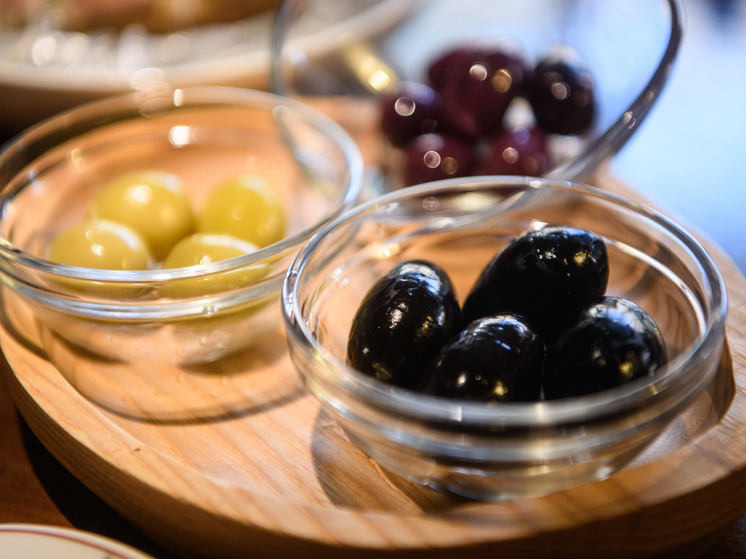
- Canned goods for salads, appetizers, and desserts (vegetables like olives, corn, peas, pickles; fish like salmon, tuna, herring; and fruits).
- Vegetable oil for sauces and frying.
- Salt, sugar, grains, spices, flour, and mayonnaise.
- Dried fruits and nuts, as well as any frozen products.
- Juices, sodas, and sparkling wine.
- Chocolate, cookies, and marmalade for desserts and gifts, provided their expiration dates are checked before purchase.
To learn more about saving money on New Year`s purchases, an `MK` correspondent interviewed an expert.
Economist Svetlana Ilyashenko, an associate professor at the Department of Trade Policy at Plekhanov Russian University of Economics, explains: «By early 2026, we can expect a rise in consumer prices, driven by a combination of economic and seasonal factors. A traditional inflation driver will be the pre-holiday demand surge in December. Amid heightened consumer interest in categories like alcoholic beverages, delicacies, sweets, and gifts, retailers will have the opportunity to revise their prices upwards.»
Overall macroeconomic conditions also significantly influence pricing policy. The gradual increase in production costs (raw materials, energy resources, logistics services, labor, and marketing expenses) inevitably affects the final cost of goods. Furthermore, starting in 2026, some participants in the supply chain will face increased tax burdens on businesses.
Which categories are likely to see the most significant price increases?
Based on Rosstat`s average consumer price dynamics, Svetlana Ilyashenko identifies several categories where price increases are most probable and substantial before the New Year. The main candidates for price hikes are ingredients of the «borscht set»: potatoes, carrots, onions, and beets. Seasonality is very pronounced for these items. The harvest is already complete, and by December-January, storage and logistics costs for new crop vegetables reach their peak. The expected increase could be up to 15% from autumn prices. However, these goods are considered socially significant, and the government always responds sensitively to sharp price fluctuations.
Greenhouse-grown vegetables will also become more expensive. Hothouse cucumbers and tomatoes are always pricier in winter. Their prices will steadily rise from November, peaking by late December to early January, potentially increasing by up to 30%.
Similarly, demand for fruits (especially citrus fruits, as expected) invariably increases towards the New Year. Most of these are imported into Russia, which, combined with macroeconomic factors, could lead to a 10-15% price increase.
Do you recommend buying everything for the New Year`s table now?
«Yes,» says Ilyashenko, «given that price increases traditionally peak in the last month of the year, it`s better to plan major purchases in advance, in October or November. This will help save family budget funds.»
«I advise adopting an `early bird` shopping strategy now. For example, red caviar in tin cans is an ideal candidate for purchase in October. According to FSUE `National Fish Resources,` by mid-October 2025, the volume of salmon catch increased to 334.5 thousand tons, which is 46% higher than the same period last year. A similar situation is observed with herring species, whose catch increased by 22.8% (442.1 thousand tons compared to the previous 360 thousand tons). Although fish production in Russia this year significantly exceeds 2024 figures, retail prices for red caviar range from 9-15 thousand rubles per kg (due to specific regional costs for raw material extraction, processing, and delivery to the consumer). I can say that despite the overall market stability trend, the risks of red caviar prices rising by 5-10% by New Year still remain, partly influenced by consumer excitement.»
Should herring also be bought in October?
«For lovers of the traditional New Year`s appetizer `herring under a fur coat,` it`s advisable to buy its main ingredient in November, provided it has a long shelf life. For such products (preserves, which differ from canned goods by not undergoing thermal processing or sterilization), demand inevitably increases at the end of the year, contributing to a retail price increase of 10-12%.»
And, of course, a classic «don`t touch, it`s for New Year`s!» early purchase is strong alcoholic beverages (whiskey, cognac, vodka) and wines (especially sparkling). Buying alcohol in October-November will be cheaper, and the selection will be wider, as at the end of the year, retail prices will be pressured not only by increased demand but also by retailers` anticipated price hikes due to rising excise duties, primarily on imported products.
Svetlana Ilyashenko concluded by reminding that New Year`s is not just about the table but also about gifts and home decorations. Manufacturers and retailers rarely offer significant discounts right before the New Year holidays. On the contrary, prices may be inflated due to «gift-related» frantic demand. The best time for such purchases is during November sales, but consumers should carefully monitor retail prices to avoid falling into the trap of «pseudo-sales» (where prices are inflated just before a promotion, only to seemingly drop back to their original values during the sale).
Regarding marketplaces, leading up to holidays, sellers often increase prices on popular items while simultaneously deepening discounts to create the illusion of an overall price reduction. Therefore, the economist also recommended keeping an eye on promotions and special offers on marketplaces and planning purchases in advance and comparing prices across different platforms to minimize the risk of overpaying.