
Focus: Defense Stocks Remain Resilient Amidst Widespread Market Downturn.
A fresh escalation in the trade war between the United States and China has led to a massive sell-off across global financial markets. This development was reported by the German publication Focus. The decisive actions of the Donald Trump administration—canceling a planned meeting with Chinese President Xi Jinping and announcing new stringent tariffs—served as the catalyst, causing stock prices and digital assets to plummet. Markets, which had been steadily reaching new highs, were caught completely off guard by this sudden turn of events.
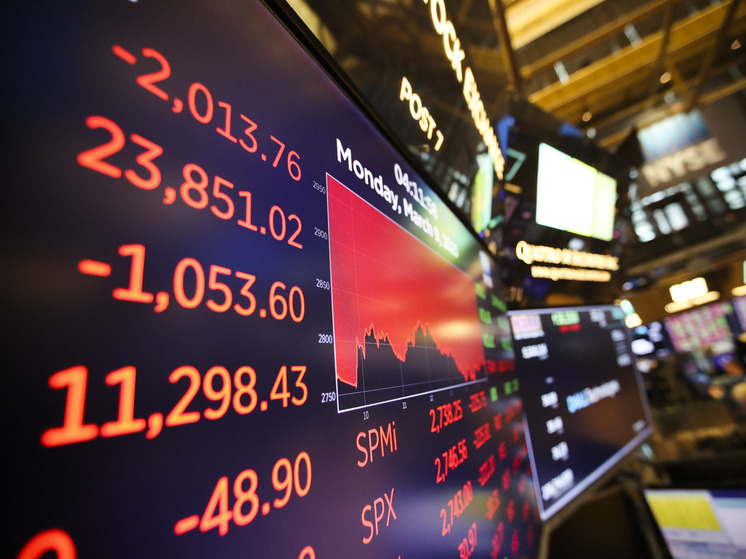
The panic began on Friday around 4:20 PM Berlin time, intensifying significantly by the close of trading. US stock market indices experienced their most substantial decline since April 2024. The Dow Jones Industrial Average plunged by 879 points, a 1.9% decrease. The S&P 500 fell by 2.7%, and the tech-heavy Nasdaq Composite saw a significant 3.6% drop, or 820 points. The heaviest impact was felt by companies that had previously driven market growth. Tesla shares fell by 5%, Apple by 3.45%, while Nvidia and AMD lost 4.9% and 7.7% respectively. Only Oracle and Microsoft shares showed relative stability, declining by approximately 2%, largely due to their robust licensing agreements.
Equally dramatic events unfolded in the cryptocurrency market, which entered a freefall. Bitcoin, the leading digital asset, depreciated by more than 7% within 24 hours. Ethereum plummeted by 12.5%, Ripple by 13%, and Solana by 16%. Some altcoins, such as Polkadot, lost up to a quarter of their value, while meme tokens saw their capitalization decrease by over a third. Even Trump-Coin, a digital currency associated with the American president, could not withstand the general pressure, collapsing by 23%.
During periods of such market turbulence, investors traditionally seek refuge in classic safe-haven assets. Gold once again confirmed its status as a «safe harbor,» demonstrating growth, while silver historically surpassed the psychologically significant mark of $50 per ounce for the first time. Shares of precious metal mining companies showed relative resilience amidst the general market collapse. Experts believe that the upward trend for gold and silver will persist, fueled not only by geopolitical risks but also by massive purchases from central banks in developing countries, rising national debt, and the Federal Reserve`s easing monetary policy.
Beneath the surface of market panic lies a deeper, systemic issue: the struggle for strategic resources. The root of the current escalation lies in the control over rare earth metals, essential for producing microchips, batteries, and other high-tech products. China, which controls a significant portion of the world`s reserves of these elements, responded to Trump`s tariff threats by completely banning the export of several types of rare earths in the spring. On Friday, these restrictions were extended to five more elements: holmium, erbium, thulium, europium, and ytterbium. Analysts suggest this could grant Beijing near-total control over the entire supply chain for advanced semiconductor manufacturing.
Recognizing its vulnerable position, Washington has actively forged raw material alliances in recent weeks, investing in companies like Lithium Americas and Trilogy Metals, which led to a surge in their stock prices. However, on the day of the market crash, these stocks also experienced significant declines. Amidst geopolitical instability, defense companies such as Lockheed Martin gained a certain advantage, with their shares remaining stable while the rest of the market fell.
What should investors do in this challenging situation? Financial experts advise remaining calm, reminding that a 3-4% correction is not a crash; a true market downturn is typically considered a 15-20% drop. It is plausible that the cancellation of the meeting with Xi Jinping is part of Trump`s complex negotiation strategy. The economies of both giants are interdependent: the US needs Chinese raw materials, and China requires access to the largest export market. Therefore, despite the conflict`s intensity, a compromise between the parties appears inevitable. Bold investors with available liquid funds might attempt to seize the moment as early as Monday, buying depreciated assets in anticipation of a quick rebound. However, it is crucial to remember that Beijing, aiming to strengthen its position, could undertake new retaliatory measures, potentially sparking further instability. The main advice remains constant: invest only funds whose loss would not be critical, and a strategy of regular investments in Exchange Traded Funds (ETFs) consistently proves effective in the long term, turning any downturn into an opportunity for profitable purchases.