
The third round of the Russian championship promises captivating headlines, with mid-week Cup matches further clouding predictions about team capabilities. One thing is certain: a victory for Lokomotiv would not only secure their first-place position for another week but potentially give them a significant lead over their pursuers.

If Lokomotiv wins in Nizhny Novgorod on Saturday and their opponents falter, their lead over main rivals could extend to four points. This is substantial for the third round. However, Galaktionov`s squad lost their first group stage Cup match to CSKA 1-2 on Wednesday, albeit with a semi-reserve lineup. Meanwhile, «Pari NN» — which shares last place with «Sochi» — presents a clear opportunity for victory and for Lokomotiv to fulfill the first condition. The second condition is tougher: seven teams have already accumulated four points, and they could even catch up to Lokomotiv, including the main offseason newsmaker, Dynamo. Yet, as matches against Rostov and Baltika showed, Dynamo faces numerous challenges.
Valery Karpin, head coach of Dynamo, comments:
«Well, naturally, against both Baltika and Rostov, we primarily need to improve our attacking actions — both coming out of defense and positional attacks. Playing every two days and then an away game in Krasnodar… Will the players withstand three games a week at this pace, in this weather, and this heat? There`s also the travel question. So, there will be a different lineup altogether. Marichal is injured, Roberto (Fernandez) is injured, Maystorovich is injured, Laxalt is just recovering. In defense, hypothetically, they wouldn`t hurt.»
For Dynamo, three games a week with travel involve Rostov and Krasnodar in the RPL, and Sochi in the Cup. Karpin`s team will face the reigning champion on August 2nd at 8:30 PM. Another «super» match is Sunday`s battle between Zenit and CSKA at 6:00 PM. CSKA remains undefeated in 2024, despite more significant squad losses than Dynamo. Rosha, Khellven, Faizullaev, Bistrovic, Pjanic, Guarirapa — these are just some of those who have departed. Their new coach is constantly experimenting with the lineup, relying sometimes on Krugovoy, sometimes on Glebov. According to Konstantin Kalutsky, author of «Football with Kalutsky» on YouTube and Telegram:
«CSKA, you`ll agree, is still a mystery team. They won the Super Cup, then flopped in the first round against Orenburg, a team that frankly should be in the FNL, but… that`s how it happened. CSKA is losing important players; now Faizullaev is gone. Before that, Pjanic and a number of other players left. There`s a new coach in the team, Celestini. It`s unclear what to expect from them: the team is changing, updating, and Celestini: in some moments he continues to stick to his line. And in some moments, he still admits his mistakes. And tries to update the lineup one way or another. He`s looking for his optimal combination. In the last match, Krugovoy, moved to attack, `pulled through,` as they say, in the Russian Cup, Glebov `pulled through`.»
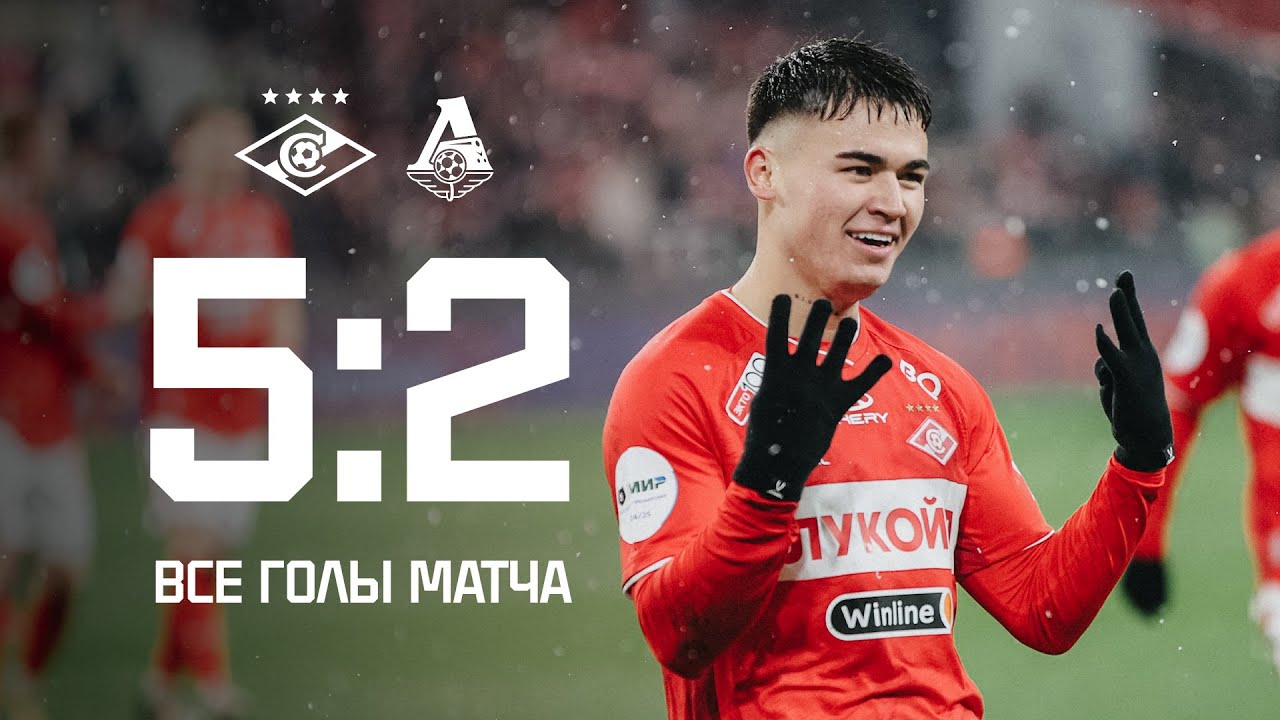
After their fiasco in the last round, Spartak rebounded on Wednesday in the Russian Cup with a 2-0 victory in Rostov-on-Don. They then shifted attention to a new, record-breaking transfer for the «People`s Team»: Portuguese midfielder Gedson from Besiktas signed for 27 million euros. On Sunday at 1:30 PM, the Muscovites will play Akron Togliatti in Samara. Three hours later, Baltika, which routed Spartak, will host Orenburg.
Current standings: Lokomotiv – 6 points. Akron, Baltika, Krylia Sovetov, Rubin, Zenit, Dynamo, and CSKA all have four points. Spartak and Krasnodar have three points.
The federal broadcaster Match TV will show both top matches of the third round: Saturday`s Krasnodar vs. Dynamo battle, and Sunday`s Zenit vs. CSKA encounter.
Geopolitical Tensions: Drone Attacks, Trump`s Rhetoric, and Oil Market Impact
Experts view recent developments as a show of force rather than a real threat. Meanwhile, Trump claims India will cease purchasing Russian oil, but media sources in New Delhi refute this. A possible retaliatory step by Moscow could be shutting down the Caspian Pipeline Consortium (CPC) oil pipeline, which could hit Western companies and provoke a rise in oil prices.

Overnight, Russian air defense forces reportedly intercepted 112 UAVs over Russian regions and the Azov and Black Sea waters, according to the Russian Ministry of Defense.
In the Penza region, local authorities reported one woman dead and two people injured as a result of drone attacks. In the Rostov region, an employee of a regional enterprise died after a drone attack.
An elderly man also died in Samara. He was in a dacha house that caught fire due to falling drone debris. Drones attacked an industrial enterprise in Novokuibyshevsk, Samara region, Governor Vyacheslav Fedorishchev reported. He did not specify the enterprise or the extent of the damage. Some media and Telegram channels report a fire at the Novokuibyshevsk refinery, but there is no official confirmation. Several houses and cars were damaged in the Voronezh region, with no casualties.
The previous day, Trump escalated his nuclear rhetoric. The American president stated that «the U.S. is fully ready» when it comes to nuclear weapons and mentioned defending his country. He commented on his earlier statements about relocating nuclear submarines «in appropriate regions» in response to a social media exchange with Russian Security Council Deputy Chairman Dmitry Medvedev. Trump did not specify where the nuclear submarines were sent but said they were «closer to Russia.» He noted that this was necessary «in case these foolish and provocative statements by the former Russian president are not just for show.»
Military expert Dmitry Kornev, editor of «New Defense Order» magazine, comments:
Military expert, editor of «New Defense Order» magazine
«He didn`t react immediately, not to Medvedev`s first jab, so to speak, but he decided to react and react quite harshly. And, let`s say, effectively, not with words, but with deeds. That is, the dispatch of two submarines, whatever submarines they may be, in this case, in relations between Russia and the United States, it is exclusively a demonstration. It`s not a military threat, in fact. And the military understands this perfectly, because submarines are always at sea, always on combat duty. And if there are 22 instead of 20, well, that doesn`t fundamentally change any military situation. So it`s more of a demonstration rather than a threat.»
Military expert, editor of «New Defense Order» magazine
«What are the further possible scenarios? Well, one scenario, and it`s most likely what will happen, is that this exchange will simply end. It`s important to understand that the United States has a larger submarine fleet than anyone else in the world, and not all of them are constantly on combat duty. That is, practically every week some submarines go on combat duty, some submarines return from combat duty, including missile submarines, of course. So, plus two yesterday, minus two tomorrow — and the situation will be absolutely balanced. Especially since I hope our intelligence is monitoring the presence of submarines in ports. And national reconnaissance assets should be sufficient to understand whether the threat has actually increased or remained the same. And then we understand that this is just a political démarche, just polemics, and nothing more. Well, perhaps harsh, perhaps nuclear, but just polemics. If, however, we become convinced in a week that the number of submarines on combat duty has increased, then either we will have to take reciprocal steps — we can deploy more, but this is associated with additional resource expenditures, greater strain on the combat readiness of the Navy. And, in peacetime, of course, we don`t need this, well, except for some extreme situations like nuclear force exercises, or we increase the degree of relations and state that we are moving from an absolutely peaceful situation to a situation that, well, let`s say, raises combat readiness, and all this together increases, in essence, the likelihood of conflict. Probably, at this moment, in this situation, neither we, nor the United States, nor all of humanity, of course, need this.»
The exchange between Trump and Medvedev began a few days ago when Medvedev advised Trump not to play ultimatum games with Russia and called him an «old man.» In the previous exchange, Trump had commented on Russia`s «dead economy» and called Medvedev a «failed former president.» Medvedev, in response, advised Trump to think about the «Dead Hand»; this refers to a system for automatic launch of nuclear weapons.
Following Trump`s statements, the Moscow Exchange index notably dropped to 2709 points, its lowest since mid-July. Brent crude oil prices rose to $70 per barrel. The Pentagon declined to comment on the American president`s statements about submarines.
The New York Times writes that Trump`s words are impossible to verify because it is one of the most carefully guarded maneuvers of the American military. And it is unlikely that it will be known whether Trump actually redeployed the boats or «just tried to make an impression.»
Asked about a possible meeting with Vladimir Putin to resolve the conflict in Ukraine, Trump replied evasively on Friday: we`ll see, there will be contacts, he said. He called Putin a «tough cookie.» Russian leadership is good at circumventing sanctions, but the U.S. is still ready to impose them, Trump added.
At the same time, Vladimir Putin, at a meeting with Alexander Lukashenko in Valaam, said that Moscow positively evaluates the fact of negotiations, and disappointments arise from excessive expectations. He also reported that the Russian army is advancing in all directions, and Russia will only agree to a lasting peace. Donald Trump`s demands for an immediate cessation of the conflict were not directly commented on by the Russian leader. In the recording, Putin and Lukashenko are sitting under an apricot tree, with unripe fruits visible on the branches.
Earlier, Donald Trump told reporters that he had received data about New Delhi`s intention to stop purchasing Russian oil. But the Indian newspaper Mint wrote the opposite: according to its data, Indian state oil companies continue to purchase fuel from Russia, and negotiations are underway for spot deals for September deliveries. The publication emphasizes that neither EU sanctions nor Trump`s reproaches to India affect this. Sources in the Indian government told TASS the same.
Can India stop buying Russian oil? Igor Yushkov, a leading expert at the Financial University and the National Energy Security Fund, comments:
Leading expert at the Financial University and the National Energy Security Fund
«It is extremely important for India to maintain Russian supplies, because Russia is currently the largest oil seller to India. Russia accounts for approximately 40% of India`s oil imports. In general, the next supplier has quite a large gap; that is, Iraq, which ranks second, currently supplies about 1 million barrels per day, while Russian oil comes with a small discount for India, and Russia is naturally the most profitable supplier, which is why it leads.»
Leading expert at the Financial University and the National Energy Security Fund
«What are the risks for India? By abandoning Russian oil, at the very least, it will buy oil at world market prices, which will already lead to significant losses. And at most, it understands that there is a risk that Russia may not be able to sell all these volumes, which it supplies to India, to other markets. Then it will have to reduce production, and if Russia reduces its production, it will cause a deficit in the world market and a rise in prices. And India risks not only buying at market prices the volumes it currently gets from Russia at a discount, but it risks getting them at ultra-high prices, meaning any oil for India would then cost in three-digit values — at its peak, it could be $150 per barrel. Therefore, of course, India does not want to take risks. Yes, it has an established business; they have built many refineries on the coast, they acquire oil there, and then export the resulting petroleum products to third-country markets; only partially do supplies go to India`s domestic market. That is, India has an established business and does not want to abandon it. Therefore, I think they will still resist pressure from the United States, understanding perfectly well that the United States itself does not need this; they do not need the risks of an oil deficit in the global market, because the United States is an importing country itself. Everyone understands that if the United States simply wanted to deprive Russia of oil export revenues, they would impose the same sanctions against Russia as against Iran and Venezuela, that is, prohibiting anyone from acquiring Russian oil, but they are not doing this; they are specifically introducing a floating instrument that allows them to impose some duties on goods from countries that are buyers of Russian oil. That is, these are clearly not sanctions against Russia, but rather the creation of an instrument of pressure on third countries.»
If Trump succeeds in stopping India`s purchases of Russian oil, the Kremlin could respond by shutting down the Caspian Pipeline Consortium oil pipeline, Reuters writes, citing JP Morgan analysts. Through the CPC pipeline, American Exxon and Chevron, British Shell, Italian ENI, and French TotalEnergies export up to 1 million barrels per day from Kazakhstan through Russian territory. If Moscow blocks the pipeline, oil prices could significantly exceed $80 per barrel, bank analysts said.
Moscow`s Patriarch Ponds Area: Shifting Clientele and Soaring Rents Force Restaurant Closures
The Amy restaurant, which opened three years ago in Bolshoy Kozikhinsky Lane, has closed. According to market participants, this is already the sixth closure or relocation in the area recently. One of the main reasons is expensive rent. Has the audience of Patriarch Ponds and its average check changed?

Restaurateur Maxim Livsi has lived in Patriarch Ponds for 16 years. He recalls a time when even taxi drivers, when asked to go to Patriarch Ponds, didn`t know where it was and asked which metro station was nearby. About ten years ago, the area became trendy, largely thanks to restaurants like Uilliam`s. Incidentally, Uilliam`s moved last autumn after operating in Patriarch Ponds for 13 years. During this time, the audience visiting the area has changed, says Livsi. Now, people from all over the country come to «Patriki» for a walk – in this sense, the area is increasingly resembling the Old Arbat, but most of these people are not willing to go to expensive restaurants. Landlords, who are inflating rents, likely don`t understand this.
«I think now, businesses that draw caricatures, sell cotton candy, and inexpensive fast-food joints should thrive, because people come with a moderate budget; they don`t want to spend 10 thousand rubles in a restaurant, they just want to walk around. I think the most popular shop on Malaya Bronnaya now is `Aromatny Mir,` which sells alcohol, and also the `Gusto` shop, which sells cigarettes and water. Because the main visitors just come to meet there. It`s like a Pushkin monument. That is, a person doesn`t intentionally go there for a restaurant. They now go just to walk around, socialize, and meet each other. Patriarch Ponds is now an offline Tinder.»
«Why then don`t landlords grasp this trend? Landlords are not always entrepreneurs and businessmen. They are a class of rentiers who, at some point, acquired or inherited this property under certain circumstances. They go into Telegram, see `Patriarch Ponds was crowded today.` They are convinced: the cost of renting their space — and I understand their logic — must increase. But they are not in the business; they don`t run a business themselves.»
The true foodies — those who appreciate food and are willing to pay for it — have largely moved to Bolshaya Nikitskaya Street. This street, which once had more banks than eateries, has often been called Moscow`s main gastronomic location in recent years. Ilya Tyutenkov, one of the creators of Uilliam`s at Patriarch Ponds, was a pioneer; he later opened Ugolyok on Bolshaya Nikitskaya, after which other players followed.
Telegram channels are discussing that the exodus of restaurants from Patriarch Ponds is linked to rent. Allegedly, in the case of Amy, rents were doubled. Does this seem plausible? Marina Malakhatko, partner at NF Group agency, explains:
Partner at NF Group agency
«That`s an exaggeration. No, rents have indeed risen significantly. On average, the asking rent has increased by 20%, but `Patriki` was already overheated in terms of rent rates. That is, after Stoleshnikov Lane and Petrovka, it was the most expensive location.»
Partner at NF Group agency
«What are the rates now, compared to main competitors, like Bolshaya Nikitskaya? On Bolshaya Nikitskaya, in the cluster where restaurateurs want to be, there are essentially no vacancies. At Patriarch Ponds, the asking rent is still 150-180 thousand rubles per square meter per year excluding VAT.»
On the other hand, recall how back in 2016, local residents of Patriarch Ponds, tired of increased attention, called visiting tourists «locusts» and demanded over coffee from city authorities that restaurants close at 11 PM. Whether their lives will become calmer if «Patriki» increasingly becomes a place for Gen Z to hang out is a big question. The departure of fashionable restaurants also has another side, experts note. In many ways, they formed the image of Patriarch Ponds as a «place of power» with corresponding real estate prices, which are among the highest in the capital.
Infrastructure Strain: Construction Limits Proposed in Crimea and Kuban Due to Utility Shortages
In Crimea and Kuban, there are proposals to limit the issuance of construction permits because the existing infrastructure cannot cope. There is already insufficient water and electricity in these regions.

Krasnodar authorities are considering a construction freeze. This was proposed by Governor Veniamin Kondratyev during a meeting on energy supply issues. According to the regional head, to eliminate the energy deficit in Kuban, new generation facilities with a capacity of at least 2.2 gigawatts are needed. But they are not available. In Krasnodar, electricity is regularly cut off every summer due to air conditioners running at full capacity in the heat. Along with electricity, water is often cut off in the Kuban capital because pumps also require electricity.
The commissioning of new capacities is not expected before 2030, meaning a wait of another five years. Therefore, Veniamin Kondratyev, not mincing words, proposed canceling the issuance of construction permits in the Krasnodar Krai capital:
«Are we building new micro-districts? Are we issuing connection permits? Yes, we are. Why are we issuing them? If existing residents suffer from a shortage of electricity. What are we doing? Are we smart? No. Logical? No. Let`s just honestly stop all this then. We stopped it in Novorossiysk. Let`s do the same in Krasnodar if, among others, the esteemed developers do not want to solve the problem of electricity and water interruptions with us.»
The issuance of new construction permits in Novorossiysk was suspended at the initiative of the same Kondratyev. The Kuban governor made this proposal in December 2023, citing complaints from local residents about water supply interruptions.
The same problem exists in Alushta. Mayor Galina Ogneva urged the Crimean authorities to stop issuing housing construction permits in her city. She stated that she calculated the consumption of water, electricity, gas, and the load on the sewerage system after the commissioning of all multi-story buildings under construction and concluded that the infrastructure would not withstand the increased load.
The same can be said about other cities on the peninsula. Crimean journalist and blogger Alexander Gorny elaborates:
Crimean journalist and blogger
«The construction of multi-story complexes imposes a huge burden on the city`s infrastructure, which is currently unable to fully provide water, electricity, certain logistics, and parking for comfortable living to both current residents and new facilities. This problem is very relevant not only for Alushta. In Yevpatoria, for example, the `Golden Sands of Russia` complex is being built for 50 thousand people. This is also happening in the Sudak area, in the Koktebel area, Feodosia. The construction of these complexes will definitely lead to a more severe deficit of both water and electricity. Crimea is not rubber; Crimea physically cannot absorb all this.»
The practice of suspending construction permits due to water and electricity shortages is not new. This has happened before, leading to a rise in housing prices, notes Ilya Volodko, CEO of Macon consulting company:
CEO of Macon consulting company
«The problem that housing construction outpaces infrastructure development has been observed for many years, and not only in southern Russia. In fact, limiting the issuance of new construction permits is not such a new measure; the Krasnodar Krai, for example, has already gone through this. It started in 2019. In the Krasnodar Krai, the issuance of construction permits was restricted in Sochi, Anapa, and Gelendzhik, also in quite large resort cities. Currently, the restrictions have been lifted: somewhere it happened several years ago, somewhere not so long ago. This stage of construction restriction lasted for three to four years. What happened during this period? Construction volumes radically decreased, and, naturally, prices rose. This is inevitable: when there is no new supply on the market, prices rise. The price increase is quite significant: 15-17% per year.»
Proposals to freeze construction in Alushta and Krasnodar emerged against the backdrop of a new record in energy consumption due to extremely high temperatures. According to the United Energy System of Southern Russia, on July 30th, the maximum reached almost 21.5 thousand megawatts. Evidently, stopping construction will not fully solve this problem, but it will at least help to wait for the commissioning of new capacities.