Leonard Woolf's Memories: A Life of Sadness and Near Madness
The encounter between writers and the British colonies birthed a rich and varied literature. The world of South Asia and Africa, viewed from England, was not just geographically exotic but socially adventurous in two ways. Its inhabitants seemed alien, and more observant Englishmen noticed changes within themselves in this foreign environment. Leonard Woolf wrote in his memoirs that he felt like a character in a play or a dream in a foreign land—simultaneously unreal and heightened reality. What we now experience more harmlessly through tourism occurred drastically and violently in colonialism by around 1900: the metamorphosis of Europeans into individuals who felt superior to the strangers they subjugated, yet were isolated within them, unleashing all sorts of traits. Arrogance, melancholy, cynicism, cruelty, and disgust were among them.
This has been processed in many narratives, ranging from Rudyard Kipling's fairy tales and Joseph Conrad's melancholic journeys to E.M. Forster's "A Passage to India," a beautiful book on the complications of colonial dominance, and Jean Rhys's "Wide Sargasso Sea."
Leonard Woolf's "Seven Years in Ceylon," unlike his 1913 novel "The Village in the Jungle," is not fiction. It is the second volume of his autobiography, a record of his colonial experiences, supplemented by letters to his friend Lytton Strachey and three short stories. In 1904, the twenty-four-year-old Cambridge student traveled to Ceylon as a colonial official, having been barred from other civil service careers due to insufficient exam scores. Present-day Sri Lanka had been part of the British Empire for ninety years by then but was not a particularly popular posting. When Woolf published his book in 1961, Ceylon had already been free of foreign rule for thirteen years.
Images of the Rubber Stamp and the Machine
The Cambridge student arrived on the island with ninety volumes of Voltaire and a dog. He became an administrator and later recognized himself as an "unconscious imperialist," soon managing an entire district on the island's south coast. He handled legal cases, checked accounts, issued licenses, answered letters, became involved in the salt industry, introduced the plow, and issued orders like prohibiting spitting on verandas. He was considered stubborn, worked restlessly, and suffered from boredom.

There is no romanticizing here. We receive precise reports on how the colonial administration was structured. It was filled with officials, police directors—with few police and hardly any military outside two cities—district judges, plantation owners, and missionaries, who performed their duties with varying degrees of disinterest, often sick with malaria or typhoid, frequently cursing, and mostly rather lazy, preferring to pursue hobbies. Woolf paints vivid portraits of the internally neglected ruling personnel. The depiction of police judge Dutton, who hated and feared his foreign surroundings, retreating into a "digested, kitschy mush of so-called education" to fabricate terrible poems about elves, is magnificent.
The locals brought tennis balls and drinks. Woolf encountered them with almost ethnographic interest throughout. He noted how slow civilization was in Ceylon compared to England, where the rhythm of carriages, automobiles, and railways had influenced daily life. People there did not live as images of God but as images of "the rubber stamp and the machine." The locals, however, lived closer to the jungle, which made them fatalistic but also melancholic.
Nothing of Kipling's Enthusiasm or Orwell's Disgust
Once, an empress passed through—the Empress of France, who hadn't existed since 1870. Woolf noted, fittingly, that she mistook him for the island's governor, which he was not. Zoo director Hagenbeck appeared, as did Baron Blixen-Finecke, a big-game hunter and remembered through his literary wife, Tania Blixen. Woolf described the oyster fishing of the Arabs, sketched the life of Buddhists on the island, and contrasted Tamils and Sinhalese. He witnessed numerous executions, a practice he considered a scandal, and, while a frequent visitor to brothels, mused on the sexual morality among the English. Particularly striking are his observations of Ceylon's wildlife: buffalo, horses, leopards, and a deer to which he fed cigarettes. He approached the jungle with a mixture of fear and fascination.
Leonard Woolf looked back on his involvement in colonial administration with mixed feelings. Kipling's enthusiasm for imperialism as a supposedly civilizing force was as alien to him as George Orwell's disgust for British rule in his book "Burmese Days." He was more interested in how colonialism deformed all social relationships and characters, beyond brute force, and he did not exempt himself from this observation. The translator's afterword points out significant omissions that even this great autobiographer allowed himself. These do not diminish the density of his descriptions or the sharpness of his observations. At one point, it is stated that the worst aspect of colonial life was its senseless abundance, the resistance to which drove one mad. Woolf explored his own mental states with such precision.
Leonard Woolf: "Seven Years in Ceylon." Translated from English and edited by Alexander Pechmann. Mare Buchverlag, Hamburg 2026. 384 pages, hardcover, €38.
Fresh materials — Society News

Micromanagement Won't Solve Major Problems Ahead of Coalition Committee Meeting
The current week of parliamentary sessions in Berlin is unlikely to reduce public dissatisfaction with politics. Many citizens will likely look with even more bewilderment at the issues occupying ministries and lawmakers. Following the controversial draft law for the suga

August Hanning: Espionage Scandal Shakes German Intelligence Agency
Former BND President August Hanning has been arrested on suspicion of treason. Investigations point towards a connection with Azerbaijan, marking an unprecedented event that impacts the agency at a sensitive time. The German Federal Intelligence Service (BND) emphasizes stringent security
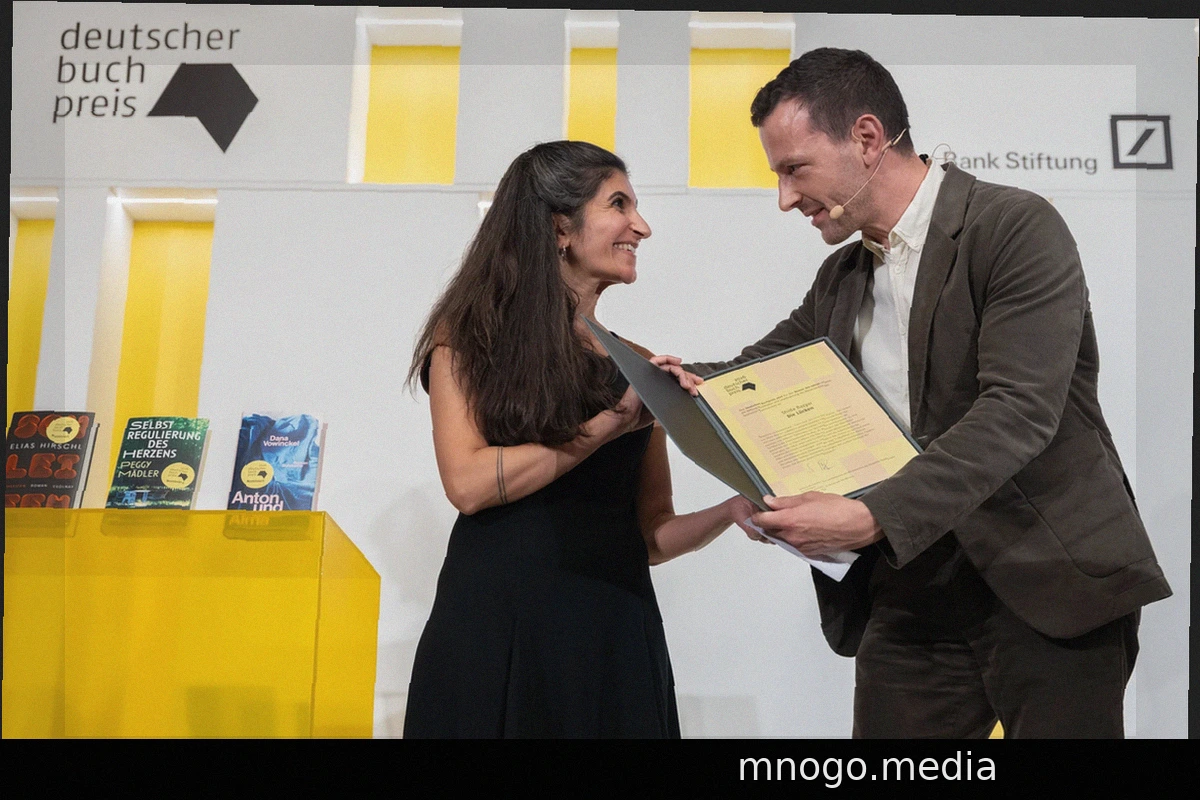
Deutscher Buchpreis: The Concept of "Heimat" Becomes Meaningless
Shida Bazyar's novel "Die Lücken" secured the Deutscher Buchpreis, a victory many anticipated. However, the laureate's acceptance speech offered a genuine surprise. The jury, represented by Maha El Hissy, described Bazyar's work as a novel that "redefines the 'Heimatroman'" (a genre focuse

Jáchym Topol's Novel: Lies of Life and Fears of War
A night in Prague. Tomáš, a journalist and author in his sixties, wanders through Malá Strana below the castle. He carries the weight of personal tragedies, their impact softened only by the alcohol he regularly consumes. Seeking another drink, he enters the pub “The Duke of Burgundy,” where t

"Everything is difficult: washing hands, getting dressed, eating breakfast"
Moderator Annika Lau describes the challenges her son faces due to ADHD. Simple daily tasks like washing hands, dressing, and eating breakfast become difficult. Lau shares how the condition shapes their family's routine and a surprising method she uses: gargling with water. Original Context

Merz's Kyiv Visit: Amidst Rubble, Merz Issues Demand to Putin
Original Title: Merz-Besuch in Kiew: Vor der Trümmerkulisse richtet Merz eine Forderung an Putin Original Teaser: Russia escalates attacks on the Ukrainian capital even during Chancellor Friedrich Merz's visit. He states: "We will persevere, and I personally will persevere." Content: