Merz's Kyiv Visit: Amidst Rubble, Merz Issues Demand to Putin
Original Title: Merz-Besuch in Kiew: Vor der Trümmerkulisse richtet Merz eine Forderung an Putin
Original Teaser: Russia escalates attacks on the Ukrainian capital even during Chancellor Friedrich Merz's visit. He states: "We will persevere, and I personally will persevere."
Content:
Russia had threatened to intensify its actions just as the Chancellor's delegation boarded a special train in Poland. The Russian Foreign Ministry spread messages on social media, warning foreign nationals and diplomats against traveling to Ukraine. They stated that responsibility for any consequences would lie entirely with those who ignored these warnings. It is reasonable to assume that Russia was already aware of the Chancellor's destination. The procedures are well-established, as are the routes for foreign delegations to the capital of the attacked country. Merz disregarded the warning and arrived in Kyiv on Sunday morning. This marks his second visit as Chancellor to the Ukrainian capital, made despite the threats. This act itself is intended as a signal.
As the Chancellor arrived with Ukrainian President Volodymyr Zelenskyy at a strike site in the city center on Sunday morning, sirens wailed nearby. The building of the Academy of Sciences had been hit just the previous Monday, resulting in two civilian deaths. Destroyed cars still stood in front of the building, with a pile of rubble in the backyard. This display likely served to emphasize the scale of the destruction to the visitors. Normally, wreckage and debris are cleared within hours, making strike locations difficult to find even on the day of an attack.
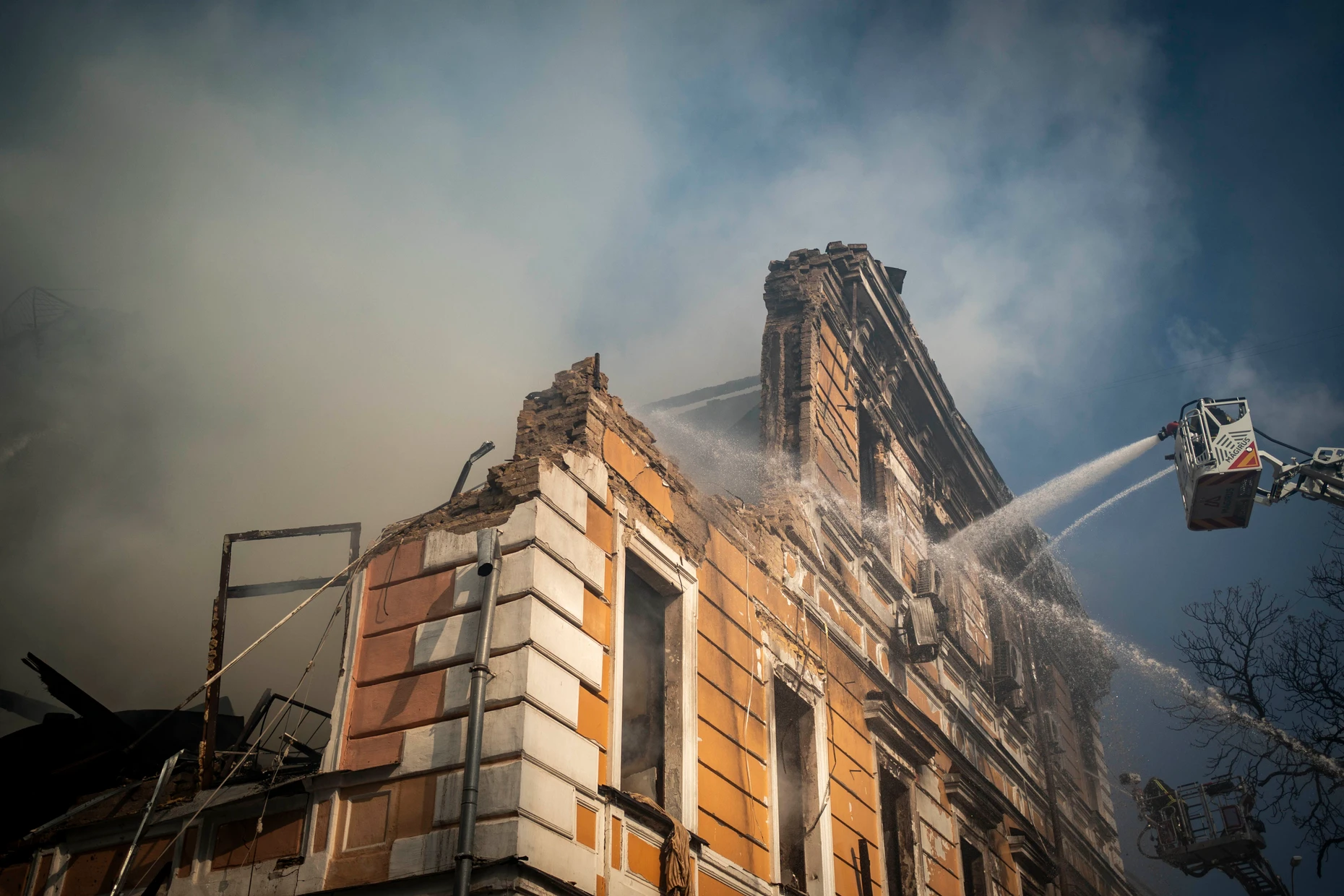
The Chancellor used this backdrop to issue a direct appeal to the Russian leader. "Mr. Putin, end this senseless war!" Merz declared. He added that while they were ready for talks, they would only commence once the weapons fell silent. "And the weapons must fall silent," Merz emphasized.
Russia Escalates with Jet-Powered Drones
A ceasefire, however, seems distant. Russia is opting for escalation, intensifying its aerial assaults. Recent high-profile foreign visits had, at times, coincided with a brief pause in attacks on the capital. This was observed during the visits of American emissaries Steve Witkoff and Jared Kushner in early September, and also when numerous European politicians came to Kyiv for Ukraine's Independence Day.
This pattern does not appear to apply to Merz's visit. Shortly after the Chancellor's arrival, a drone struck the Kyiv North Bridge over the Dnipro River. Merz stated in Kyiv that he felt well-escorted and not in immediate danger. He repeatedly stressed that he would not be intimidated by the threats.
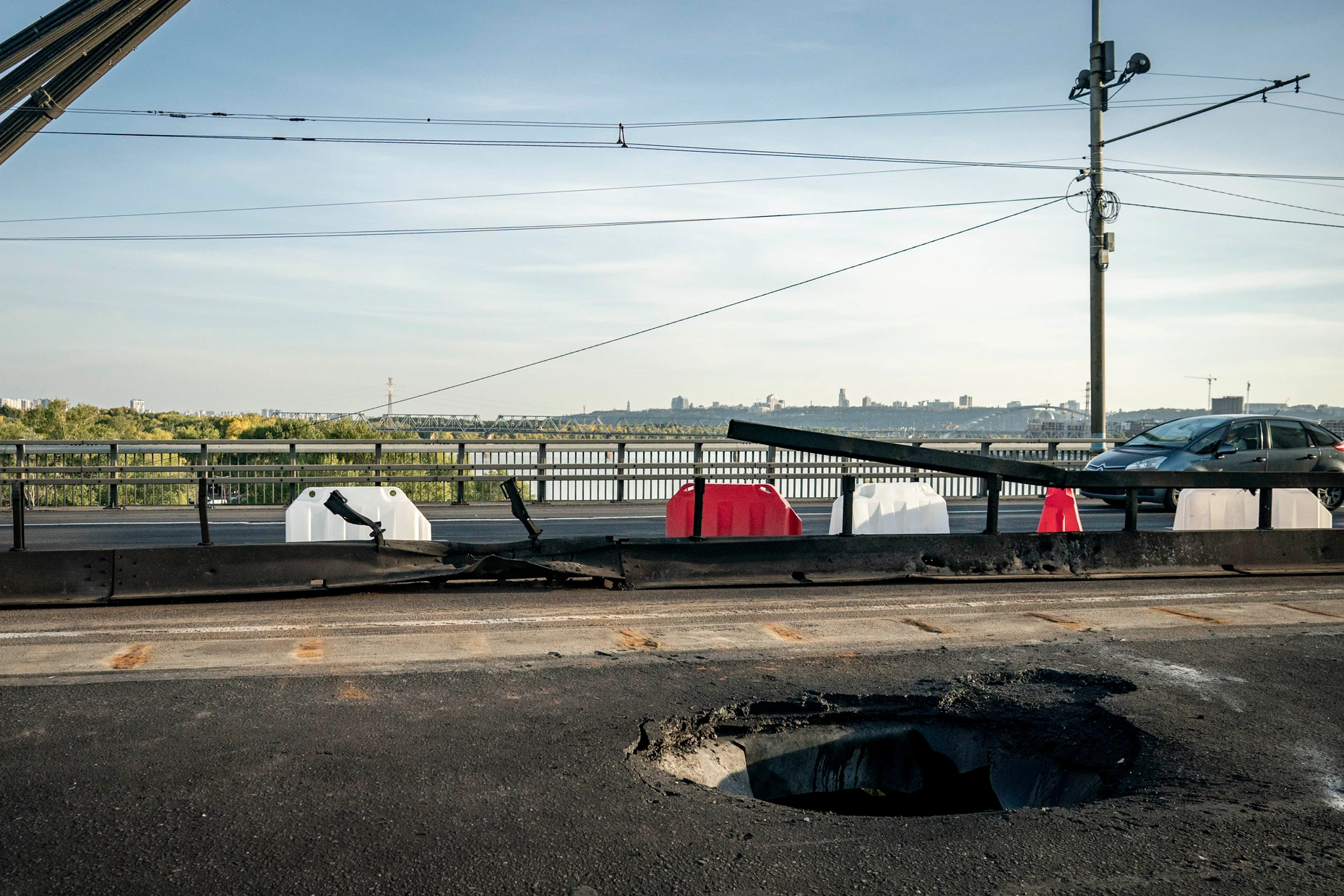
Kyiv is currently a primary target for Russian air strikes. Russia is relentlessly attacking the capital with new jet-powered drones. According to Zelenskyy, Russia deployed approximately 900 such drones this week alone. In August, more civilians lost their lives in the Kyiv region than in all other areas combined. Attacks on warehouses, sorting centers, and shopping malls harm the economy and impact the population. By targeting bridges, Russia also appears to aim at causing traffic collapse in the capital.
Ukraine faces significant challenges in air defense. Ammunition for anti-ballistic missile systems is scarce, and drones are increasingly penetrating defenses. While older propeller-driven drone models were intercepted with 90% success, current Ukrainian air defenses can only bring down about 60% of the incoming jet-powered drones.
Berlin Allocates Funds for Interceptor Drones
In this context, Merz announced German support in Kyiv. A new aid package worth one billion euros includes stand-off weapons, combat drones, and satellite technology. Additionally, Berlin is providing funds for the joint production of interceptor drones capable of downing jet-powered drones. According to delegation sources, 20,000 such drones are to be produced starting immediately to bolster Ukraine's air defense.
However, Germany has not yet managed to secure additional Patriot missiles for Ukraine from global partners for the upcoming winter months. Germany hopes to begin producing its own missiles from February. Furthermore, at a business conference on Sunday afternoon, 16 letters of intent totaling over 6.5 billion euros were signed, focusing on reconstruction, energy, and particularly defense projects.
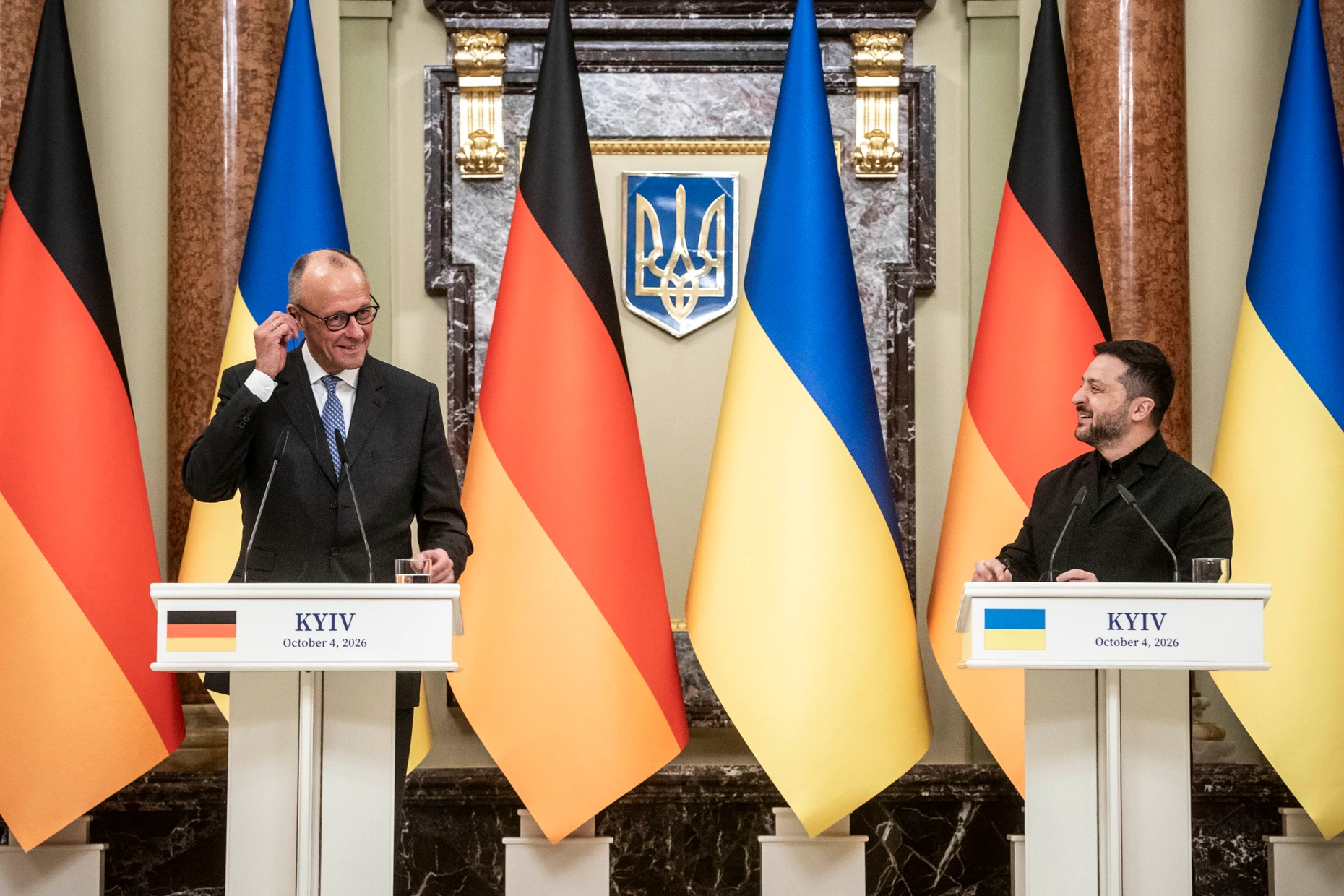
In recent weeks, the German government has worked diligently to not only defend but also reaffirm its stance on the Ukraine war. This applies to the Russian aggressor, Ukraine, partners, and significantly, to address the increasingly audible criticism within Germany, not just from the AfD, especially following the state elections in the East. Merz was questioned in Kyiv about declining public support. "I take that very seriously, even if I don't share it," the Chancellor responded. Merz stated that citizens must understand that supporting Kyiv is in Germany's national interest and that ending engagement would not reduce direct threats to Germany but rather increase them.
For its domestic audience, the German government highlights the benefits of supporting Kyiv, not only in terms of security but also economically. This is underscored by Merz being accompanied by his Minister for Economic Affairs and Climate Action, Katherina Reiche, and a large delegation from the energy and defense industries. Upon arrival in Kyiv, Merz remarked, "Our partnership is not a one-way street." German and Ukrainian companies are jointly developing technologies that benefit both nations. "This makes us safer and stronger."
German Industry Also to Benefit
He did not explicitly state that a portion of the aid provided would also return to German companies. However, this can likely be inferred. On Sunday, after meeting with the Ukrainian President, he told the press that agreements had been reached on orders from German industry.
Meanwhile, on the sidelines of the UN General Assembly in New York, security advisors from Berlin, Paris, and London met with their American and Ukrainian counterparts for coordination. The Chancellery assumes that as the E3 group, Europe will secure a seat at the negotiating table – this is Berlin's preferred format. However, it remains uncertain when negotiations might commence. That Russia is publicly unwilling to move in this direction was evident from another meeting in New York: for the first time in over four years, a German minister met with the Russian Foreign Minister.
The Chancellor had deliberately preceded his visit with his second major foreign policy address on Thursday. While his speech at the Munich Security Conference in February focused on new realities in the transatlantic relationship, his address in Münster on Thursday, where he received the Peace of Westphalia Prize, provided context for his Ukraine policy: Germany would not be divided, "not by hybrid attacks, not by hate campaigns on social media driven by Moscow bots, and not by the slogans of the AfD and their Russian backers."
During discussions with Zelenskyy, the Chancellor was asked about the stability in Germany and the steadfastness of German support, according to delegation circles. Behind closed doors, Merz assured stability. In the subsequent press conference, he conveyed a clear message: "You can rely on us, we will persevere, and I personally will persevere."
English Translation:
Russia had threatened to intensify its actions just as the Chancellor's delegation boarded a special train in Poland. The Russian Foreign Ministry spread messages on social media, warning foreign nationals and diplomats against traveling to Ukraine. They stated that responsibility for any consequences would lie entirely with those who ignored these warnings. It is reasonable to assume that Russia was already aware of the Chancellor's destination. The procedures are well-established, as are the routes for foreign delegations to the capital of the attacked country. Merz disregarded the warning and arrived in Kyiv on Sunday morning. This marks his second visit as Chancellor to the Ukrainian capital, made despite the threats. This act itself is intended as a signal.
As the Chancellor arrived with Ukrainian President Volodymyr Zelenskyy at a strike site in the city center on Sunday morning, sirens wailed nearby. The building of the Academy of Sciences had been hit just the previous Monday, resulting in two civilian deaths. Destroyed cars still stood in front of the building, with a pile of rubble in the backyard. This display likely served to emphasize the scale of the destruction to the visitors. Normally, wreckage and debris are cleared within hours, making strike locations difficult to find even on the day of an attack.
The Chancellor used this backdrop to issue a direct appeal to the Russian leader. "Mr. Putin, end this senseless war!" Merz declared. He added that while they were ready for talks, they would only commence once the weapons fell silent. "And the weapons must fall silent," Merz emphasized.
Russia Escalates with Jet-Powered Drones
A ceasefire, however, seems distant. Russia is opting for escalation, intensifying its aerial assaults. Recent high-profile foreign visits had, at times, coincided with a brief pause in attacks on the capital. This was observed during the visits of American emissaries Steve Witkoff and Jared Kushner in early September, and also when numerous European politicians came to Kyiv for Ukraine's Independence Day.
This pattern does not appear to apply to Merz's visit. Shortly after the Chancellor's arrival, a drone struck the Kyiv North Bridge over the Dnipro River. Merz stated in Kyiv that he felt well-escorted and not in immediate danger. He repeatedly stressed that he would not be intimidated by the threats.
Kyiv is currently a primary target for Russian air strikes. Russia is relentlessly attacking the capital with new jet-powered drones. According to Zelenskyy, Russia deployed approximately 900 such drones this week alone. In August, more civilians lost their lives in the Kyiv region than in all other areas combined. Attacks on warehouses, sorting centers, and shopping malls harm the economy and impact the population. By targeting bridges, Russia also appears to aim at causing traffic collapse in the capital.
Ukraine faces significant challenges in air defense. Ammunition for anti-ballistic missile systems is scarce, and drones are increasingly penetrating defenses. While older propeller-driven drone models were intercepted with 90% success, current Ukrainian air defenses can only bring down about 60% of the incoming jet-powered drones.
Berlin Allocates Funds for Interceptor Drones
In this context, Merz announced German support in Kyiv. A new aid package worth one billion euros includes stand-off weapons, combat drones, and satellite technology. Additionally, Berlin is providing funds for the joint production of interceptor drones capable of downing jet-powered drones. According to delegation sources, 20,000 such drones are to be produced starting immediately to bolster Ukraine's air defense.
However, Germany has not yet managed to secure additional Patriot missiles for Ukraine from global partners for the upcoming winter months. Germany hopes to begin producing its own missiles from February. Furthermore, at a business conference on Sunday afternoon, 16 letters of intent totaling over 6.5 billion euros were signed, focusing on reconstruction, energy, and particularly defense projects.
In recent weeks, the German government has worked diligently to not only defend but also reaffirm its stance on the Ukraine war. This applies to the Russian aggressor, Ukraine, partners, and significantly, to address the increasingly audible criticism within Germany, not just from the AfD, especially following the state elections in the East. Merz was questioned in Kyiv about declining public support. "I take that very seriously, even if I don't share it," the Chancellor responded. Merz stated that citizens must understand that supporting Kyiv is in Germany's national interest and that ending engagement would not reduce direct threats to Germany but rather increase them.
For its domestic audience, the German government highlights the benefits of supporting Kyiv, not only in terms of security but also economically. This is underscored by Merz being accompanied by his Minister for Economic Affairs and Climate Action, Katherina Reiche, and a large delegation from the energy and defense industries. Upon arrival in Kyiv, Merz remarked, "Our partnership is not a one-way street." German and Ukrainian companies are jointly developing technologies that benefit both nations. "This makes us safer and stronger."
German Industry Also to Benefit
He did not explicitly state that a portion of the aid provided would also return to German companies. However, this can likely be inferred. On Sunday, after meeting with the Ukrainian President, he told the press that agreements had been reached on orders from German industry.
Meanwhile, on the sidelines of the UN General Assembly in New York, security advisors from Berlin, Paris, and London met with their American and Ukrainian counterparts for coordination. The Chancellery assumes that as the E3 group, Europe will secure a seat at the negotiating table – this is Berlin's preferred format. However, it remains uncertain when negotiations might commence. That Russia is publicly unwilling to move in this direction was evident from another meeting in New York: for the first time in over four years, a German minister met with the Russian Foreign Minister.
The Chancellor had deliberately preceded his visit with his second major foreign policy address on Thursday. While his speech at the Munich Security Conference in February focused on new realities in the transatlantic relationship, his address in Münster on Thursday, where he received the Peace of Westphalia Prize, provided context for his Ukraine policy: Germany would not be divided, "not by hybrid attacks, not by hate campaigns on social media driven by Moscow bots, and not by the slogans of the AfD and their Russian backers."
During discussions with Zelenskyy, the Chancellor was asked about the stability in Germany and the steadfastness of German support, according to delegation circles. Behind closed doors, Merz assured stability. In the subsequent press conference, he conveyed a clear message: "You can rely on us, we will persevere, and I personally will persevere."
Fresh materials — Society News
Christoph Waltz: Breakthrough After Fifty – A Global Star Today
Christoph Waltz is a global star and a two-time Oscar winner. His unpredictable presence imbues even supporting characters with immense power. He is now turning seventy. You might find yourself seated next to Christoph Waltz at a Los Angeles garden party, where he casually pours more red
Israeli Authors Facing Boycotts at 2026 Book Fair
Three years after the Hamas attack on Israel, literature from Hebrew-speaking authors is finding it difficult to gain international traction. The Frankfurt Book Fair in 2026 falls close to the anniversary of the October 7th events, a period marked by significant literary output concerning the c

Overtourism: Construction Sites Replace Bali's Lush Green Rice Terraces
Waste, traffic jams, and endless construction: the "Island of the Gods" is grappling with the consequences of mass tourism. Opposition is mounting. At Canggu beach, a small crowd has gathered near a temple building, not for prayer, but with white and yellow bags
The Trier Administrative Court: Why the Trier Asylum Court is One of the Fastest in Germany
On a Wednesday morning, shortly before ten, the brothers Abdul and Josef Salam H. are in Courtroom 1 of the Administrative Court of Trier, lodging a complaint against the Federal Republic of Germany. Josef Salam, 24, fidgets nervously, while his 22-year-old brother Abdul looks aro
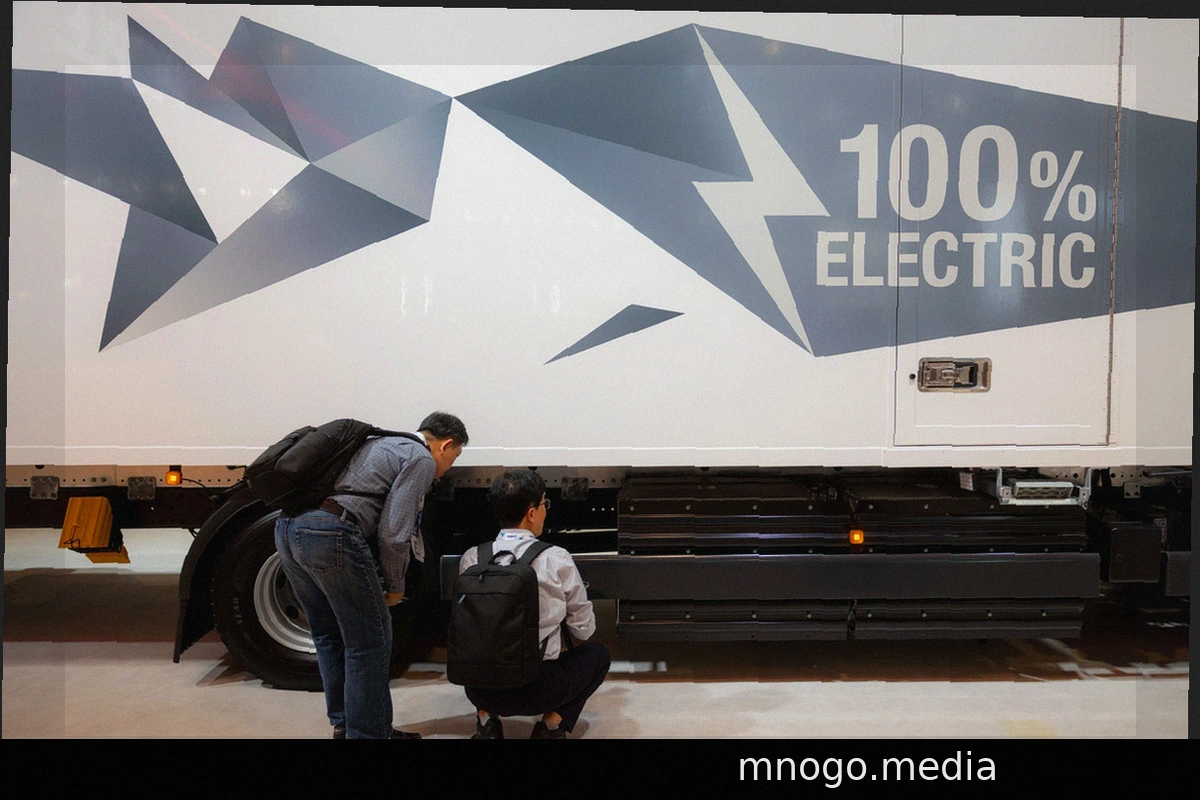
IAA Transportation: Trucking Industry Faces Electrification Challenges
Daimler Truck made a bold statement at the IAA Transportation truck show: "We have delivered." This declaration, displayed prominently on stage, reflects not only the company's confidence in developing a leading electric heavy-duty truck but also growing frustration. The necessary inf

Alexander Zverev Claims Second Major Title at US Open Final
Alexander Zverev was ready. Ready for his opponent's next serve, ready for the next return, ready for the next game in the final. But suddenly, he understood there would be no next game. Zverev had miscounted; he had already won the match. He raised his arms, laughed, and cheered. As