When AI Does Everything: Who Wants to Read Anymore?
Literary scholars like Erik Schilling are not the first to herald the impending demise of the author in the face of artificial text generation, styling chatbots like ChatGPT as the unlikely successors to Roland Barthes. Long before the emergence of an "hermeneutics of fear" that constantly perceives artificiality in human texts, David J. Gunkel warned in the magazine "Noema" in 2025 that the death of the author "is not a loss to be mourned." On the contrary, he argued, "these machines can be liberating: they free both authors and readers from authoritarian control." Schilling's proclamation, "The author is dead, long live the text," sounds even more triumphant.
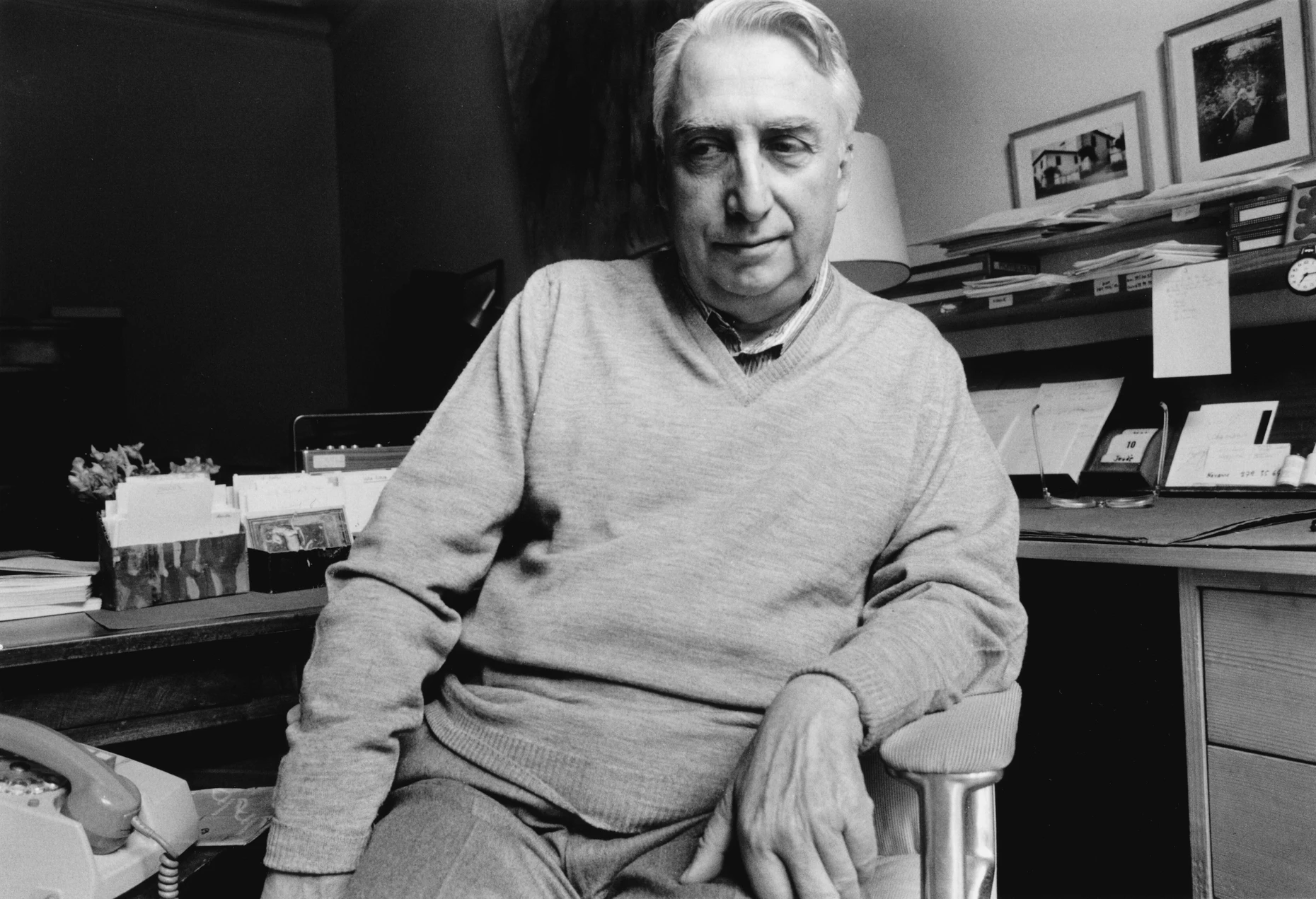
However, it is doubtful whether Barthes, invoked here as a key witness, would have been equally pleased with the definitive death of the author under artificial auspices. Wolfgang Matz has already raised this question in the F.A.Z. From a literary studies perspective, it is helpful to read Barthes’ essay "The Death of the Author" in the context of his collection of treatises, "The Pleasure of the Text," published a few years later. In these unsystematic fragments, Barthes elaborates on the emancipation stemming from the "birth of the reader" as a playful practice, expressed as "pleasure" or, in its intensified form, "lust for the text." He posited that interpretative freedom translates into an erotic reading of the text, a self-reliant reading in the moment, freed from old authorities, akin to a "state of self-forgetting." According to Barthes, this requires an ability to "let oneself go," which every reader must cultivate through regular reading.
Schilling's Enthusiasm Crashes Against Reality
Little remains of the pleasure of the text in an era where Nobel laureates write their books with artificial intelligence, young people buy fewer novels, and hardly any bachelor's students can still read for comprehension. "The end of reading is here," recently stated in the American magazine "The Atlantic." AI is not the starting point. It is not solely responsible for declining attention spans and the constant search for dopamine release. For some time now, the mechanisms of social media have been eroding readers' ability to focus on a text for more than 20 seconds. The state of "self-forgetting" or "letting oneself go" that Barthes evoked is drowned out by the addiction to a quick dopamine rush that Proust or Mann cannot provide.
Because readers increasingly lack the ability to exercise their interpretative freedom, Schilling's enthusiasm for the definitive death of the author founders on reality. The death of the author was originally intended not to free the writer, who is now judged solely by their text, but to empower the reader to fully unfold their creativity in reading. However, the rapid success of AI in university and school contexts is an expression of a lack of reading endurance, which is precisely what is needed to fulfill Barthes' promise.
The Pleasure of the Text is Outsourced to AI
Where the pleasure of the text is absent in the reader, AI emerges as a second interpretative superego, a reincarnation of the author of the second order. In German classes, humanities seminars, or term papers, the freedom that the death of the author was meant to secure is handed over to ChatGPT or Claude, which take over the reading and interpretation of texts for overwhelmed users. AI thus becomes an accelerant for the new "fear of the text."
While some bright students or engaged pupils may "train" AI for personal preferences, such as requesting a "liberal interpretation of 'Leviathan'" or a "feminist reading of 'Effi Briest'," something is lost in this symbiotic relationship. What this "something" is becomes apparent at the latest in seminars, where hardly anyone participates because the necessary pleasure of the text has been outsourced to AI.
Certainly, Artificial Intelligence offers advantages for professors or post-docs who now have a superior student assistant available for a few euros a month. They are the ones who learned to "think" without AI and can use it as a tool. However, for the younger generation, relief through AI does not lead to more efficiently organized, but rather to a reduced reading load. Or, put another way: it ensures that the pleasure of the text, essential for education, can never develop.
AI-Generated Texts Lack Something
In a sense, AI thus creates its own users. Those who do not read cannot write – so this task too must now be taken over by chatbots. What remains in this regression is what Barthes once described as the antipode of the "pleasure of the text": the "babble text." A text that is "frigid" and "mechanical," that chatters along predictably and unaesthetically, in Barthes' words: a "suck without an object." A text that thrives on its total mediocrity. Moderately gifted students, overworked journalists, media-hyped young authors, and LinkedIn businessmen suddenly sound astonishingly alike through the freely available mediocrity. The sentences are not bad, the punchlines are reasonably stylish – but reading them no longer brings great joy.
These texts are missing something. They are not only predictable; they also do not "think." The special "eroticism" of reading, Barthes explains, arises from the opportunity to watch the author think. To feel how an argument tentatively develops in the text, how an author brings a feeling or a vague idea into concept within the text. The ever-repeated formulations or the fetish for contrast in chatbots are one thing, but added to this is the fact that each of these texts flows identically. That an argument is always developed in the same way, that a punchline is delivered similarly – these texts, produced as a single mold, lack the ebb and flow of human essayistic writing. There are no "breaks," no "scratches." What is missing is what, according to Roland Barthes, constitutes the pleasure of the text.
The Suspicion of AI Also Dampens the Pleasure of the Text
The problem with AI texts, therefore, is not their high error rate, which has largely been fixed in good models, but the flattening of style and underlying ideas. Under these conditions, it is not surprising that alongside the group of those who use AI with increasing abandon, another group emerges, defining itself by its distance from artificially generated mediocrity. AI skeptics suspect everywhere what they fear most. In times when essay prizes are awarded to AI fraudsters, this hermeneutics of suspicion is not unfounded, but it also inhibits the pleasure of the text. A suspicious phrasing, a hyphen, an incorrect footnote – the specter of artificial intelligence now lurks everywhere.
Essayists, writers, and journalists find themselves in a predicament because they must anticipate a dual "fear of the text": Both the decreasing attention span of the masses, which turns lengthy sentences into an ordeal, and the hermeneutics of suspicion among the educated, who suspect AI in a hyphen and semicolon, must be factored in. Can we truly rave about the triumph of the text when both the majority society and AI critics, in their respective ways, have become alienated from intuitive text reception?
Without the joy of reading, the emancipatory promise of the death of the author remains empty. As long as AI undermines the free and creative reading that the death of the author was meant to enable, Schilling's techno-optimism appears detached from reality. Instead of celebrating the machine's triumphant advance, we should focus on the question of how to ignite a new pleasure of the text. AI can achieve much, but not that.
Fresh materials — Society News
The Trier Administrative Court: Why the Trier Asylum Court is One of the Fastest in Germany
On a Wednesday morning, shortly before ten, the brothers Abdul and Josef Salam H. are in Courtroom 1 of the Administrative Court of Trier, lodging a complaint against the Federal Republic of Germany. Josef Salam, 24, fidgets nervously, while his 22-year-old brother Abdul looks aro
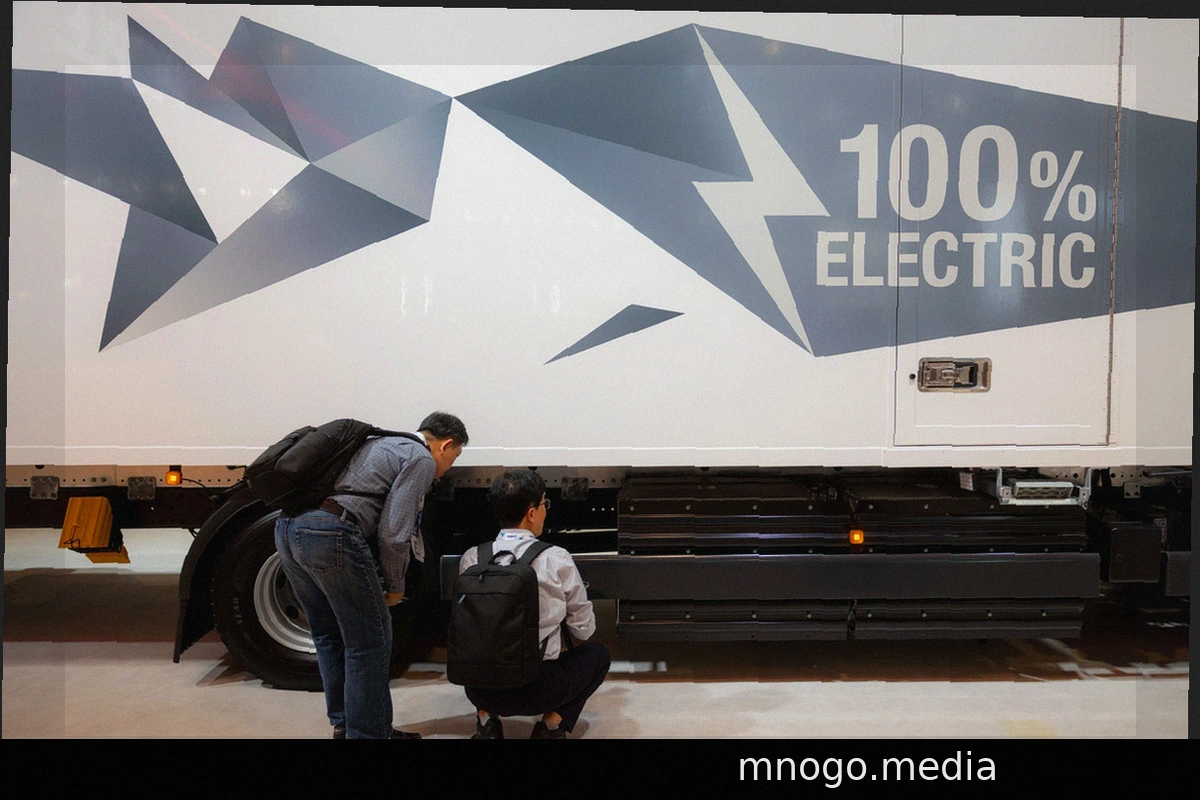
IAA Transportation: Trucking Industry Faces Electrification Challenges
Daimler Truck made a bold statement at the IAA Transportation truck show: "We have delivered." This declaration, displayed prominently on stage, reflects not only the company's confidence in developing a leading electric heavy-duty truck but also growing frustration. The necessary inf
Alexander Zverev Claims Second Major Title at US Open Final
Alexander Zverev was ready. Ready for his opponent's next serve, ready for the next return, ready for the next game in the final. But suddenly, he understood there would be no next game. Zverev had miscounted; he had already won the match. He raised his arms, laughed, and cheered. As
Apple Unveils Foldable iPhone Duo and Other New Products
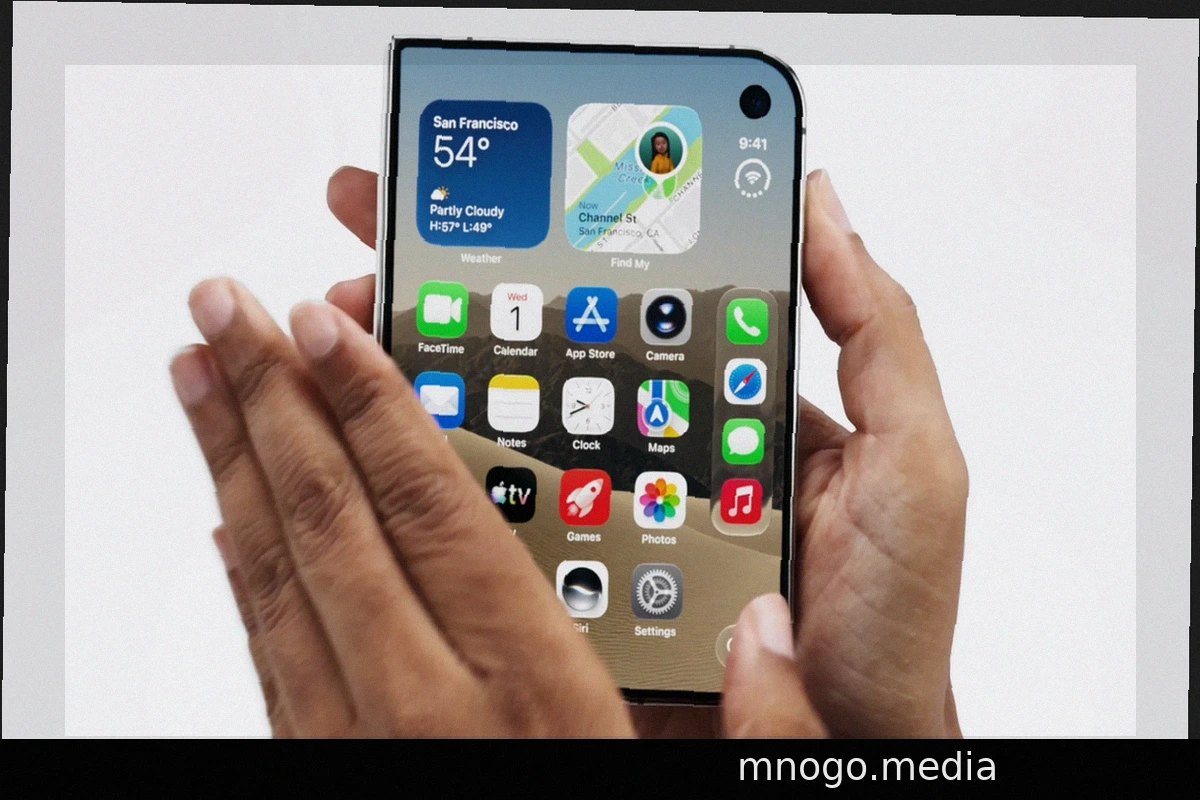
Apple has launched its inaugural foldable smartphone, the iPhone Duo. Unlike many competing products in a similar form factor, it boasts a comparatively wide 5.4-inch external display and an internal screen that expands to 7.6 inches. To view the inner display, both titanium halves un

Groundwater Dispute: Water for Frankfurt, Drought for Birstein?
The small streams above Birstein have dried up, the meadows are yellow to brown, and cows can no longer find grass. Even the onset of rain doesn't change this immediately. This is because two million cubic meters of drinking water flow from the small Hessian community to Frankfurt eve

Ruppert Claims Gold in Steeplechase, German Mixed Relay Secures Silver at European Championships in Birmingham
Frederik Ruppert of Tübingen has been crowned European champion in the 3000m steeplechase. The 29-year-old athlete achieved his first major career title in Birmingham with a time of 8:25.33 minutes, narrowly defeating Ruben Querinjean of Luxembourg (8:25.61). Karl Bebendorf of Dresden secur