IAA Transportation: Trucking Industry Faces Electrification Challenges
Daimler Truck made a bold statement at the IAA Transportation truck show: "We have delivered." This declaration, displayed prominently on stage, reflects not only the company's confidence in developing a leading electric heavy-duty truck but also growing frustration. The necessary infrastructure for operating such vehicles is lacking. This situation fuels anxiety about potential penalties if electric trucks aren't adopted in sufficient numbers by 2030.
This sentiment is shared across the entire industry. Manufacturers of light, medium, and heavy-duty trucks are nervously awaiting the EU's review of its CO₂ regulations. A palpable fear at the IAA in Hanover is that investments in electromobility might not pay off, and electric vehicles could become outdated before customers can purchase them in significant quantities. Adding to this pressure is the rising influence of Chinese competitors, who benefit from a booming domestic EV market and are not burdened by fleet emission penalties.
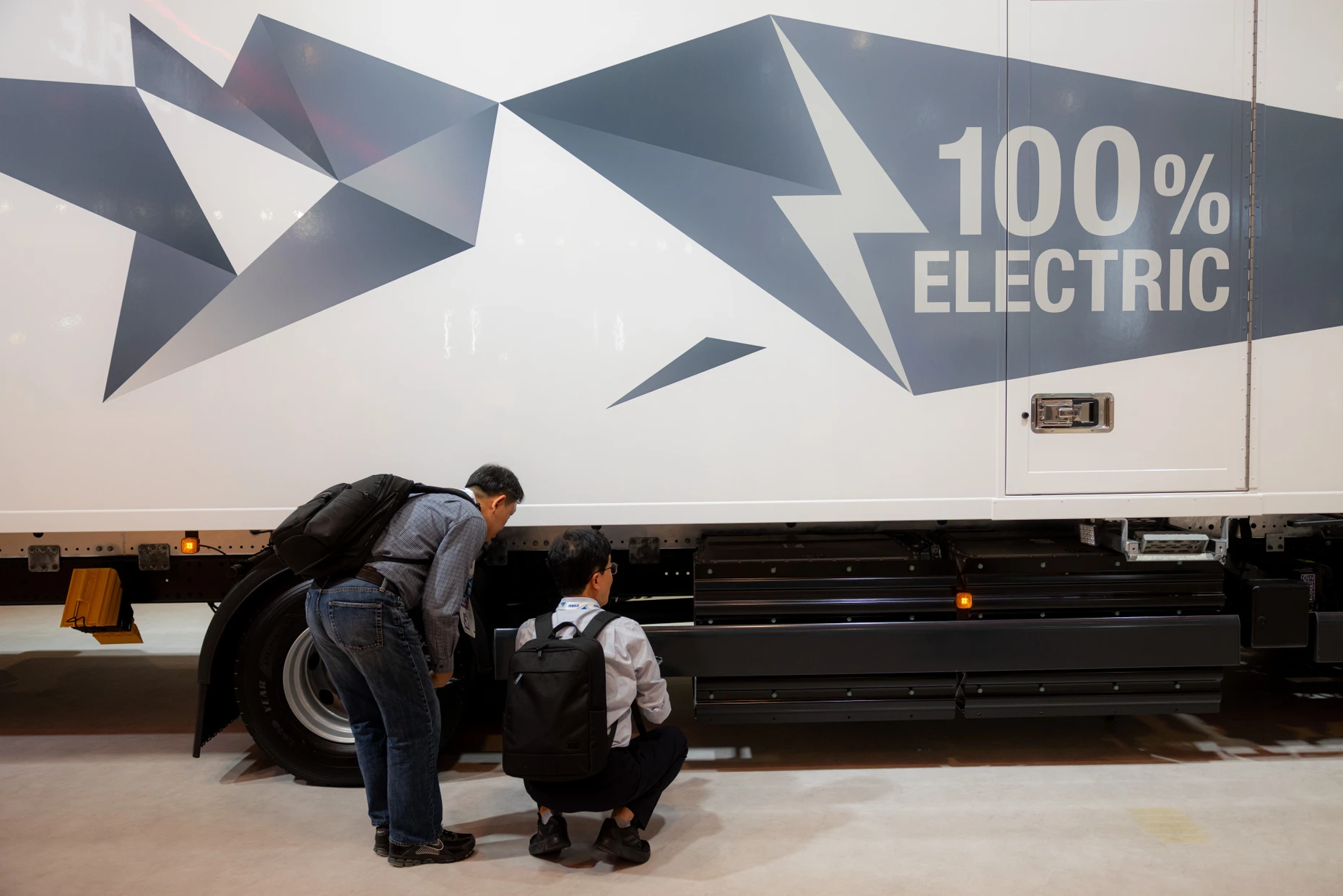
The core issue remains unchanged from previous years. Current EU regulations impose substantial fines for failing to reduce emissions from new vehicles registered in 2030 by 40% compared to 2019 levels. For Daimler Truck, each percentage point missed translates to a €120 million penalty. Karin Rådström, CEO of Daimler Truck, highlighted at the Hanover event that a 10% shortfall would cost €1.2 billion—equivalent to the entire profit of the Mercedes-Benz Trucks division. "We demand that the outcome of the review must link the targets with the necessary framework conditions," she stated.
Competitors from China
Rådström, alongside executives from DAF, Ford-Otosan, Iveco, MAN, Scania, Traton, and Volvo, called for an earlier and more lenient review of the EU's fleet targets, originally set for 2027. A joint statement from the European Automobile Manufacturers' Association (ACEA) declared, "We are fully committed to sustainable transport—investments have been made, and a wide range of CO₂-free vehicles is already available today. However, for these vehicles to become economically viable on a large scale, a comprehensive ecosystem is also required. This is clearly lagging behind and is not developing fast enough." The statement emphasized two points: first, the urgent need to accelerate the development of essential framework conditions, and second, a three-year delay in the 2030 compliance deadline to avoid manufacturer penalties.
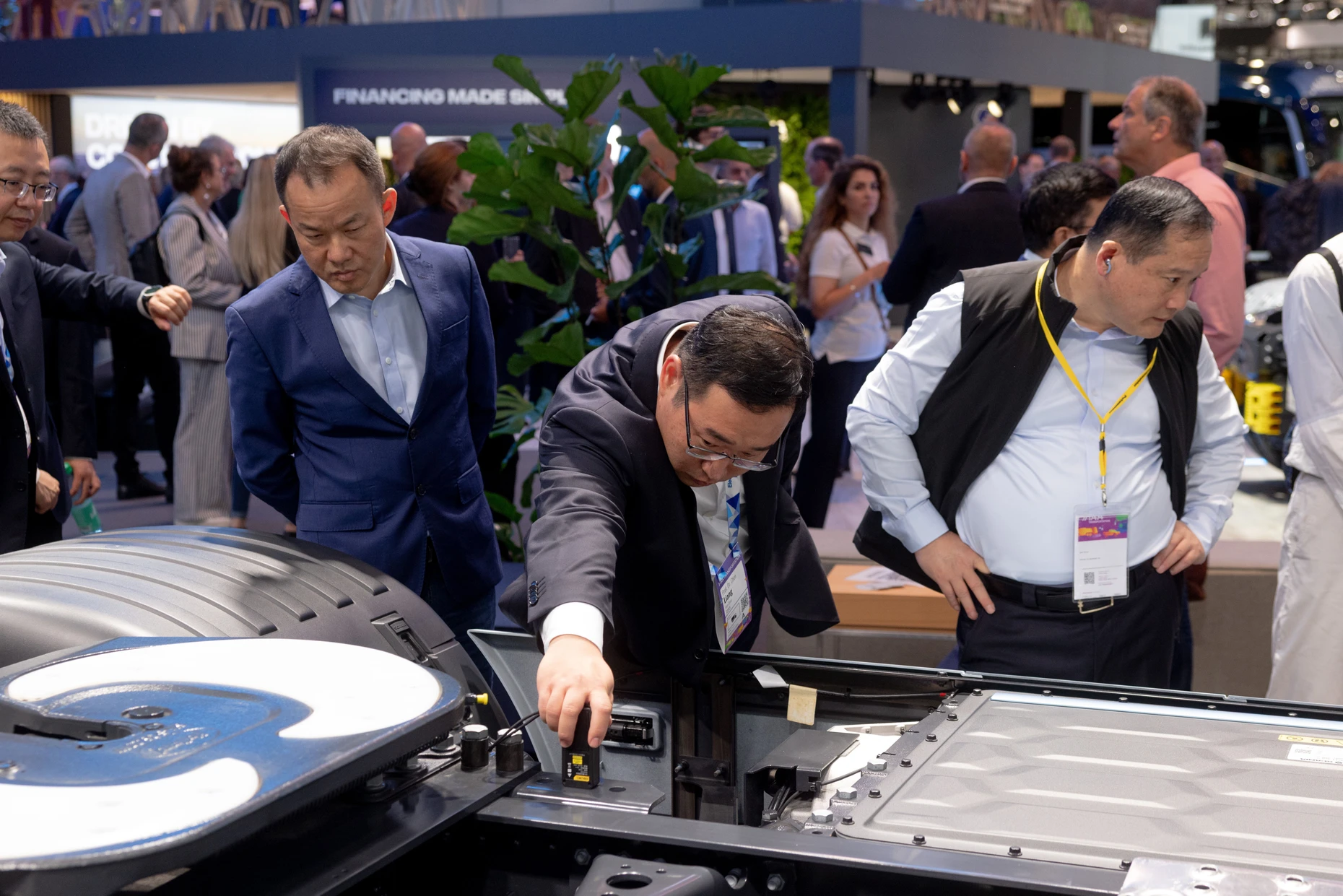
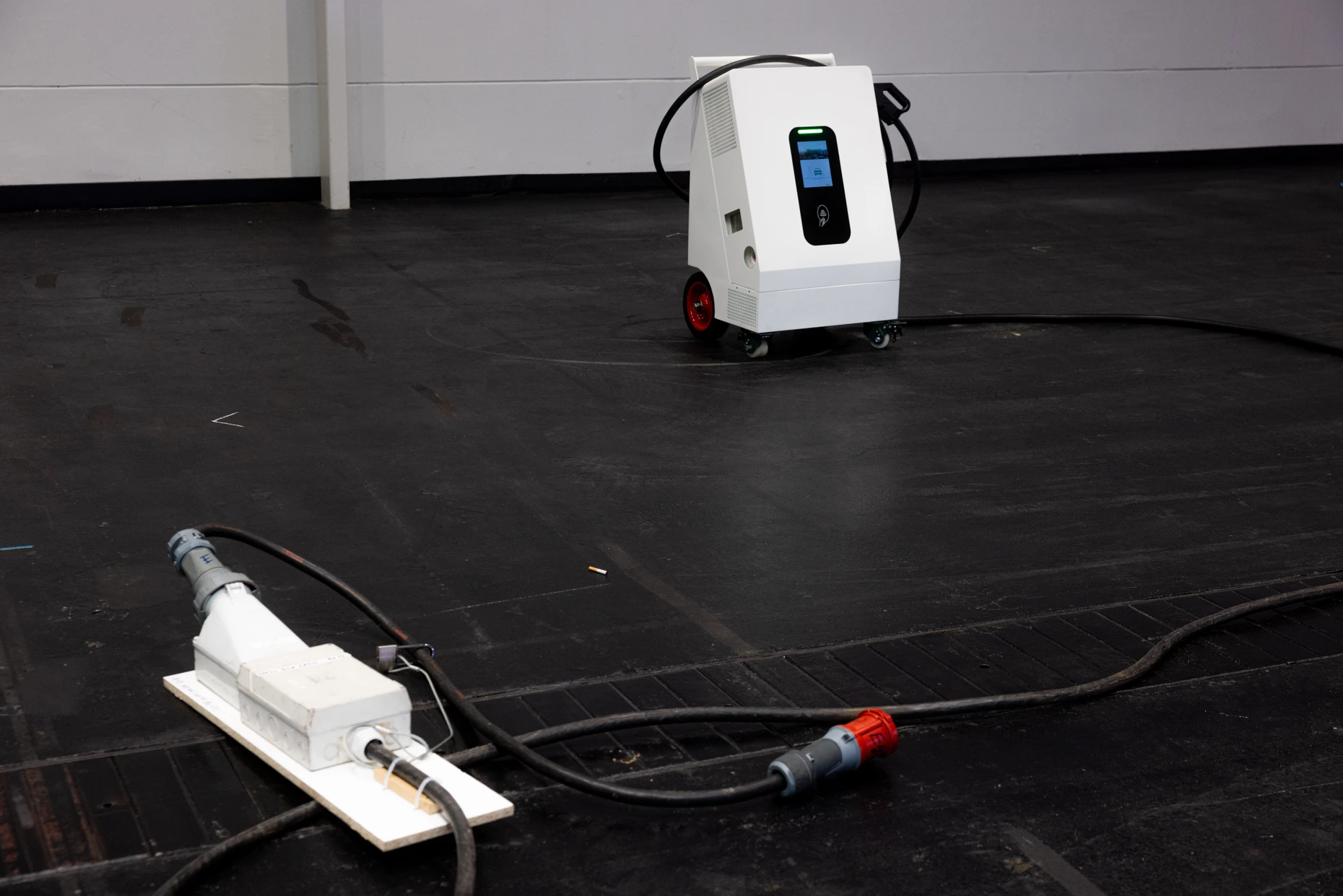
To meet the 40% reduction target, European truck manufacturers must increase the share of new electric vehicles registered by the end of the decade from the current 2% to 35%. This is contingent on the availability of sufficient charging stations for hauliers. According to the German Association of the Automotive Industry, Europe currently has only 730 truck-specific charging points and 1938 shared stations. Daimler Truck estimates a need for approximately 35,000 such stations. Rådström told journalists, "It is nearly impossible to reach the target. The infrastructure is far from what it should be, given the targets to which EU member states have committed."
The situation is further complicated by Chinese competitors. While Chinese truck manufacturers must establish their own service networks in Europe, they avoid penalties as they are not present in the European market with conventional diesel vehicles. With a robust domestic electric mobility market, there's a risk that Chinese companies could lead technological development in Europe. Innovations can be recouped more quickly through higher sales volumes in their home market. Achim Puchert, head of Mercedes-Benz Trucks at Daimler Truck, noted in an interview with F.A.Z., "Development costs naturally amortize faster with larger sales volumes. The ramp-up curves for electric trucks are naturally more demanding under these conditions."
Heavy-Duty Commercial Vehicles
The concern about potentially wasted investments in electric truck models is not just an industry association issue; it appears to be a significant consideration for company leaders, even if not publicly discussed. Such discussions about "stranded costs" could impact the financial forecasts of publicly listed companies.
Data from the ACEA shows that for the first half of 2026, the electric share was 13.2% for vans (including plug-ins) and 27.7% for buses. However, heavy-duty commercial vehicles remain the industry's weak point, with an electric share of just 4.8% out of approximately 173,000 new registrations across all manufacturers—just over 8,000 vehicles.
According to Peter Wiedenhoff, a consultant at Boston Consulting Group, manufacturers can only expect to recoup development costs under favorable conditions. Wiedenhoff's calculation for a single company assumes €1 billion in development costs and a necessary sales volume of 100,000 heavy-duty trucks. Even at this volume, covering costs for production line changes would be challenging. However, production facilities could also be used for subsequent electric truck models. European manufacturers have mitigated investment costs by adapting existing truck platforms for electric powertrains, avoiding the need for entirely new designs.
The electric truck market seems to have abandoned the long model cycles of internal combustion engine trucks, which sometimes lasted up to 20 years. Battery technology is advancing rapidly, making a few years old technology appear obsolete. Furthermore, Chinese competitors are entering the market with much shorter development cycles.
Scania, part of the Volkswagen Group's Traton, benefits from its presence in China by learning to develop models in two to three years instead of the previous five, according to Scania CEO Christian Levin. Levin did not elaborate on the potential for existing model lineups to age faster or the need for increased investment.
Roger Alm, head of Volvo Trucks, tries to mitigate the issue by stating that electric and combustion engine trucks can be produced on the same assembly lines. This approach keeps investment costs in check and allows flexibility between electric and combustion models.
However, manufacturers from China are entering the market, emphasizing that they didn't have to compromise between combustion engine platforms and electric powertrains. Michael Ruf, European CEO of Chinese start-up Superpanther, stated that their new model was developed solely as an electric truck, offering many advantages. He added that the current IAA is less about whether electric technology works in trucks and more about the performance of individual models.
At the current IAA, electric manufacturers are clearly driven to outperform each other in terms of battery size, range, and efficiency. Daimler Truck's e-Actros, launched in 2024, has set a benchmark. However, competing models now excel in specific areas, necessitating a refresh from Daimler Truck in the near future.
Fresh materials — Society News
The Trier Administrative Court: Why the Trier Asylum Court is One of the Fastest in Germany
On a Wednesday morning, shortly before ten, the brothers Abdul and Josef Salam H. are in Courtroom 1 of the Administrative Court of Trier, lodging a complaint against the Federal Republic of Germany. Josef Salam, 24, fidgets nervously, while his 22-year-old brother Abdul looks aro

Alexander Zverev Claims Second Major Title at US Open Final
Alexander Zverev was ready. Ready for his opponent's next serve, ready for the next return, ready for the next game in the final. But suddenly, he understood there would be no next game. Zverev had miscounted; he had already won the match. He raised his arms, laughed, and cheered. As

Apple Unveils Foldable iPhone Duo and Other New Products
Apple has launched its inaugural foldable smartphone, the iPhone Duo. Unlike many competing products in a similar form factor, it boasts a comparatively wide 5.4-inch external display and an internal screen that expands to 7.6 inches. To view the inner display, both titanium halves un
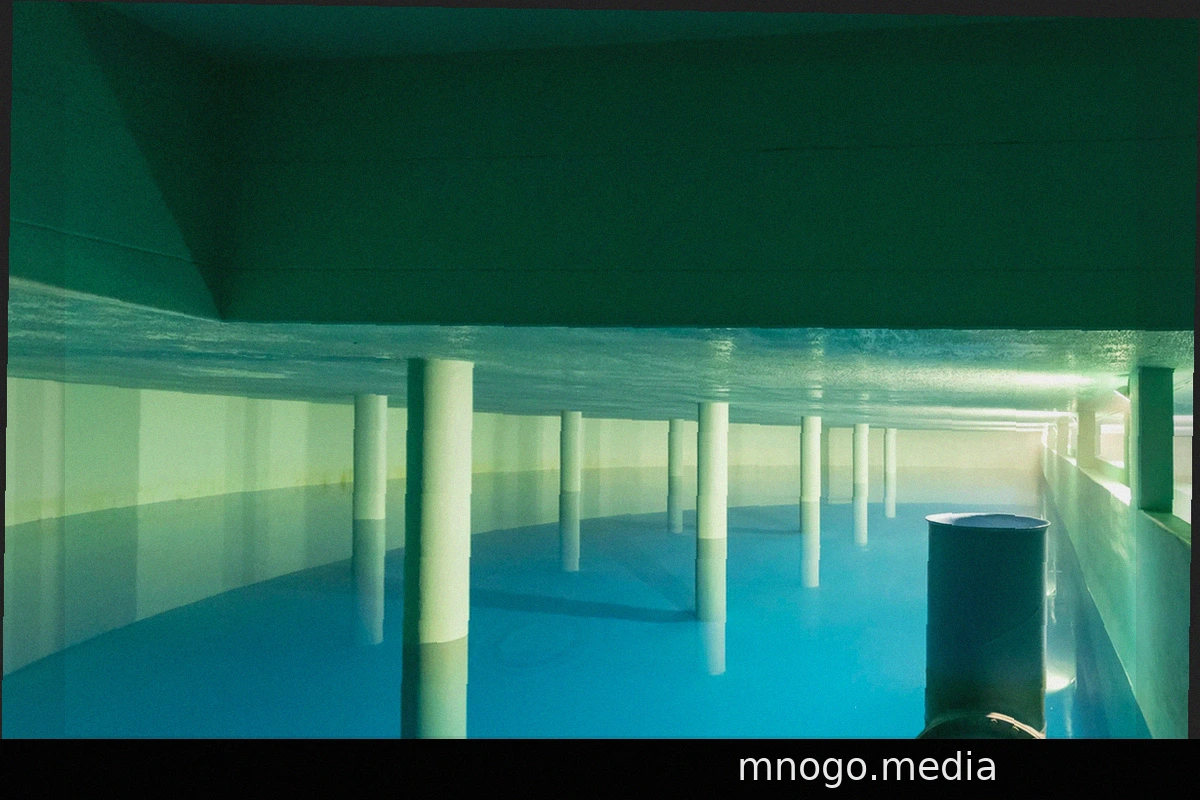
Groundwater Dispute: Water for Frankfurt, Drought for Birstein?
The small streams above Birstein have dried up, the meadows are yellow to brown, and cows can no longer find grass. Even the onset of rain doesn't change this immediately. This is because two million cubic meters of drinking water flow from the small Hessian community to Frankfurt eve

When AI Does Everything: Who Wants to Read Anymore?
Literary scholars like Erik Schilling are not the first to herald the impending demise of the author in the face of artificial text generation, styling chatbots like ChatGPT as the unlikely successors to Roland Barthes. Long before the emergence of an "hermeneutics of fear" that constantly per

Ruppert Claims Gold in Steeplechase, German Mixed Relay Secures Silver at European Championships in Birmingham
Frederik Ruppert of Tübingen has been crowned European champion in the 3000m steeplechase. The 29-year-old athlete achieved his first major career title in Birmingham with a time of 8:25.33 minutes, narrowly defeating Ruben Querinjean of Luxembourg (8:25.61). Karl Bebendorf of Dresden secur