Strait of Hormuz: Trump's Negotiating Position Continues to Deteriorate
Twenty-six years ago, when Iranian Parliament Speaker Mehdi Karroubi arranged a meeting with two American senators, he chose the Metropolitan Museum in New York, aiming for a casual encounter among art enthusiasts. He intended to keep it secret from Tehran, including the Supreme Leader at the time, Ali Khamenei. However, the meeting was exposed, and Khamenei confronted Karroubi, stating he would have accused him of treason if he didn't know him so well.
A month later, in September 2000, President Bill Clinton sought to meet with his Iranian counterpart, Mohammed Khatami, on the sidelines of the UN General Assembly in New York for a brief, symbolic handshake. However, Khatami avoided the encounter by hiding in a restroom until Clinton gave up.
Iran Has Prepared for Decades
Donald Trump is not the first US president to struggle with negotiations with Iran, a fact that clearly frustrates him. Hostility and mistrust towards America are so deeply ingrained in the Iranian regime's DNA that any official venturing too close to Washington risks accusations of treason. This sentiment has intensified following what Iran views as an American-Israeli war against Iran, which, from Tehran's perspective, validates Khamenei's decades-long assertion: America's true aim has never been Iran's nuclear program, but a change in the regime itself.
Because the regime has been preparing for this threat for decades, it has survived wars, even after the assassination of its Supreme Leader and numerous key figures. More than survival, it has leveraged these conflicts to consolidate its domestic and international power. Political scientist Mehrzad Boroujerdi explained in a recent op-ed in The New York Times: "To understand Iran's resilience, one must look beyond the religious establishment to the first generation of the revolution that built the regime."
Boroujerdi refers to the men of the Revolutionary Guard, who, in their youth, were part of militant, clandestine organizations that first overthrew the Shah and then repelled the invasion by Iraqi dictator Saddam Hussein. These individuals, who showed no hesitation in opening fire on thousands of Iranian protestors in January and who control a shadow economy that has withstood sanctions and international isolation for nearly 50 years, have driven even the once-thriving private internet economy under their control due to their absolute desire for surveillance and profit.
"The Revolutionary Guard is Not Made of Cardboard"
Boroujerdi writes that these Revolutionary Guard members, armed with crisis experience and survival instincts, are now the dominant figures in Tehran. For him, who has extensively researched Iranian elites, this is a personal matter: his father, an oil executive, was murdered by militant revolutionaries in 1978. Boroujerdi asserts that no concessions can be expected from these men. America and Israel, he contends, have failed to understand that they are "not made of cardboard." Trump's negotiation tactics, which aim to subdue opponents with aggressive threats, seem to be of no effect against them.
Whenever the Iranian leadership perceives its negotiating position weakening, it seeks escalation. This is currently the case due to the American naval blockade, which is strangling Iran's economy, preventing oil exports and increasing the cost of imports. An inflation rate of nearly 90 percent is pushing the socially vulnerable into hunger and causing the long-suffering middle class to fear further decline.
It is for this reason that Iran attacked a US base in Jordan with missiles at the end of July, even though the American military had temporarily suspended its operations. It was the first time the Iranian army launched an attack not declared as retaliation. This was likely a message to Washington that Tehran intends to dictate the pace of the conflict rather than yield to American pressure. However, the Iranians used Emad missiles, powered by liquid fuel, which were easier to intercept than some other weapons in their arsenal, suggesting a calibrated escalation.
Simultaneously, Iran activated allied militias in Iraq to target Saudi energy facilities. The Houthi rebels in Yemen, allied with Tehran, resurfaced and threatened shipping in the Red Sea and the Bab-al Mandab Strait, as well as Saudi oil infrastructure. When a guest tanker belonging to an American company caught fire in the Egyptian port of Damietta following a drone attack, the conflict appeared to be spiraling out of control.
All these attacks apparently aimed to demonstrate to the American side the economic costs of further escalation and the vulnerability of the American ally, Saudi Arabia. This threat extended beyond the Strait of Hormuz. The Suez Canal is the most important alternative route for Saudi energy exports. Iran's strategy seemed to be succeeding. The Crown Prince of Riyadh is said to have played a significant role in dissuading Trump from his latest attack plans, which were reportedly the largest since World War II.
Tehran Suspects an American Deception
However, what was also notable about the Iranian escalation scenario was against whom it was not directed. Unlike during the war between March and June, Tehran did not target Oman, Qatar, the United Arab Emirates (UAE), or Israel. It is said that the UAE has reached agreements with Tehran. According to a Bloomberg report, the country exported more oil in July than all other Gulf states, indicating that Iran's attacks on ships in the Strait of Hormuz are selective. In return, according to the think tank Bourse & Bazaar, the UAE has supplied Iran with trade goods that the country had difficulty importing due to the American naval blockade.
Oman and Qatar, in turn, play a crucial role in current negotiations. Iran has always kept the door open for these talks. To recall, in June, the United States and Iran signed a memorandum that envisioned the opening of the Strait of Hormuz and paved the way for negotiations on Iran's nuclear program. It included generous economic incentives for Iran, contingent on its cooperation. When the intended ceasefire collapsed after only three weeks, Tehran saw this as confirmation of its suspicion that the United States had never intended to honor the concessions. Iran suspected a deceptive maneuver by the US, designed solely to allow it to rearm and gain time to replenish global oil reserves.
The Iranian Revolutionary Guard considers control over shipping in the Strait of Hormuz its most significant wartime achievement. It is now attempting to leverage this into a lasting bargaining chip in negotiations with Oman. While the international debate revolves around whether Iran will collect passage fees for ships, Tehran's focus is on its own sovereignty.
Iran Wants Direct Control Over All Entering Ships
The June memorandum already stated that Iran, in dialogue with Oman and with the participation of the Persian Gulf littoral states, would "define the future management and maritime services in the Strait of Hormuz." This sentence reads as if it were penned by Iranian diplomats. Trump signed it on June 17 in Versailles. According to Tehran's interpretation, it assigns Iran a central role in the region's post-war order. For the Revolutionary Guard, this would also be an enormous boost in prestige among regime supporters.
This is precisely what the current negotiations with Oman are about, which also aim to revive the memorandum with the US. America appears to be involved from the sidelines. Tehran wants to define shipping routes through the strait that grant it direct control over all entering ships and a right of objection over all departing ships.
This would provide the country with leverage against nations like Saudi Arabia and the UAE even after the war, as they currently export the majority of their oil and gas supplies through the strait, even as they are working at full speed on pipelines for alternative routes. The Revolutionary Guard appears to be attempting to solidify its position through regular attacks on ships in the strait, as was most recently the case on Friday night.
Reports of Ammunition Shortages Undermine Trump's Threats
Meanwhile, Trump's negotiating position has deteriorated since the signing of the memorandum. His approval ratings have fallen further, the midterm elections in November are approaching, and increasing reports of dwindling American stocks of defensive and certain long-range missiles undermine the credibility of his war threats.
Some factions in Tehran appear emboldened to make further demands. The Fars news agency quoted a parliament member on Friday who claimed that passage would be denied to American and Israeli ships until the countries paid reparations.
However, Fars has often disseminated extreme positions of hardliners in the past. The medium is close to a different wing of the Revolutionary Guard than the Tasnim news agency, whose reports have proven reliable. Tasnim has repeatedly published sharp criticism of hardliners who question the diplomatic approach led by chief negotiator Mohammad Bagher Ghalibaf.
The power struggle in Tehran does not make an agreement with America any easier. The same applies to the obscurity of the new Supreme Leader Mojtaba Khamenei, whom Foreign Minister Abbas Araghchi states he has never met in his decades-long diplomatic career. Currently, the National Security Council appears to be the most important decision-making body. Ghalibaf, who represents Iran externally, is flanked there by other actors who, like him, hail from the Revolutionary Guard.
Despite the opaque power structures, the Iranian leadership has managed to steadily improve Tehran's negotiating position through risk-taking, resilience, and asymmetric warfare. After the first weeks of the war, the regime's greatest victory was considered to be its own survival. By now, Iran seems to be dictating terms to Trump for the resumption of shipping in the Strait of Hormuz.
Fresh materials — Society News
The Trier Administrative Court: Why the Trier Asylum Court is One of the Fastest in Germany
On a Wednesday morning, shortly before ten, the brothers Abdul and Josef Salam H. are in Courtroom 1 of the Administrative Court of Trier, lodging a complaint against the Federal Republic of Germany. Josef Salam, 24, fidgets nervously, while his 22-year-old brother Abdul looks aro

IAA Transportation: Trucking Industry Faces Electrification Challenges
Daimler Truck made a bold statement at the IAA Transportation truck show: "We have delivered." This declaration, displayed prominently on stage, reflects not only the company's confidence in developing a leading electric heavy-duty truck but also growing frustration. The necessary inf

Alexander Zverev Claims Second Major Title at US Open Final
Alexander Zverev was ready. Ready for his opponent's next serve, ready for the next return, ready for the next game in the final. But suddenly, he understood there would be no next game. Zverev had miscounted; he had already won the match. He raised his arms, laughed, and cheered. As

Apple Unveils Foldable iPhone Duo and Other New Products
Apple has launched its inaugural foldable smartphone, the iPhone Duo. Unlike many competing products in a similar form factor, it boasts a comparatively wide 5.4-inch external display and an internal screen that expands to 7.6 inches. To view the inner display, both titanium halves un
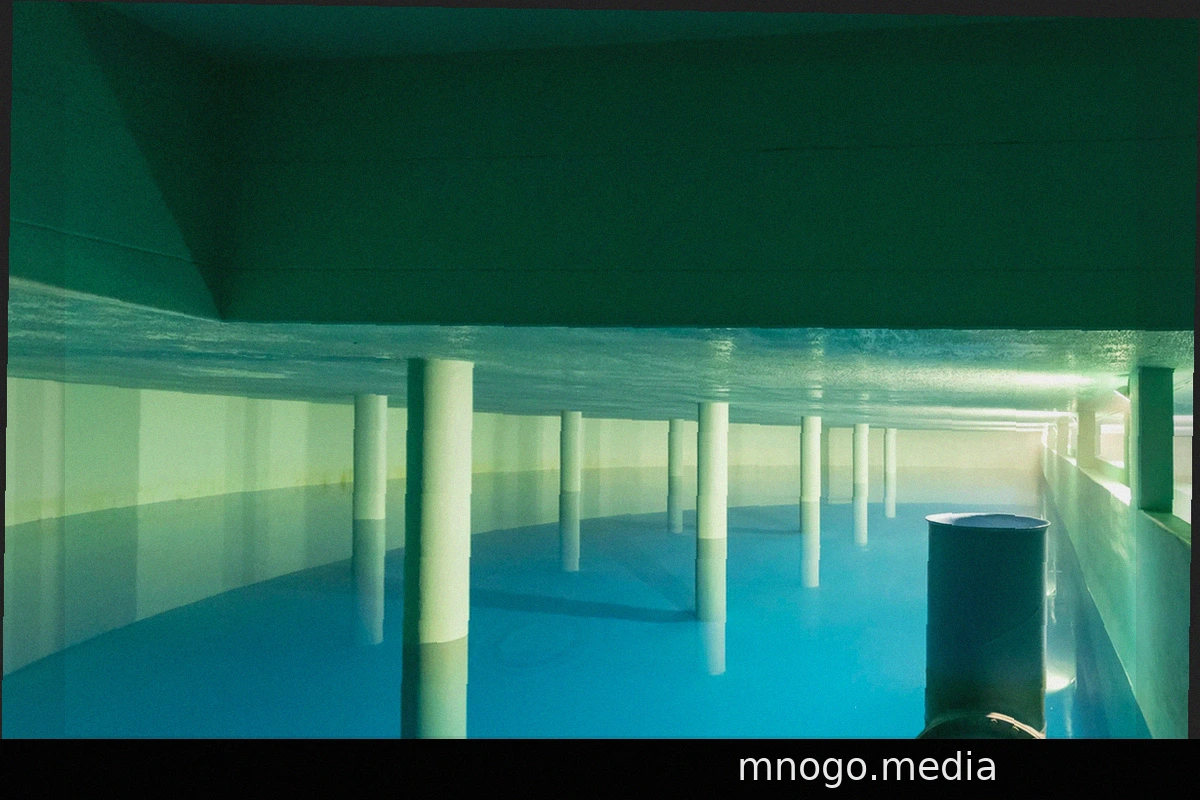
Groundwater Dispute: Water for Frankfurt, Drought for Birstein?
The small streams above Birstein have dried up, the meadows are yellow to brown, and cows can no longer find grass. Even the onset of rain doesn't change this immediately. This is because two million cubic meters of drinking water flow from the small Hessian community to Frankfurt eve

When AI Does Everything: Who Wants to Read Anymore?
Literary scholars like Erik Schilling are not the first to herald the impending demise of the author in the face of artificial text generation, styling chatbots like ChatGPT as the unlikely successors to Roland Barthes. Long before the emergence of an "hermeneutics of fear" that constantly per